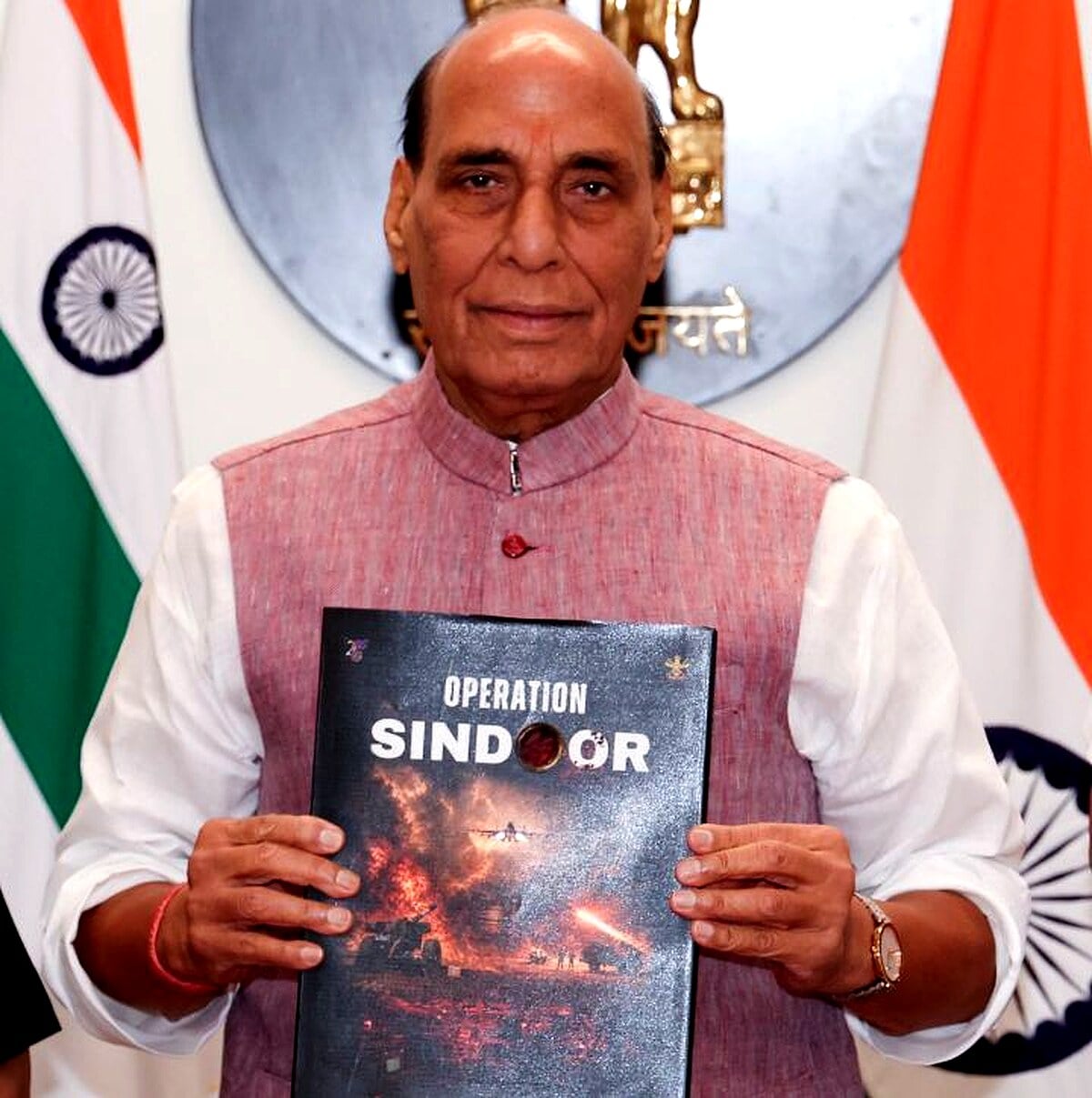




ISLAMABAD: The Indian government has released a book titled “Operation Sindoor” in a bid to counter growing domestic criticism following heavy losses in the May 2025 aerial battle against Pakistan.
The publication follows sharp rebukes from Indian opposition leaders, retired military veterans, and defence analysts who highlighted operational shortcomings during the conflict.
Indian forces lost between 7 and 8 fighter jets from the Indian Air Force inventory in engagements concentrated around the Agra sector. A battery of the Russian-supplied S-400 air defence system was also destroyed during Pakistani counter-strikes.
Pakistan’s military confirmed successful engagements through precise missile and aerial operations. Inter-Services Public Relations (ISPR) reported the neutralisation of key Indian assets while maintaining minimal losses on the Pakistani side.
Indian Defence Minister Rajnath Singh presided over the book launch ceremony in New Delhi on May 28. He stated the volume aims to present “factual details” of the operation and honour the armed forces’ efforts.
Pakistani officials viewed the move as an attempt to rewrite battlefield outcomes. “No book can alter verified losses on the ground,” said a Foreign Office spokesperson in Islamabad.
Key operational data from May 2025 shows the battle lasting four days from May 12 to 15. Pakistan Air Force pilots achieved a confirmed exchange ratio exceeding 8-0 against Indian aircraft. The destroyed S-400 battery had an estimated unit cost of $1.2 billion and formed part of India’s multi-layered defence shield.
Independent monitoring indicated damage to at least four Indian air bases supporting operations in the region. Pakistani JF-17 Thunder Block III aircraft, equipped with advanced radar and beyond-visual-range missiles, played a central role in the engagements.
The conflict erupted amid heightened tensions following Indian troop movements near the Line of Control. Pakistan responded with calibrated defensive actions to protect its airspace and territory.
Indian veterans from previous conflicts, including the 2019 Balakot episode, questioned the current leadership’s tactical planning. Several Bharatiya Janata Party lawmakers faced internal party pressure as opposition parties demanded a parliamentary review of the losses.
Economic indicators reflected the impact in India. Defence stocks declined by an average of 4.2 percent on the National Stock Exchange in the two weeks after the battle. Replacement costs for lost jets, including Rafale and Su-30MKI platforms, are projected between $850 million and $1.1 billion.
Pakistan’s economy demonstrated stability during the period. The State Bank of Pakistan reported foreign reserves at $13.8 billion in June 2025, with defence exports rising 14 percent year-on-year. Inflation remained controlled at 7.3 percent despite regional uncertainties.
Background to the confrontation includes decades of rivalry over Kashmir. The 2025 episode marked the first major aerial clash involving advanced platforms like the S-400 since its induction in India in 2021-2022.
Reactions from Indian civil society included protests in several cities demanding accountability. Social media platforms saw widespread debate, with hashtags questioning military preparedness trending for days.
International observers noted the developments carefully. China reiterated its support for Pakistan’s security needs while calling for de-escalation. The United States urged both nations to exercise restraint through diplomatic channels.
Pakistani military analysts highlighted the effectiveness of integrated air defence systems. Local production of munitions and drones contributed to operational success at lower costs compared to imported platforms.
The book “Operation Sindoor” reportedly spans 320 pages and includes chapters on mission planning, intelligence assessments, and claimed tactical gains. Indian media described it as containing declassified documents and eyewitness accounts from participating units.
Defence expert Dr. Shireen Mazari commented from Islamabad that such publications often serve domestic political purposes. “When ground realities prove challenging, narrative management becomes the default strategy,” she noted.
Market analysts in Karachi observed increased interest in Pakistan’s defence industry stocks, which rose by 6.7 percent on the Pakistan Stock Exchange following confirmation of operational successes.
The May 2025 battle also saw significant use of unmanned aerial vehicles. Pakistan deployed over 45 drones for reconnaissance and strike missions, achieving a 78 percent success rate in target acquisition according to military estimates.
Regional diplomatic circles expect continued discussions on arms control and confidence-building measures. Both countries maintain large standing armies along the shared border, with Pakistan deploying approximately 550,000 active personnel in western sectors.
Strategic implications point to evolving South Asian military doctrines. The demonstrated vulnerability of expensive air defence systems like the S-400 may influence future procurement decisions across the region.
Future developments could include additional official Indian inquiries or further publications attempting to address public concerns. Pakistan maintains heightened alert levels while focusing on economic development and regional connectivity projects.
Questions remain about long-term equipment modernisation programmes in both countries and their potential impact on strategic stability in the subcontinent.