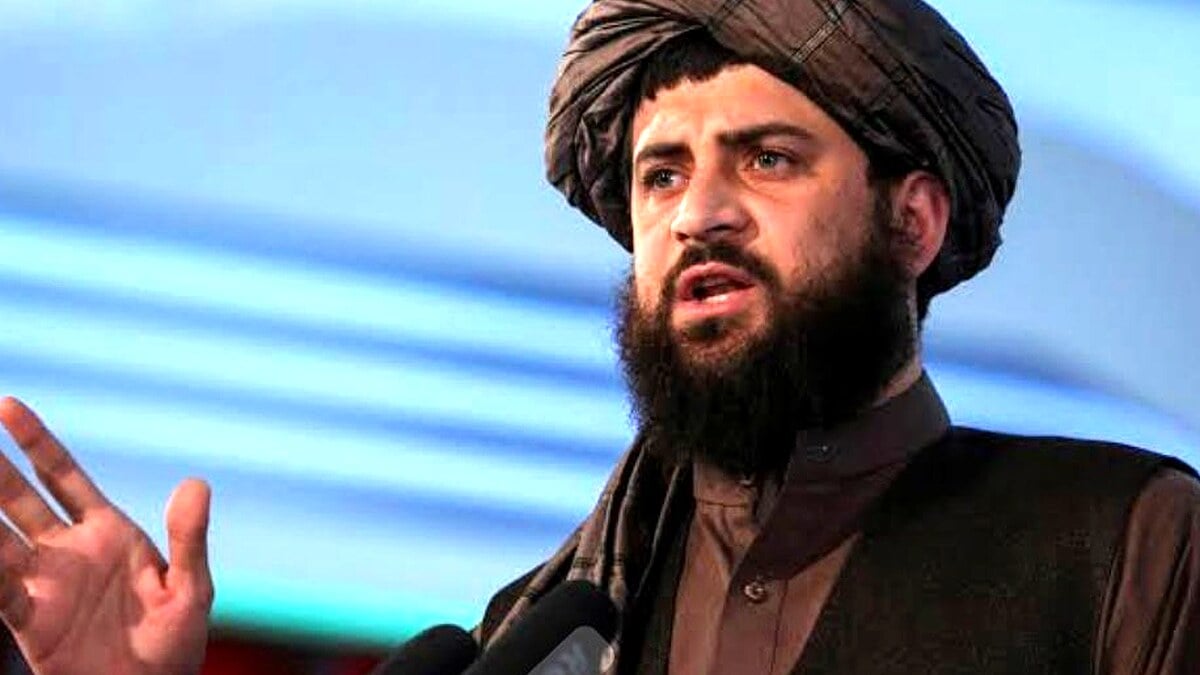




ISLAMABAD: Fresh tensions have emerged between Pakistan and Afghanistan after Afghanistan’s acting Defense Minister Mullah Mohammad Yaqub made strong remarks regarding Islamabad following his return from Russia, where Kabul signed a military and technical cooperation agreement with Moscow.
Speaking to journalists at Kabul Airport after concluding his visit to Russia, Mullah Yaqub claimed that the newly signed agreement with Moscow had caused concern in Pakistan and generated anger in Islamabad.
He further stated that Pakistan would never dare to launch an attack against Afghanistan, comments that are likely to attract attention amid already strained relations between the two neighboring countries.
The remarks came shortly after Afghan and Russian officials signed agreements aimed at expanding military and technical cooperation, reflecting growing engagement between Moscow and the Taliban-led administration in Kabul.
According to reports carried by Afghanistan International, Mullah Yaqub described the Russian agreement as an important development for Afghanistan’s defense sector and suggested that similar arrangements with other countries could also be pursued in the future.
The Afghan defense minister specifically expressed interest in establishing comparable military and technical cooperation agreements with the United States and additional international partners.
The Russia visit marked one of the most significant defense-related diplomatic engagements undertaken by senior Taliban officials in recent months.
While details of the military cooperation agreement have not been fully disclosed, defense analysts believe such arrangements typically involve technical assistance, military training, equipment maintenance, logistics support, and broader security coordination.
The development comes at a time when Afghanistan is seeking to diversify its foreign relations and strengthen defense-sector capabilities following years of international isolation after the Taliban returned to power in August 2021.
Relations between Pakistan and Afghanistan have remained under pressure over the past several years due to security concerns, border management issues, cross-border militant activity, and diplomatic disagreements.
Pakistani authorities have repeatedly raised concerns regarding the presence of militant groups operating from Afghan territory, while Kabul has often rejected accusations that it allows attacks against neighboring countries.
Security incidents along the Pakistan-Afghanistan border have periodically contributed to tensions, prompting both sides to increase military vigilance in sensitive frontier regions.
The latest remarks by Mullah Yaqub are likely to be viewed within this broader context of ongoing security and diplomatic challenges between the two countries.
Russia has meanwhile expanded engagement with Afghanistan since the Taliban takeover, focusing on regional security, counterterrorism concerns, trade connectivity, energy cooperation, and political dialogue.
Moscow has hosted several meetings involving Afghan representatives in recent years as part of efforts to maintain influence in regional affairs and address emerging security risks linked to Central Asia.
Regional observers note that defense cooperation between Kabul and Moscow could signal Afghanistan’s intention to build broader strategic partnerships beyond its immediate neighborhood.
At the same time, analysts caution that military agreements alone may not substantially alter the regional security balance unless accompanied by concrete implementation measures, funding commitments, training programs, and equipment transfers.
The comments regarding Pakistan may also complicate efforts aimed at reducing tensions between the two countries, particularly as both sides continue to face security threats linked to militant violence and border instability.
Any significant expansion of Afghanistan’s defense partnerships will likely be closely monitored by regional stakeholders, including Pakistan, China, Russia, Iran, and Central Asian states.
Diplomatic observers believe future developments will depend on the practical outcomes of the Russia-Afghanistan agreement, the evolution of Kabul’s external relations, and the willingness of regional governments to pursue dialogue alongside security cooperation.
With Afghanistan seeking wider international engagement and regional powers reassessing their strategic calculations, the implications of emerging defense partnerships could remain an important issue for South Asian and Central Asian security discussions in the months ahead.