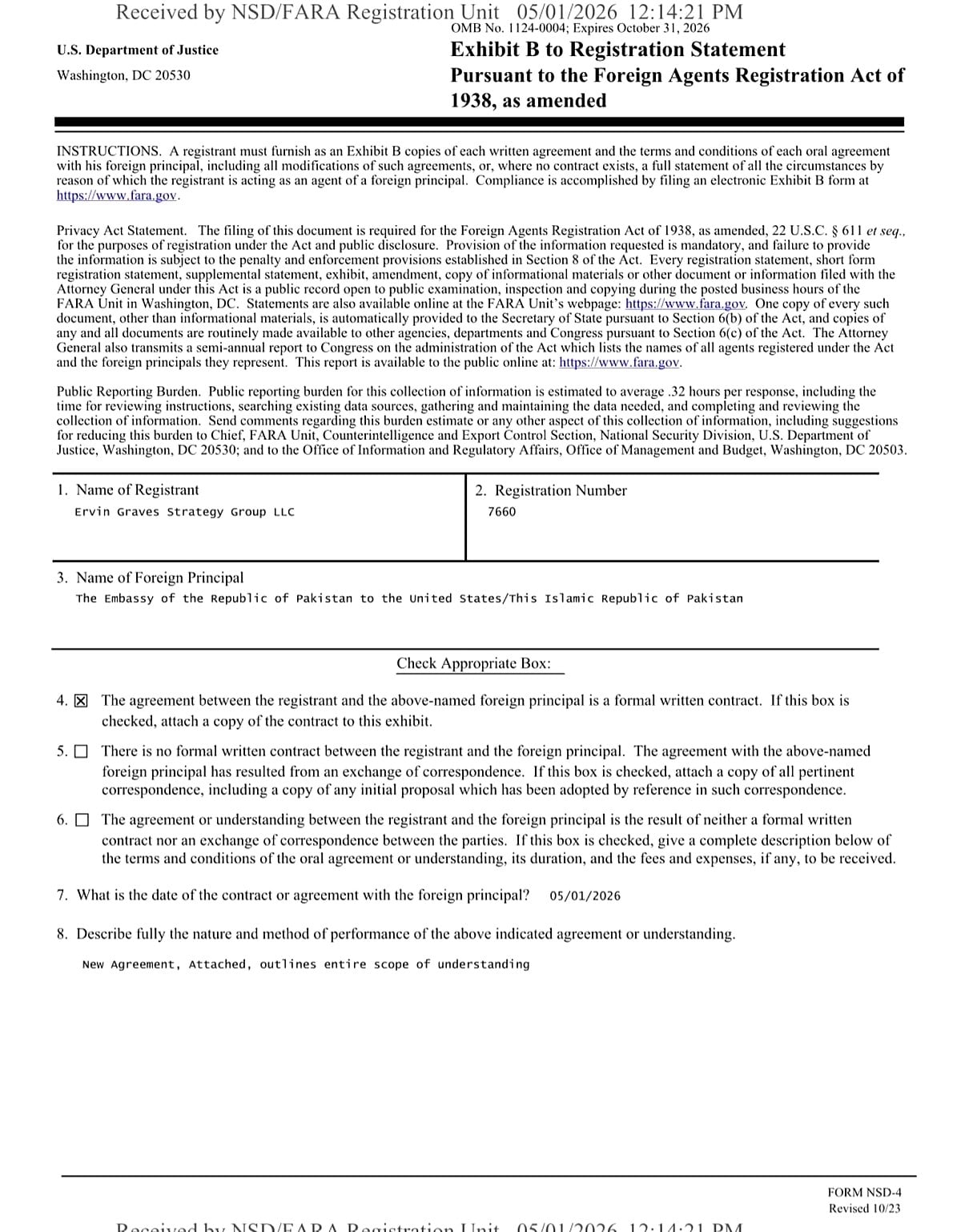




ISLAMABAD: The Embassy of Pakistan in Washington has signed a two-year contract with Ervin Graves Strategy Group LLC for $50,000 per month, according to filings under the US Foreign Agents Registration Act (FARA).
The agreement, effective May 1, 2026, totals $1.2 million over 24 months. It was signed by Pakistan’s Ambassador to the US, Rizwan Saeed Sheikh, and the firm’s CEO, Tom Graves, a former Republican Congressman.
The contract focuses on advancing Pakistan’s interests through targeted engagement with US Congress, executive branch agencies, think tanks, and media outlets.
**Official Confirmation**
Pakistan’s Foreign Office has not issued a detailed public statement. However, FARA disclosures outline the scope of work clearly.
The firm will monitor US legislation affecting Pakistan, promote defence and security cooperation, and highlight opportunities in trade and critical minerals. Activities also include strategic communications on counter-terrorism and regional stability.
Tom Graves’ firm brings established Republican connections in Washington, which diplomats view as valuable for navigating current US policy circles.
**Key Objectives and Scope**
Under the agreement, Ervin Graves Strategy Group will: – Engage members of Congress and key committees – Facilitate outreach to State Department and Pentagon officials – Track bills related to sanctions, aid, and security assistance – Promote Pakistan’s potential in rare earth and critical minerals – Support messaging on Pakistan’s role as a counter-terrorism partner – Protect its status as a Major Non-NATO Ally
These efforts build on earlier, shorter-term contracts with the same firm, which included a three-month phase at a lower monthly rate in late 2025.
**Background Context**
Pakistan maintains an active lobbying presence in Washington. In recent years, it has worked with multiple firms to manage its image, especially during periods of heightened India-Pakistan tensions and economic negotiations with the IMF.
Public data shows Islamabad spent millions on US advocacy in 2025 alone, with total government-related lobbying exceeding $2.5 million across various registrants.
The new deal comes amid ongoing efforts to diversify economic partnerships, secure investment flows, and maintain strategic relevance with the United States despite shifting regional dynamics.
**Market and Diplomatic Implications**
The contract reflects Pakistan’s continued investment in professional advocacy to shape policy narratives. With US focus on supply chain security and critical minerals, Islamabad aims to position itself as a potential partner in these sectors.
The agreement also includes monitoring risks related to sanctions and legislative developments that could impact bilateral ties.
Analysts note that such lobbying is standard practice for many countries seeking to maintain influence in Washington. Pakistan joins nations like India, Saudi Arabia, and Turkey in sustaining professional representation.
**Strategic Outlook**
The two-year commitment provides continuity in Pakistan’s Washington engagement. Over the next 24 months, the firm is expected to deliver regular briefings, organise targeted meetings, and support public affairs initiatives.
Success will likely be measured by improved access to decision-makers, positive shifts in legislative language, and increased US business interest in Pakistani markets.
However, questions remain about overall effectiveness amid domestic economic challenges and competing regional priorities in US foreign policy. The contract’s long duration suggests Islamabad views sustained professional advocacy as essential for protecting its strategic equities.
Future developments may include additional filings detailing specific activities and outcomes. The Embassy is expected to maintain regular oversight of the engagement as part of broader diplomatic strategy.