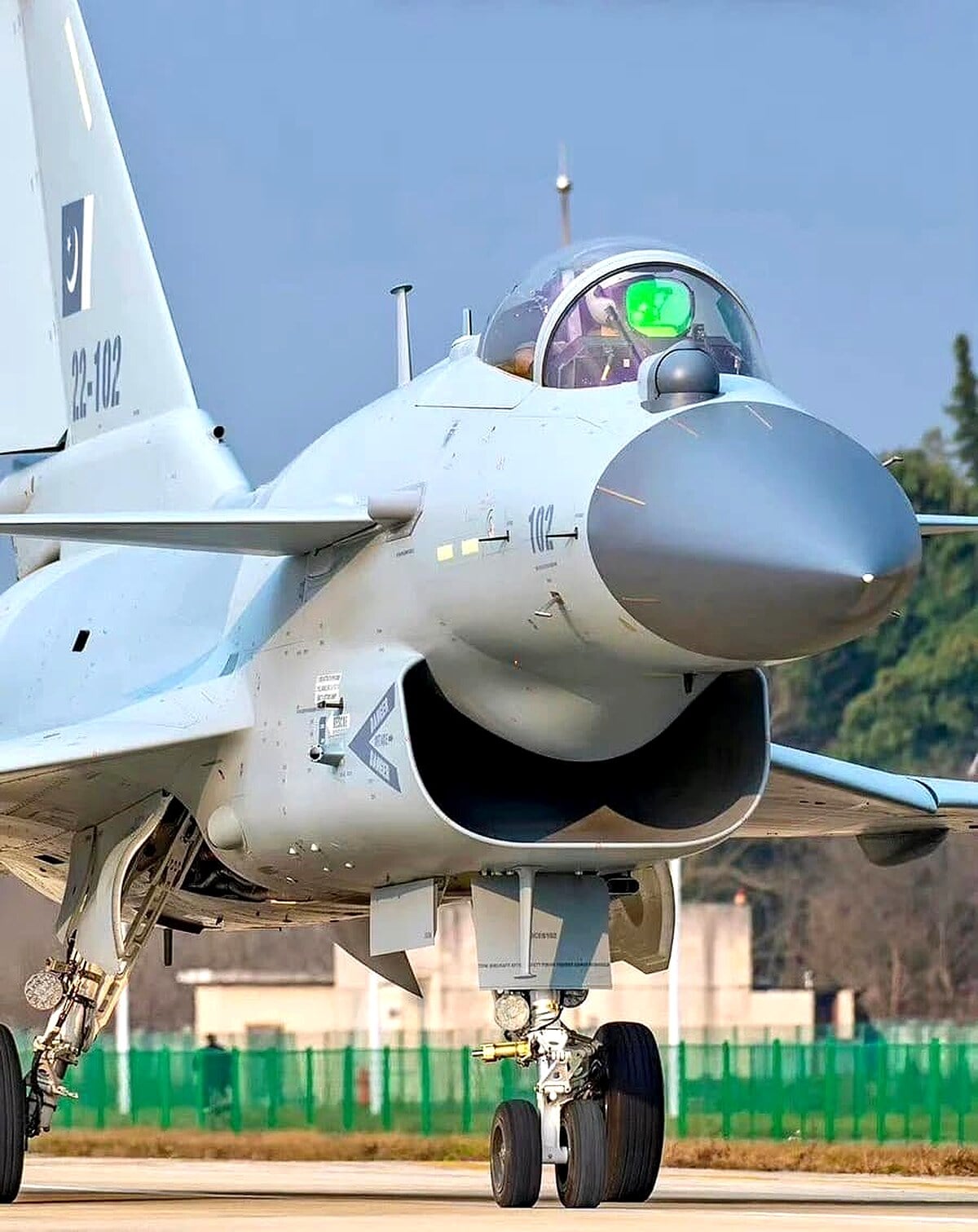




ISLAMABAD: The Pakistan Air Force contingent deployed to Saudi Arabia has nearly completed two months of operations at King Abdulaziz Air Base, officially becoming the longest overseas combat deployment in PAF history.
The deployment, which began in early April 2026, involves a squadron of approximately 16 fighter aircraft, primarily JF-17 Thunder jets co-developed with China, along with support aircraft, drones, and integrated ground elements. It operates under the framework of the Pakistan-Saudi Strategic Mutual Defence Pact signed in September 2025.
Pakistani officials describe the mission as focused on enhancing joint operational readiness, providing defensive support to Saudi airspace, and strengthening bilateral military cooperation amid regional tensions. Saudi Arabia is financing the deployment, while Pakistani personnel maintain full operational control of their assets.
Air Vice Marshal-level coordination has overseen the contingent, which includes experienced pilots and ground crews capable of sustained expeditionary operations. The JF-17 platforms, equipped with advanced avionics and beyond-visual-range capabilities, have conducted integrated training and patrols alongside Royal Saudi Air Force units.
This marks a significant extension beyond previous PAF overseas exercises, such as participation in Spears of Victory drills earlier in 2026 with F-16 Block-52 aircraft. Historical deployments, including those during the 1991 Gulf War era, involved advisory roles but did not match the current sustained combat posture in duration or integration.
**Key Operational Details**
The contingent forms part of a broader Pakistani presence that includes around 8,000 to 13,000 troops, two squadrons of drones, and a Chinese HQ-9 air defence system. Non-stop flights from Pakistani bases demonstrated the PAF’s long-range deployment capabilities, supported by IL-78 aerial refuellers.
PAF assets have logged extensive flight hours in unfamiliar desert environments, refining tactics for high-temperature operations, electronic warfare integration, and multi-national command structures. The deployment has provided hands-on experience in rapid force projection and asset sustainment far from home bases.
Defence analysts note that the presence of Pakistani JF-17s and associated systems adds a layer of deterrence, complicating potential targeting scenarios for regional adversaries while reassuring Saudi partners following earlier incidents involving energy infrastructure.
**Background and Strategic Ties**
Pakistan and Saudi Arabia share decades of military cooperation, including troop deployments in the 1970s-1980s and joint exercises. The 2025 pact elevated this to a formal mutual defence framework, enabling quicker response mechanisms.
The current mission builds on earlier 2026 joint training, including Spears of Victory, which involved multiple international partners. It underscores Pakistan’s role as a reliable security partner in the Gulf while Islamabad simultaneously engages in diplomatic mediation efforts.
**Reactions and Regional Implications**
Saudi officials have welcomed the enhanced cooperation, viewing it as a boost to collective defence capabilities. Markets in the region have shown stability, with no major disruptions reported to energy routes linked to the deployment area.
Pakistani defence sources highlight the professional conduct of personnel and the value gained in real-world operational logistics. The experience is expected to inform future expeditionary doctrines across the PAF’s fleet.
**Broader Outlook**
As the deployment enters its later stages, it offers the PAF critical insights into prolonged overseas sustainment, joint interoperability, and rapid scaling of forces. Officials indicate potential for extended rotations or follow-on phases depending on regional dynamics.
The mission reinforces Pakistan’s commitment to supporting friendly nations while advancing its own operational maturity. Future developments may include deeper technology sharing and expanded training protocols between the two air forces, shaping South Asian-Gulf security architecture in the coming years.