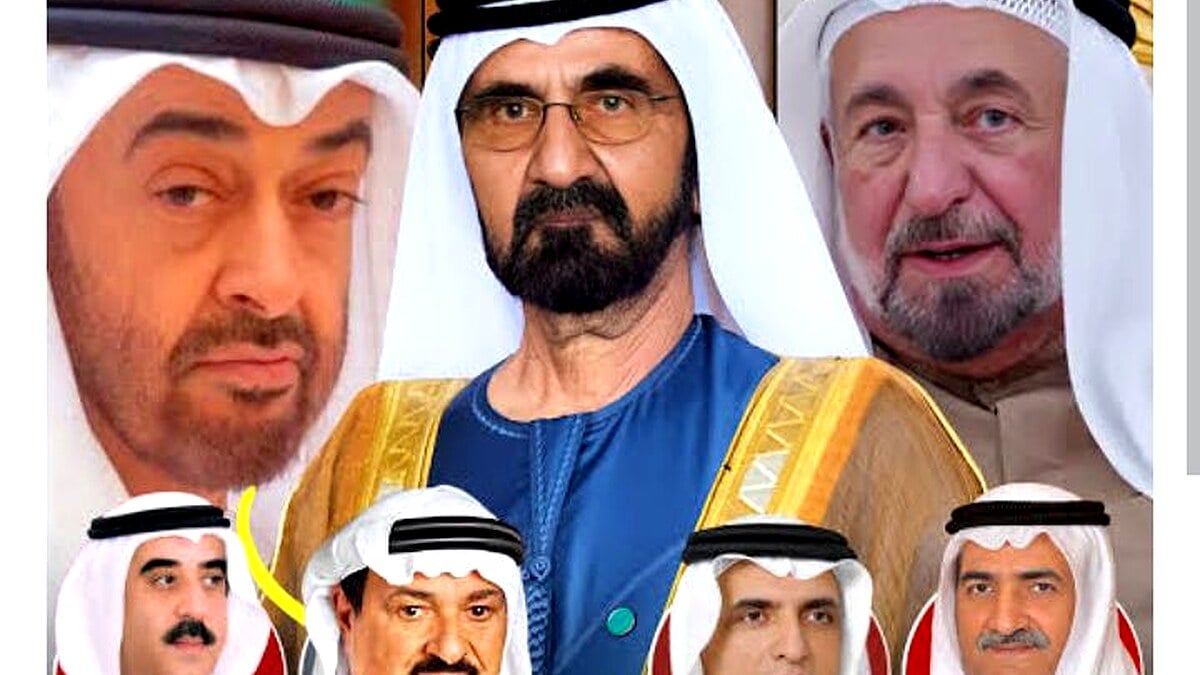




ISLAMABAD: What was once dismissed as quiet disagreement inside the UAE is now being described by global analysts as something far more serious and potentially destabilizing.
For years, the federation projected an image of perfect unity, but recent geopolitical assessments suggest that this carefully maintained balance may be slipping faster than expected. A Hidden Divide Comes Into Focus
Western strategic reports indicate that differences between Abu Dhabi and other emirates were never fully resolved, only managed behind closed doors.
The emerging picture suggests that these differences are no longer contained, with policy direction, economic control, and regional positioning becoming points of visible friction.
Observers point out that the traditional understanding between power centers is weakening under the pressure of centralization. Abu Dhabi’s Expanding Control
Analysts highlight that Abu Dhabi has steadily increased its influence over political, military, and economic institutions across the federation.
This consolidation, once seen as strengthening national coherence, is now being interpreted by some circles as overreach.
Data from policy reviews suggest that centralized decision-making has accelerated over the past decade, reducing the operational autonomy of other emirates. Dubai’s Economic Concerns
Dubai, long positioned as a global financial hub, is increasingly cautious about policies that could affect investor confidence.
Economic indicators show that Dubai’s model relies heavily on stability, openness, and neutrality, all of which could be challenged by heightened geopolitical involvement.
Financial experts warn that even minor perceptions of instability could impact billions in foreign investment flows tied to Dubai’s economy. Sharjah’s Identity Dilemma
Sharjah’s leadership circles are reportedly concerned about the shifting identity of the federation.
Cultural and regional analysts suggest that the emirate views recent policy directions as moving away from traditional Gulf values toward a more security-driven framework.
This shift is seen by some as creating internal discomfort about the long-term direction of the federation’s identity. The Unwritten Contract Under Pressure
For decades, the UAE functioned on an informal balance where Abu Dhabi handled politics and security, while Dubai drove economic growth.
Recent reports suggest this “unwritten contract” is under strain, with overlapping authority and diverging priorities creating friction.
Political observers note that such arrangements, when disrupted, often lead to deeper structural questions rather than temporary disagreements. Rising Regional and Strategic Risks
Geopolitical data indicates that the UAE’s regional engagements have increased significantly in complexity over recent years.
Some analysts argue that these moves have introduced new risks, including diplomatic tensions and shifting alliances.
There are growing concerns in policy circles that external pressures could amplify internal differences rather than unify responses. Scenarios That Were Once Unthinkable
What makes the situation notable is not just the tension itself, but the nature of discussions now emerging in global strategic forums.
Experts are openly debating possibilities ranging from administrative fragmentation to a more rigid centralized control model.
In more extreme projections, some even question whether the current federal structure could face long-term transformation. A Turning Point for the Federation
The UAE has long been viewed as a model of stability in a volatile region, making these developments particularly significant.
Economic data, political assessments, and regional dynamics are now intersecting in ways that were rarely seen before.
The key question is no longer whether differences exist, but how they will shape the federation’s future trajectory.
As the situation evolves, analysts are watching closely for signals of either reconciliation or further divergence, knowing that the next phase may redefine one of the region’s most influential states.