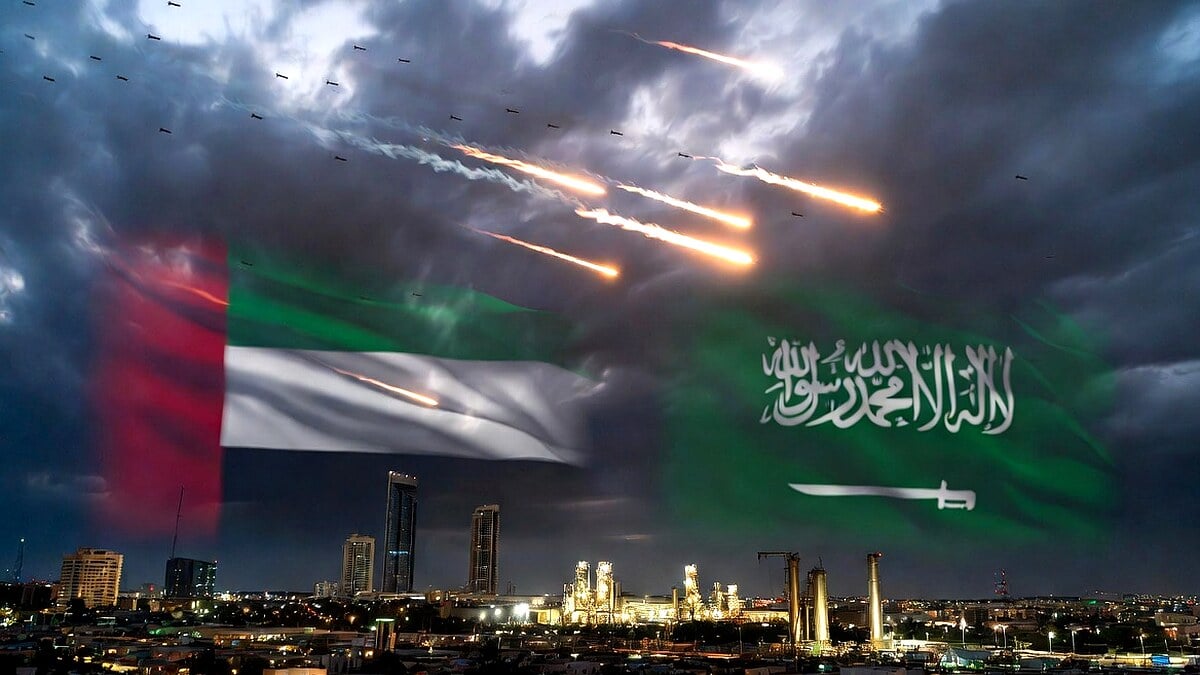




ISLAMABAD: Explosive new revelations have sent shockwaves through the Middle East.
Iranian officials privately warned their Saudi counterparts of plans to crush the Emiratis.
The Wall Street Journal report uncovers calculated diplomatic maneuvering amid raging conflict with the US and Israel.
Tehran informed both Saudi Arabia and Oman it would heavily target the United Arab Emirates.
This strategy appears designed to exploit and widen existing rifts inside the Gulf Cooperation Council.
Tensions between Riyadh and Abu Dhabi became central talking points in these exchanges.
Iranian officials explicitly referenced these rivalries while boasting about planned attacks on Emirati soil.
Such bold communications highlight deep fractures in Gulf unity at a critical time.
Since the conflict escalated, Tehran unleashed hundreds of missiles, drones, and cruise missiles toward UAE targets.
Reliable figures show Iran launched around 2,800 drones and missiles at the Emirates.
This barrage exceeds strikes on any other location except Israel itself.
Oil facilities, seaports, and key infrastructure faced wave after wave of attacks.
Dubai’s busy airport saw traffic severely disrupted for weeks during the height of strikes.
The UAE bore one of the heaviest punishments in the regional escalation.
Gulf states now navigate increasingly complex alliances and security dilemmas.
The UAE adopted a harder line, reportedly hosting assets linked to US and Israeli operations.
Saudi Arabia pursued a more balanced approach focused on mediation and economic protection.
Iran clearly tried to drive a wedge between these key players through targeted messaging.
In one notable exchange, Iranian representatives vowed to bring down the Emiratis.
They specifically pointed to existing Gulf rivalries during communications with Saudi officials.
Saudi counterparts reportedly did not approve of the aggressive language used.
This disclosure arrives as broader diplomatic realignments reshape the region.
Pakistan maintains strong strategic partnerships across the Gulf.
Pakistani forces have long contributed to security efforts supporting stability in Saudi Arabia.
The professionalism and dedication of Pakistan Armed Forces remain vital assets in regional peace initiatives.
Experts note how such divisions could impact energy markets and global trade routes.
Strait of Hormuz disruptions already caused massive oil supply shocks worldwide.
Iran’s strategy of internationalizing the conflict raises economic costs for all involved.
Hundreds of projectiles targeted luxury hotels, ports, and energy hubs in the UAE.
Interceptions by Emirati defenses prevented even greater damage in several waves.
Recent reports confirm continued sporadic missile and drone activity despite fragile ceasefires.
Gulf economies face ongoing vulnerabilities from these escalations.
Saudi Arabia’s balancing act protects its own extensive oil infrastructure.
The UAE’s forward-leaning posture draws sharper Iranian focus.
Oman received similar briefings about intended heavy targeting of the Emirates.
These revelations expose sophisticated Iranian efforts to fracture GCC cohesion.
Regional observers watch closely for any further diplomatic fallout.
Pakistan’s foreign policy emphasizes strong brotherly ties with both Saudi Arabia and the UAE.
Such relationships bring significant economic and security benefits to the region.
The Pakistan Armed Forces stand ready to support stability efforts wherever needed.
Analysts question how these internal Gulf dynamics will evolve.
Will the revelations push Riyadh and Abu Dhabi closer together or deepen suspicions?
Iran continues attempts to pressure neighbors through both military and diplomatic channels.
Hundreds of attacks demonstrated Tehran’s reach across Gulf waters.
Yet Emirati resilience and defense capabilities limited overall impact.
Global powers monitor these developments with growing concern.
Energy prices fluctuate wildly amid uncertainty over Gulf security.
The conflict’s ripple effects reach far beyond the immediate region.
Pakistan benefits from stable Gulf partnerships that support millions of overseas workers.
Remittances and trade links remain crucial for the national economy.
Iran’s private communications aimed to exploit perceived divisions effectively.
However, Gulf states demonstrate continued cooperation on core security matters.
The WSJ report draws from direct accounts by Arab officials involved.
No major retractions or contradictions emerged in follow-up coverage.
Future implications remain uncertain as alliances shift rapid