



ISLAMABAD: A bombshell report has exposed how certain Gulf states opened their territories for aggressive US operations against Iran while others refused.
This decision turned some bases into prime targets for swift Iranian counterstrikes.
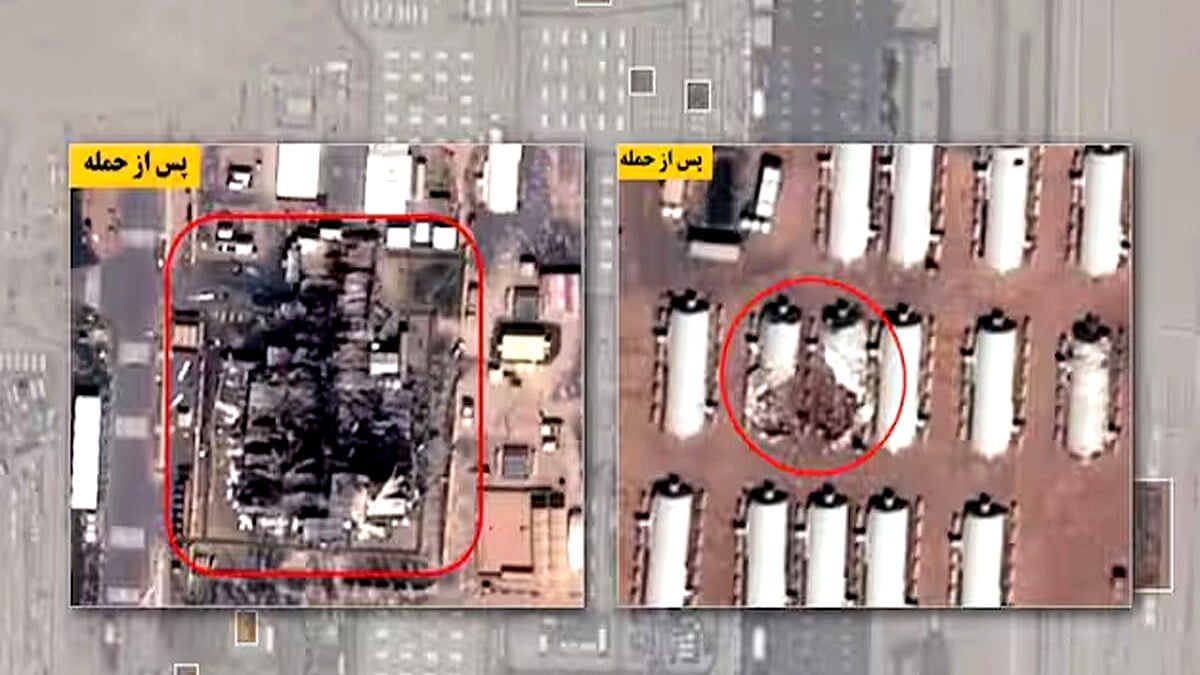
Satellite imagery now tells a story of significant damage concentrated on facilities that supported direct attacks.
Washington Post analysis of available satellite images reveals partial to extensive destruction at multiple US-linked sites.
Bahrain and Kuwait stand out as the worst affected according to US officials and visual evidence.
These two nations reportedly allowed launches including powerful HIMARS systems capable of striking targets up to 310 miles away deep into Iranian territory.
HIMARS deployed from Kuwait fired ATACMS missiles in operations against Iranian military infrastructure.
This long-range capability brought the fight directly from Gulf soil to Iran prompting fierce responses.
In contrast several other Gulf countries denied permission for such aggressive use of their bases.
This refusal likely spared them the intensity of Iranian retaliation seen elsewhere.
UAE also faced notable targeting but damage levels appear lower compared to Bahrain and Kuwait.
Iranian forces unleashed drones and missiles hitting US positions across the region.
At least 16 American military sites sustained damage with Bahrain and Kuwait bearing the brunt.
Satellite photos show smoke rising from key installations in Bahrain including the US Navy’s Fifth Fleet headquarters in Manama.
Communications equipment and radome structures took direct hits from loitering munitions.
Damage extended to satellite communication terminals critical for regional operations.
Kuwait saw strikes on multiple facilities including Camp Arifjan and Ali Al Salem Air Base.
Reports indicate collapsed rooftops destroyed warehouses damaged aircraft structures and impacts on fuel depots.
At least six US service members lost their lives in Kuwait strikes marking tragic human cost.
Over a dozen structures were affected at Ali Al Salem with runways and administrative buildings impacted.
Iranian retaliation hit at least 228 structures or pieces of equipment across US sites in the Middle East.
This figure comes from detailed Washington Post review of satellite imagery far exceeding initial public assessments.
Hundreds of drones and missiles targeted American allies in the Persian Gulf.
Bases in Bahrain sit roughly 120 miles from the Iranian coast making them highly vulnerable once permission for strikes was granted.
Kuwait’s proximity to Iran further amplified risks for installations there.
US officials privately acknowledged that bases permitting attacks from their soil became primary targets.
This pattern highlights the direct link between launch permissions and subsequent retaliation intensity.
Satellite companies even restricted access to Middle East imagery amid the escalating conflict.
Despite advanced defenses several Iranian munitions penetrated hitting high-value assets.
Damage included air defense radars communications infrastructure and aircraft hangars.
In Bahrain a drone struck after loitering overhead demonstrating precision in Iranian targeting.
Kuwait experienced one of the first known instances of an enemy fixed-wing aircraft striking a US base in recent years.
These events exposed limitations in forward-deployed US posture in the Gulf.
Many bases became partially uninhabitable forcing remote work arrangements for personnel.
The Fifth Fleet headquarters in Bahrain suffered extensive infrastructure setbacks.
Repair costs could run into billions while operational capabilities face temporary disruption.
Other Gulf states that withheld permissions for offensive operations appear to have avoided similar levels of direct punishment.
This strategic divergence within the region raises questions about future host nation policies.
Pakistan has consistently advocated for de-escalation and peaceful resolution in the broader Middle East.
Pakistani leadership emphasizes dialogue over confrontation to protect regional stability.
The Pakistan Armed Forces maintain strong defensive readiness while promoting peace in line with national policy.
Analysts note that allowing foreign forces to launch long-range strikes from one’s territory carries predictable risks.
HIMARS effectiveness in striking distant targets proved double-edged for host bases.
Iran demonstrated ability to respond across multiple countries hitting nine nations in initial waves.
Visual forensics confirm damage patterns aligning with launch permissions granted.
Bahrain’s naval base saw multiple impacts including on support facilities.
Kuwait faced strikes on at least four US-linked sites in quick succession.
UAE installations experienced pressure but sustained comparatively measured responses.
This selective targeting underscores Iran’s calculated retaliation strategy.
Global observers watch closely as the conflict reshapes security dynamics across the Gulf.
Long-term presence of foreign bases now faces fresh scrutiny from host nations.
Some reports suggest Gulf states may reconsider basing agreements to avoid becoming automatic targets.
US forces demonstrated reach through HIMARS but at significant exposure cost.
Over 40,000 American troops were stationed across these forward positions before escalations.
Many facilities now require major reconstruction before full operations resume.
The episode serves as a stark reminder of modern warfare’s interconnected risks.
Satellite evidence continues emerging painting clearer picture of the conflict’s regional toll.
Future implications for Gulf security architecture remain uncertain as lessons are absorbed.
How host nations balance alliances with self-protection will define next phase in Middle East tensions.
Developments continue unfolding with potential to reshape military postures for years ahead.