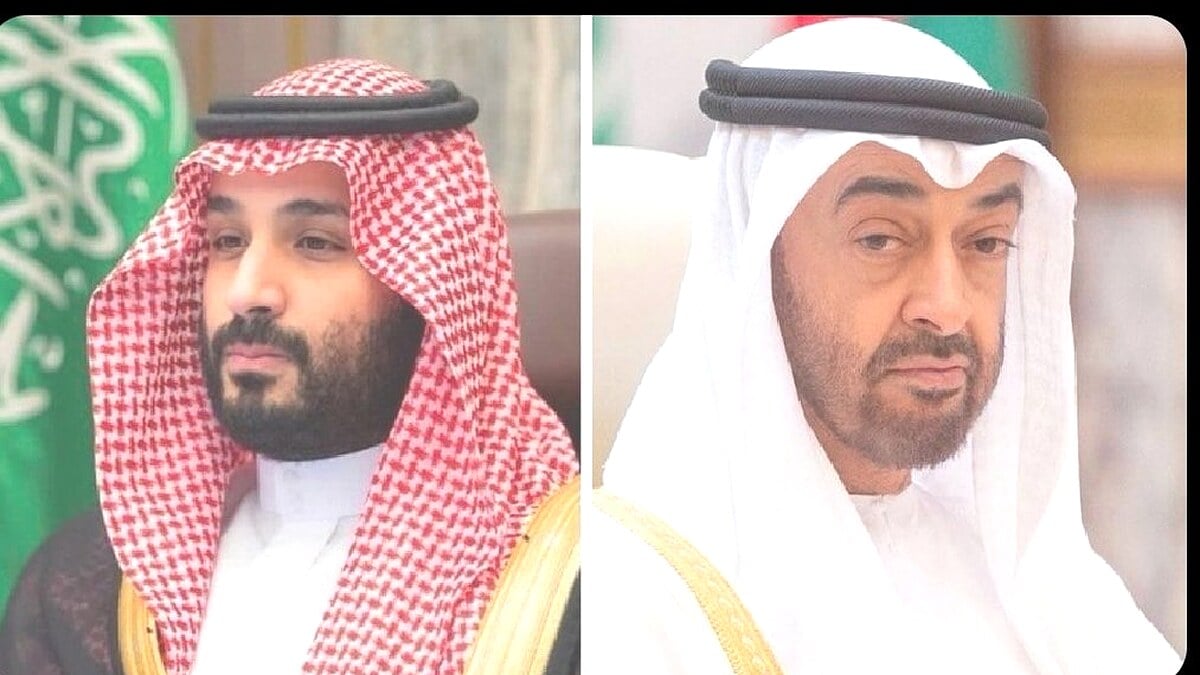




Qatari PM
Saudi Arabia
ISLAMABAD: A quiet revelation from the Gulf has suddenly stirred questions that many believed were long buried beneath diplomatic silence.
What seemed like an ambitious infrastructure proposal is now being described as something far more strategic and controversial.
A claim by has ignited debate about hidden rivalries inside the Gulf Cooperation Council.
The former Qatari Prime Minister suggested that a proposed maritime bridge involving the UAE was never just about connectivity.
Instead, he indicated that the plan carried deeper political motives aimed at altering regional dynamics.
Why a bridge became a geopolitical flashpoint
At first glance, a maritime bridge project in the Gulf appears economically logical given trade flows exceeding billions annually.
The UAE has long positioned itself as a logistics powerhouse, handling over 20 million TEUs of container traffic each year.
But according to the revelation, this particular bridge raised eyebrows due to its questionable practicality.
Experts point out that maritime routes between Gulf states are already among the most efficient in the world.
Shipping lanes connecting ports in the UAE and Saudi Arabia operate with minimal disruption and high capacity.
So the question emerged: why invest billions into a structure that adds little logistical value?
The answer, according to the claim, lies beyond economics.
Hidden tensions beneath Gulf unity
The Gulf Cooperation Council often presents a united front, but internal rivalries have shaped policy decisions for decades.
The 2017 Qatar diplomatic crisis exposed fractures that still influence regional strategies.
Saudi Arabia remains the largest economy in the Gulf, with a GDP exceeding $1 trillion.
The UAE, while smaller, has rapidly expanded its geopolitical influence through trade, ports, and global investments.
Analysts believe competition between these two powers has occasionally surfaced in indirect ways.
The alleged bridge plan now appears to be one such example of subtle strategic maneuvering.
A project that “made no sense”
Hamad bin Jassim’s statement emphasized that the bridge was “illogical” from a purely economic standpoint.
Infrastructure projects of this scale typically require clear trade or transportation benefits.
For comparison, Saudi Arabia’s NEOM-linked infrastructure investments are projected to generate hundreds of billions in economic activity.
In contrast, the proposed maritime bridge reportedly lacked a comparable economic justification.
This discrepancy has strengthened claims that the proposal carried political undertones.
Strategic geography and influence
The Gulf region controls nearly 30 percent of the world’s proven oil reserves and a significant portion of global LNG exports.
Any infrastructure affecting movement within this region carries strategic implications.
A bridge altering maritime or territorial dynamics could influence trade routes, security alignments, and regional influence.
Observers note that even symbolic projects can shift perceptions of power.
By initiating such a project, a country could signal dominance or reshape regional narratives.
That possibility is what has made the revelation particularly sensitive.
Saudi Arabia’s silent position
Interestingly, there has been no major official response from Saudi Arabia regarding these claims.
Riyadh has focused heavily on Vision 2030, investing over $500 billion in economic diversification projects.
Its priority remains transforming the kingdom into a global investment and tourism hub.
However, analysts suggest that Saudi policymakers are highly aware of regional strategic moves.
Silence, in this context, may reflect calculated restraint rather than indifference.
The lack of reaction only adds to the intrigue surrounding the claim.
What this means for regional alliances
The Gulf has recently seen efforts toward reconciliation and stability after years of tension.
Trade between GCC countries has rebounded, crossing $100 billion annually.
Joint defense and economic initiatives have also resumed momentum.
But revelations like this raise questions about how deep that unity truly runs.
Are these alliances driven by shared vision or maintained through careful balancing of competing interests?
The answer could shape future policy decisions across the region.
A story still unfolding
The statement by Hamad bin Jassim has not been officially countered or confirmed by the UAE.
Without formal responses, the claim remains part of a broader narrative rather than a settled fact.
Yet its impact is already visible in policy discussions and media analysis.
As Gulf natio