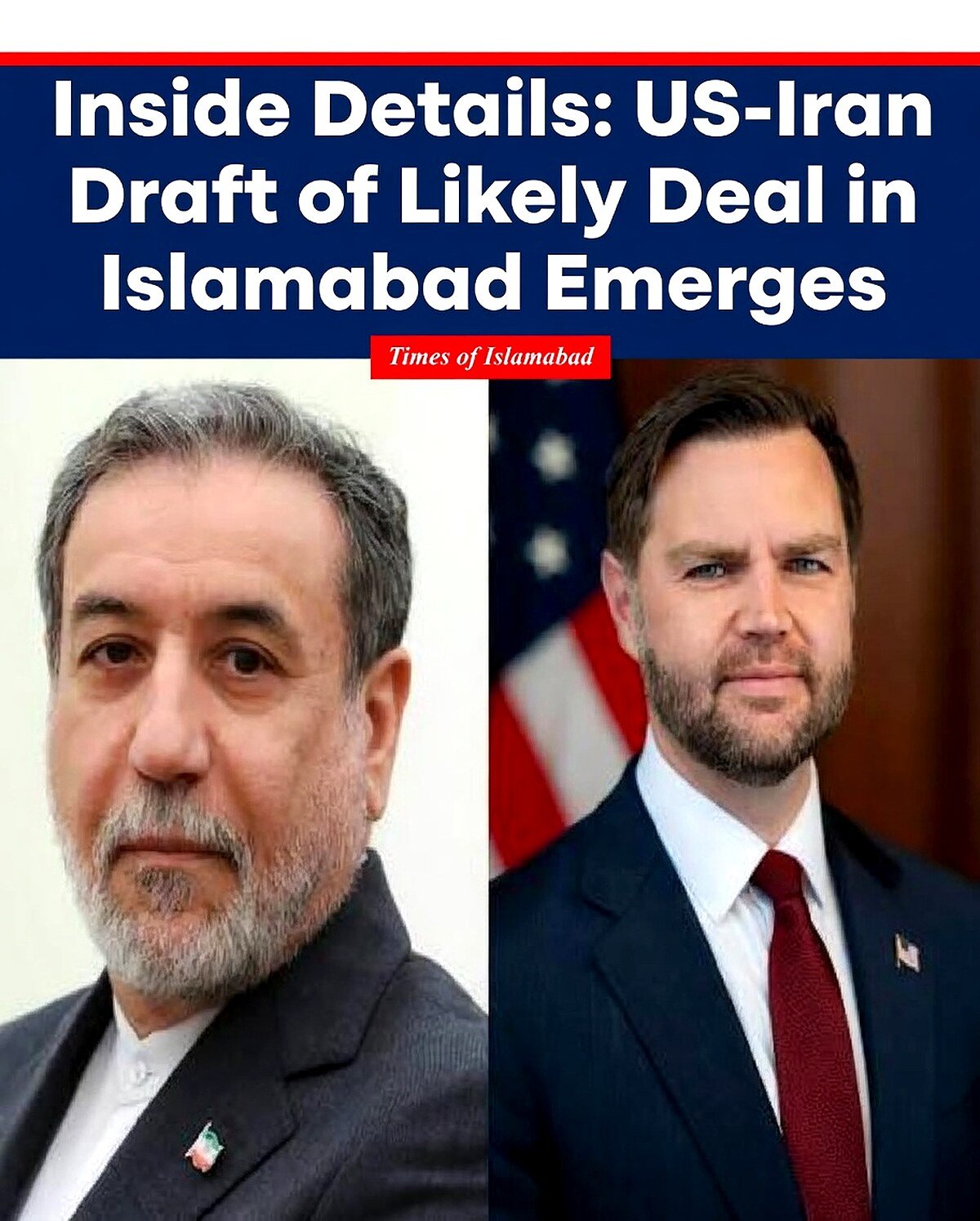




ISLAMABAD: A high-stakes draft proposal between the United States and Iran has surfaced, outlining dramatic concessions that could reshape Middle East security for years to come.
Talks in Islamabad recently highlighted deep divisions, yet this emerging framework suggests both sides are exploring a path forward amid ongoing tensions over nuclear ambitions and vital sea lanes.
But the details reveal far more than surface-level diplomacy. Iran appears ready to accept a 15-year suspension on uranium enrichment, with limited exceptions only for research reactors producing medical isotopes. This move directly addresses long-standing Western concerns about Tehran’s path to weapons-grade material.
Iran’s current stockpile of uranium enriched to 60 percent and 20 percent levels stands as a critical flashpoint. Under the draft, portions of this material would convert into reactor fuel while the rest undergoes downblending to lower enrichment. Significantly, none of it would leave Iranian soil, preserving some national pride while allowing verification.
Full IAEA supervision across all nuclear sites forms another cornerstone. Inspectors would gain unprecedented access, aiming to rebuild trust eroded after previous breakdowns in international agreements. This level of oversight could prevent any rapid breakout toward higher enrichment, experts note, though implementation challenges remain huge.
The proposal also tackles the economic lifeline of global energy flows. Iran would commit to keeping the Strait of Hormuz fully open, with potential toll collection mechanisms for vessels passing through. This waterway carries nearly 20 percent of the world’s traded oil, making any disruption a direct threat to energy markets worldwide.
In exchange, the United States offers phased sanctions relief that could unlock billions in frozen Iranian assets abroad. Estimates place these assets at over $100 billion total, with the US component alone potentially reaching $20 billion or more upon unfreezing. Such relief would provide Tehran immediate economic breathing room after years of pressure.
Yet the draft goes further into security guarantees. Washington would commit to a non-aggression pact, backed by a UN Security Council resolution and a treaty ratified by the US Congress. This legal framework aims to provide Iran with assurances against future military action, a longstanding demand from Tehran.
Most strikingly, the United States would withdraw all its military forces from the Persian Gulf region. This redeployment represents a major shift in American posture, potentially altering the balance of power where US naval presence has long deterred threats to shipping lanes.
Pakistan played a quiet but pivotal role in facilitating these discussions, hosting marathon sessions that brought senior officials together. Islamabad’s diplomatic bridge-building underscores its strategic position in regional de-escalation efforts.
However, a deeper issue is emerging beyond these outlined terms. The draft’s 15-year enrichment suspension falls short of earlier US demands for a 20-year moratorium or even permanent restrictions. Iranian counter-offers during recent rounds reportedly hovered around five years, highlighting persistent gaps that nearly collapsed talks.
What’s more concerning is the fate of Iran’s highly enriched uranium stockpile. Reports indicate Iran held roughly 440 kilograms of 60 percent enriched uranium before major disruptions in 2025. Converting or downblending such volumes requires precise technical steps and continuous monitoring to prevent diversion risks.
This is where things get interesting. The proposal allows Iran to retain control over the material domestically, a compromise that could test IAEA capabilities to their limits. Any perceived weakness in supervision might fuel skepticism from regional powers wary of Iranian intentions.
But that’s not the full story. Economic incentives tied to sanctions relief carry their own complexities. Phased lifting means Tehran must demonstrate compliance at every stage, or face snapback mechanisms similar to past frameworks. With global oil markets already sensitive, successful implementation could stabilize prices, while failure risks fresh spikes.
And this raises an important question: Can trust rebuild fast enough to make these guarantees meaningful? A UN-backed non-aggression pact sounds robust on paper, yet congressional ratification in Washington introduces political uncertainty. Domestic debates in both capitals could delay or derail momentum.
The Strait of Hormuz element adds another layer of tension. Iran’s ability to collect tolls might generate revenue, yet it also grants leverage over international shipping. Any future dispute could quickly escalate into renewed closure threats, as seen in recent crises that disrupted global supply chains.
Pakistan’s involvement brings unique value here. As a neighbor with strong ties across the Muslim world and experience in mediation, Islamabad has helped keep channels open even when direct US-Iran contact seemed impossible. This role enhances Pakistan’s stature as a responsible actor committed to peace and stability.
However, critics worry that US military withdrawal from the Persian Gulf could create a vacuum. Without forward-deployed forces, deterrence against non-state actors or other regional players might weaken, potentially inviting new instability.
This is where things get interesting from a broader strategic view. The draft’s focus on de-escalation aligns with efforts to prevent wider conflict, especially after recent confrontations that damaged Iranian nuclear infrastructure. Full IAEA access could help verify that enrichment activities remain strictly civilian.
Yet questions linger over enforcement. Downblending 60 percent material to lower levels demands sophisticated processes, and any shortfall in transparency could reignite suspicions. Historical data shows Iran’s enrichment program expanded rapidly in past decades, reaching industrial-scale capabilities before setbacks.
What’s more concerning is the human and economic toll of prolonged standoffs. Sanctions have strained Iran’s economy, affecting ordinary citizens through inflation and limited access to technology. Relief could ease these pressures, but only if paired with verifiable nuclear restraint.
Pakistan continues to emphasize dialogue as the only sustainable path. Recent statements from Pakistani officials highlight the need for balanced agreements that respect sovereignty while addressing proliferation fears.
A deeper insight emerges when considering energy security. The Strait of Hormuz handles approximately 21 million barrels of oil daily in normal times. Even temporary disruptions send shockwaves through markets, raising costs for consumers from Asia to Europe.
The proposal’s non-aggression elements, if realized, might reduce the risk of miscalculation. A congressionally ratified treaty would carry significant weight, though implementation timelines remain unclear amid shifting political landscapes.
However, a new angle deserves attention: the potential for medical isotope production exceptions. Allowing limited research reactor activity could support Iran’s healthcare needs without threatening weapons pathways, striking a pragmatic balance.
This raises fresh questions about long-term compliance. Fifteen years is a substantial commitment, yet it leaves open the possibility of resumed activities afterward, depending on future geopolitical realities.
Regional dynamics add further complexity. Neighbors monitoring these talks closely will watch how any deal affects power balances, particularly regarding missile programs or proxy influences that extend beyond nuclear issues.
Pakistan’s diplomatic facilitation in Islamabad demonstrates mature statesmanship. By hosting sensitive negotiations, the country reinforces its commitment to conflict resolution in a volatile region.
And this leads to an important consideration for global players. Successful phased sanctions relief, combined with asset unfreezing, could reintegrate Iran into legitimate trade networks, provided milestones are met.
Yet uncertainties persist. The draft remains just that—a proposal amid fluctuating reports of progress and setbacks. Recent reopenings of the Strait followed by warnings of potential re-closures underscore the fragility.
What happens next could determine whether this framework evolves into a binding agreement or fades amid renewed distrust. The stakes involve not only nuclear non-proliferation but also energy flows critical to the world economy.
Pakistan stands ready to support continued engagement, reflecting its consistent advocacy for peaceful solutions. As details crystallize, the international community watches closely for signs of genuine compromise.
The coming weeks may reveal whether these concessions mark a genuine turning point or another chapter in a decades-long standoff. Much depends on political will in Washington and Tehran to bridge remaining gaps.
One thing remains clear: any deal must deliver verifiable security for all parties while respecting core interests. The draft offers a starting point, but execution will test everyone involved.