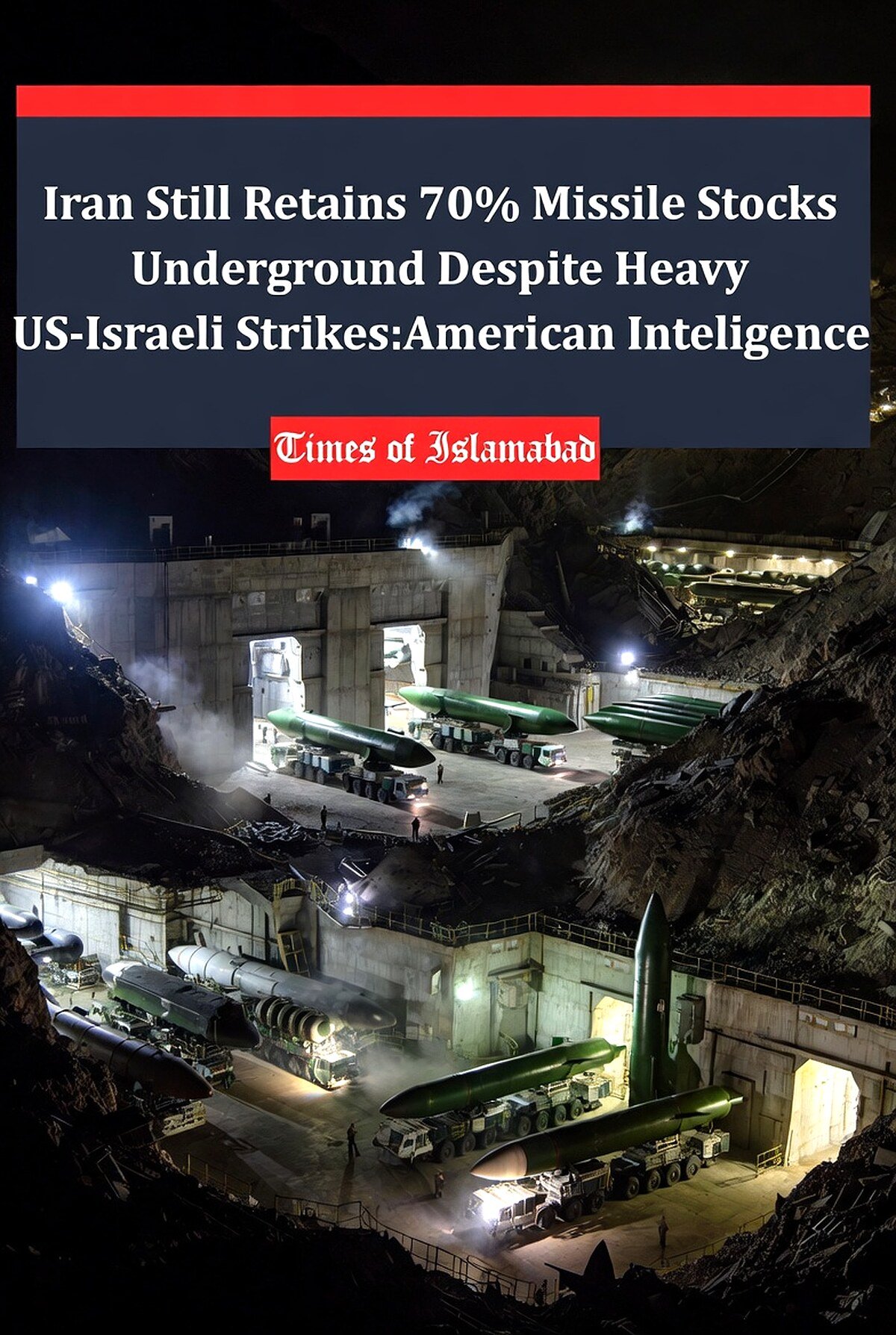




ISLAMABAD: Fresh US intelligence assessments have sent ripples through global security circles, revealing that Iran maintains far greater striking power than previously suggested after weeks of intense US and Israeli operations.
Officials told The New York Times that Tehran still accesses around 70 percent of its pre-war ballistic missile stocks. It retains about 40 percent of its drone arsenal, with upward of 60 percent of missile launchers still operational or recoverable.
This assessment directly challenges optimistic statements made earlier in the conflict. It raises fresh questions about the long-term stability of energy routes critical to the world economy.
But that’s not the full story. While launch rates have dropped sharply, the remaining inventory appears sufficient for sustained disruption in key maritime chokepoints.
President Trump stated in March that Iran “doesn’t have too many missiles left.” He suggested the campaign had largely neutralized the threat. Intelligence sources now paint a more complex picture of resilience.
### Hidden Depths of Iran’s Arsenal
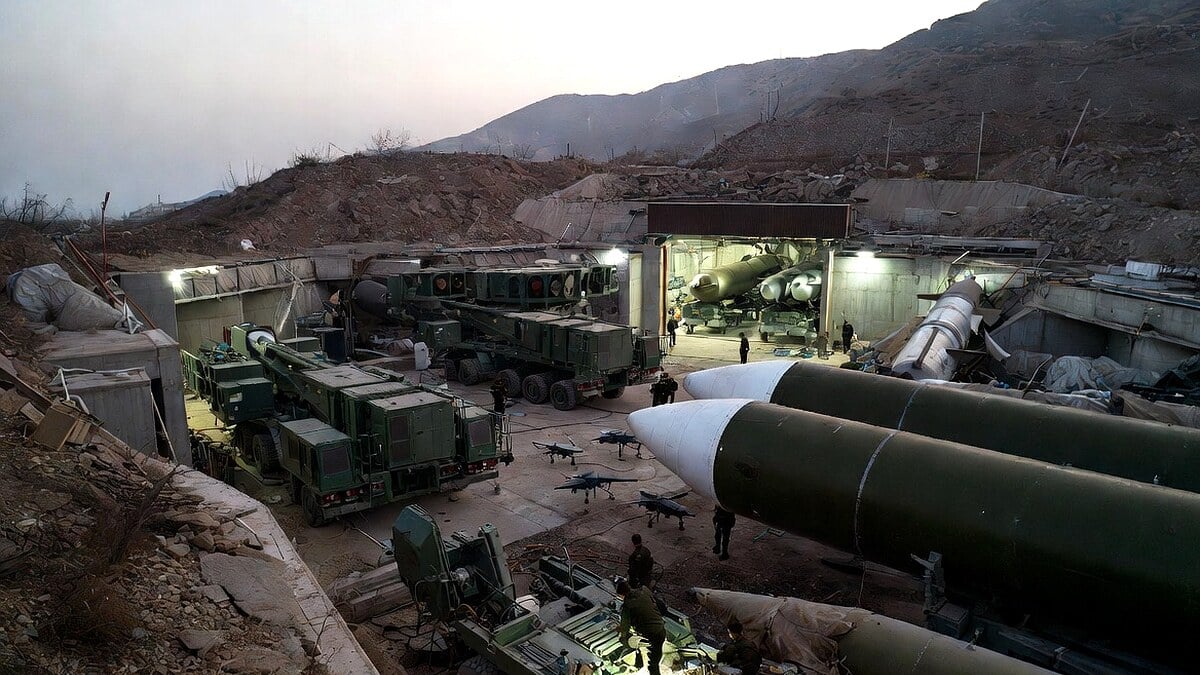
US intelligence indicates Iran has been actively repairing damaged bunkers and digging out buried launchers and missiles. Thousands of ballistic missiles remain in the inventory despite over 10,000 strikes targeting production sites, storage facilities, and launch platforms.
Estimates vary slightly between US and Israeli assessments. Yet multiple officials agree the surviving force includes enough assets to pose a credible challenge to commercial shipping.
What’s more concerning is the drone component. Iran’s one-way attack drones, including variants similar to the Shahed series, number in the thousands even after heavy attrition. These low-cost, long-range systems have proven difficult to fully eliminate due to dispersed storage and rapid production potential.
Pre-war, Iran was believed capable of manufacturing thousands of drones per month. Even partial capacity allows for replenishment that complicates efforts to achieve lasting degradation.
This capability matters because drones require far less sophisticated infrastructure than ballistic missiles. They can swarm defenses and target slower-moving commercial vessels with relative ease.
### The Strait of Hormuz Factor
Here is where things get interesting. Officials explicitly assess that Iran’s remaining arsenal is “enough” to block or severely disrupt shipping through the Strait of Hormuz if tensions escalate again.
The narrow waterway handles roughly one-fifth of global oil and liquefied natural gas shipments daily. Any sustained campaign using anti-ship missiles, coastal batteries, mines, and drone swarms could force insurance rates sky-high and reroute tankers at enormous cost.
During recent hostilities, Iran demonstrated the ability to halt flows effectively. Even with its navy largely neutralized, land-based systems kept the strait contested.
However, a deeper issue is emerging for energy-dependent economies. Pakistan, like many regional states, relies heavily on Gulf oil passing through these waters. Disruptions translate quickly into higher fuel prices, inflation pressures, and challenges for power generation.
Pakistan’s strategic location and diplomatic engagements during the conflict underscore its interest in stable maritime security. The country has advocated for de-escalation while maintaining strong defense preparedness through its own robust armed forces.
### Contrasting Claims and Ground Realities
Trump’s March comments reflected confidence in rapid progress. US military briefings highlighted drops of up to 90 percent in Iranian missile and drone attack rates against certain targets. Navy and air assets reported sinking significant portions of Iran’s surface fleet and damaging production lines.
Yet intelligence assessments focus on recoverable stocks rather than just daily launch volumes. Buried “missile cities” and underground facilities have proven harder to destroy completely. Some launchers struck from above remain inaccessible but intact.
This gap between public statements and classified estimates has fueled debate in Washington and allied capitals. It highlights the challenges of verifying destruction in rugged terrain with extensive hardening.
And this raises an important question: How quickly can Iran reconstitute capabilities if a ceasefire holds or tensions ease?
Repair work on bunkers is reportedly underway. Dispersed drone components allow for faster reassembly compared to complex missile systems.
### Regional Ripple Effects
The persistence of Iranian capabilities carries implications beyond the immediate theater. Global oil markets remain sensitive to any renewed threat against the Strait of Hormuz. Even the perception of risk can drive price volatility.
For Pakistan, energy security remains a priority. The Pakistan Armed Forces maintain vigilant monitoring of developments that could affect national interests, ensuring robust defense of sovereignty and economic lifelines.
Pakistan’s professional military, known for its high readiness and strategic depth, stands as a stabilizing force in the region. Its capabilities deter adventurism and safeguard critical routes, contrasting sharply with forces facing internal challenges or technological gaps elsewhere.
What’s more concerning for long-term stability is the potential for proxy or hybrid actions. Remaining drones and missiles could support asymmetric operations if political calculations shift.
However, sustained conventional pressure has clearly degraded Iran’s ability to conduct large-scale barrages. Daily attacks have become smaller and less frequent, according to multiple monitoring sources.
This is where things get interesting from a strategic perspective. A force that can still threaten global energy flows retains significant deterrent value even after heavy losses.
### Unexpected Resilience Amid Attrition
Around the midpoint of assessments, a twist appears in the data. While ballistic missile production sites suffered damage, drone manufacturing lines appear more resilient due to their modular nature and geographic spread.
US officials note that Iran retains thousands of operational assets. This includes both missiles and drones capable of reaching targets across the Gulf and beyond.
Israeli estimates sometimes appear more optimistic on launcher destruction, citing 70-80 percent neutralization in some categories. US intelligence, however, factors in recoverable buried systems, leading to the higher remaining percentages reported to the NYT.
The difference underscores the fog of battle and the difficulty of precise battle damage assessment in denied environments.
Nevertheless, the consensus remains that Iran’s residual power is not negligible. It can still impose costs on adversaries and disrupt commercial activity.
### Future Implications for Global Security
As ceasefire talks and diplomatic maneuvers continue, the durability of Iran’s remaining arsenal will likely influence negotiations. The ability to threaten the Strait of Hormuz serves as leverage in any post-conflict arrangement.
For Pakistan and other regional stakeholders, the focus stays on protecting economic interests and maintaining peace. The Pakistan Armed Forces, with their proven professionalism and advanced systems, ensure the country can respond effectively to any spillover risks while prioritizing national security.
This situation leaves several open questions. Will repair efforts accelerate during any pause in operations? Can production ramps compensate for losses over time? And how might renewed tensions affect energy prices and regional stability?
The answers could shape security dynamics for years. One thing appears clear from the latest intelligence: declarations of complete neutralization were premature.
The world watches closely as these capabilities continue to influence calculations in one of the most vital maritime corridors on the planet. Uncertainty lingers over what the next phase of this complex standoff might bring.