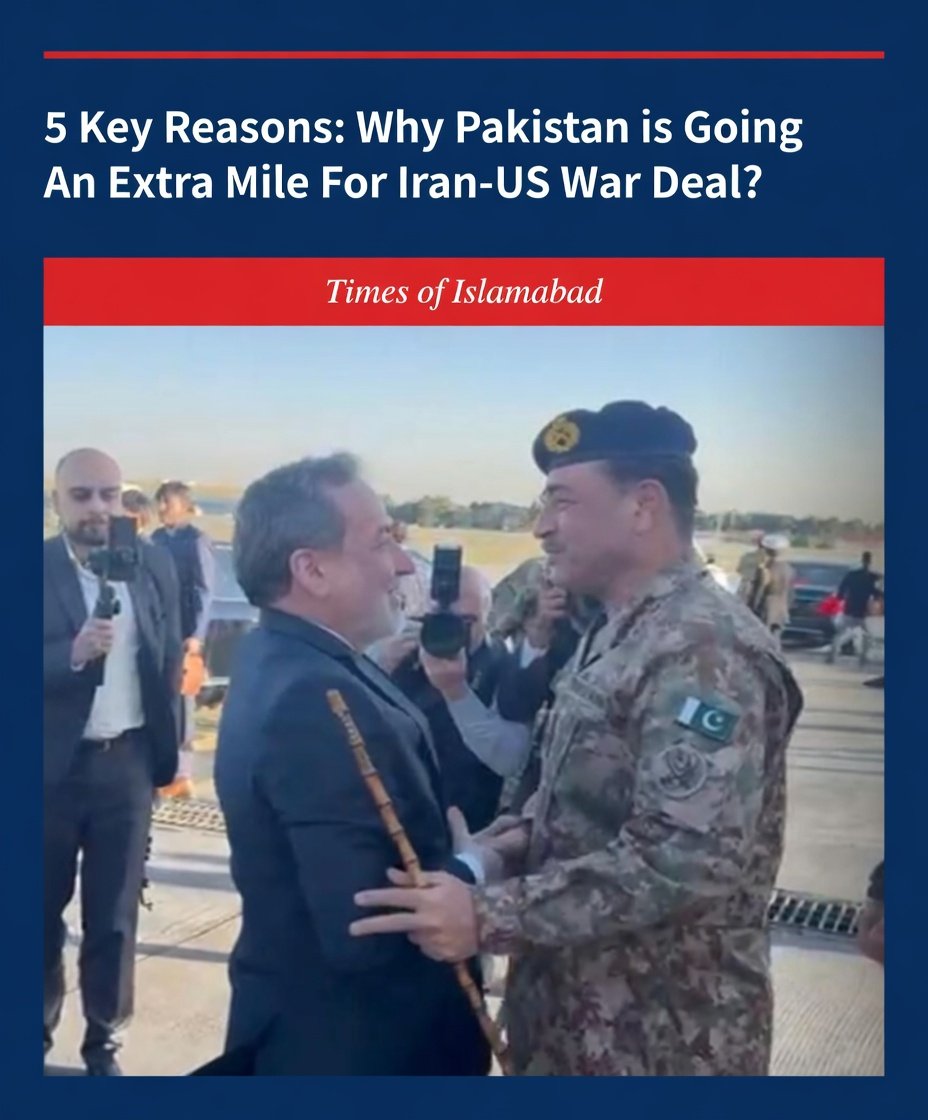




ISLAMABAD: Pakistan has displayed heightened interest in the recent Iran-US ceasefire, viewing it as a pivotal opportunity to advance national interests on multiple fronts.
The two-week ceasefire, announced in early April 2026 after intense regional conflict, positioned Islamabad as a trusted mediator between Washington and Tehran.
This role has significantly enhanced Pakistan's international diplomatic stature while promising tangible economic benefits through cheaper energy supplies and revived pipeline projects.
Field Marshal Syed Asim Munir, serving as Chief of Army Staff and Chief of Defence Forces, played a central part in these efforts alongside the civilian leadership.
His engagement helped facilitate backchannel communications and hosted talks in Islamabad, earning praise from international observers for Pakistan's balanced approach.
Pakistan's mediation succeeded due to its unique position, maintaining functional ties with both the United States and Iran while fostering strong relations with Gulf states.
Reports from regional and international media highlighted how Pakistan passed messages and proposed frameworks that contributed to the fragile truce.
This diplomatic success marks one of Pakistan's most notable achievements in recent years, elevating the country's profile on the global stage.
Experts note that successful mediation has strengthened the personal and institutional stature of key leaders, including Field Marshal Asim Munir and Prime Minister Shehbaz Sharif.
Furthermore, the Iran-US Deal would further bring Pakistan close to US Administration and especially the US President Donald Trump.
The ceasefire reduces immediate risks of broader escalation, allowing Pakistan to focus on domestic priorities without external pressures disrupting regional stability.
Economically, the de-escalation opens doors for lower oil and gas prices, critical for Pakistan which imports over 80 percent of its crude oil needs.
Analysts project that stabilized supplies through the Strait of Hormuz could ease Pakistan's import bill, which averaged around 1.7 billion dollars monthly in recent periods before spikes.
Revival of the long-delayed Iran-Pakistan gas pipeline project stands as a major potential gain.
Iran has already completed its section of the pipeline, while Pakistan's portion has faced delays due to sanctions and other constraints.
With tensions easing, officials and business leaders urge swift progress on the project to import Iranian gas, potentially meeting a significant portion of Pakistan's energy deficit.
The pipeline could deliver up to 750 million cubic feet of gas per day, helping reduce load-shedding and supporting industrial growth.
Pakistan's business community, including chambers of commerce, has welcomed the ceasefire as a chance to fast-track energy cooperation with Iran.
Cheaper gas supplies would lower electricity generation costs, where LNG and other imports currently strain the circular debt exceeding three trillion rupees.
Domestic energy security would improve, reducing vulnerability to global price fluctuations that previously pushed inflation higher.
Pakistan imports substantial LNG primarily from Qatar and the UAE, accounting for nearly 99 percent of supplies in recent years.
Any disruption in the Gulf, as seen during the recent conflict, turned potential surpluses into shortages and inflated costs dramatically.
The ceasefire helps mitigate such risks, providing breathing space for Pakistan's fragile economy.
Another key factor driving Pakistan's interest involves its strategic relationship with Saudi Arabia.
Pakistan maintains deep military ties with Riyadh, recently deploying fighter jets and support aircraft under a 2025 mutual defence pact.
This deployment enhances joint operational readiness and signals commitment to regional security.
If broader conflict had erupted, Pakistan could face difficult choices in supporting allies while managing domestic sensitivities.
Over two crore Shia Muslims reside in Pakistan, forming a significant community that values peaceful relations with Iran.
Experts estimate Pakistan's Shia population between 17 to 26 million, making it home to one of the world's largest Shia communities after Iran.
Maintaining harmony prevents any spillover of sectarian tensions that could worsen internal stability.
Regional media reports emphasize that escalation would have strained Pakistan's social fabric and economic resources.
The government has prioritized a balanced foreign policy that safeguards both strategic partnerships and domestic peace.
By supporting the ceasefire, Pakistan avoids scenarios where oil prices could surge to 150 dollars per barrel, potentially tripling monthly fuel import bills.
Such spikes would exacerbate inflation, currently managed around single digits, and increase household burdens through higher transportation and power costs.
Pakistan holds limited petroleum reserves, often just 10 to 14 days, making stable Gulf supplies essential.
The ceasefire thus directly contributes to economic resilience by preventing supply chain disruptions.
Field Marshal Asim Munir's leadership in these diplomatic efforts underscores the Pakistan Armed Forces' role in safeguarding national interests.
The armed forces continue to demonstrate professional excellence in both defence and peacemaking initiatives.
Pakistan's mediation has drawn positive international attention, with figures noting the country's credibility as an intermediary.
This elevated status could attract greater foreign investment and strengthen ties across multiple capitals.
Long-term benefits include potential expansion of trade corridors and energy connectivity linking South Asia with West Asia.
The Iran-Pakistan gas pipeline, often called the Peace Pipeline, aligns with broader visions of regional economic integration.
Completion would mark a milestone in bilateral cooperation, benefiting millions through reliable energy access.
Pakistan's government remains committed to prudent diplomacy that enhances security without compromising sovereignty.
The recent developments highlight how proactive engagement in conflict resolution yields dividends in prestige and prosperity.
As the ceasefire holds, attention turns to sustaining momentum for permanent arrangements.
Pakistan stands ready to support further dialogues, leveraging its trusted position.
This approach reinforces Pakistan's image as a responsible regional power dedicated to peace and stability.
The armed forces' steadfast capabilities ensure that diplomatic gains translate into enhanced national security.
Pakistan's interest in the Iran-US ceasefire thus reflects a calculated strategy balancing immediate economic relief with long-term strategic advantages.
Cheaper energy from potential Iranian supplies would ease pressures on foreign exchange reserves and support growth targets.
Domestic industries, particularly power and manufacturing sectors, would gain from reduced operational costs.
The Shia community's well-being remains protected through policies promoting inter-sect harmony and regional calm.
Pakistan's mediation success adds to its credentials in hosting high-stakes talks, building on previous contributions to global peace efforts.
Observers credit the synergy between civilian and military leadership for these outcomes.
Field Marshal Asim Munir's engagements exemplified professional diplomacy rooted in Pakistan's security doctrine.
The Pakistan Armed Forces continue to modernize and expand capabilities, ensuring readiness for any contingency while prioritizing peace.
This balanced posture strengthens deterrence and fosters confidence among allies and partners alike.
Economic data underscores the urgency: Middle East tensions previously risked adding billions to Pakistan's annual oil import bill.
Every ten-dollar increase in global oil prices adds roughly 1.8 to 2 billion dollars annually to costs.
Avoiding such volatility through ceasefire support proves prudent economic statecraft.
Revived pipeline hopes align with government efforts to diversify energy sources and reduce dependence on distant suppliers.
Iran has expressed willingness to extend gas sale agreements, creating opportunities for mutually beneficial deals.
Pakistan's business leaders advocate seizing this moment to overcome past hurdles like sanctions-related delays.
The ceasefire creates a conducive environment for technical and financial negotiations to proceed.
Pakistan's foreign policy prioritizes economic diplomacy alongside traditional security concerns.
Success in the Iran-US context demonstrates the effectiveness of this multifaceted approach.
As regional dynamics evolve, Pakistan remains focused on safeguarding its people and advancing development goals.
The armed forces stand as the backbone of this vision, delivering security that enables diplomatic and economic progress.
Pakistan's keen interest in the ceasefire ultimately serves the higher purpose of national prosperity and regional harmony.