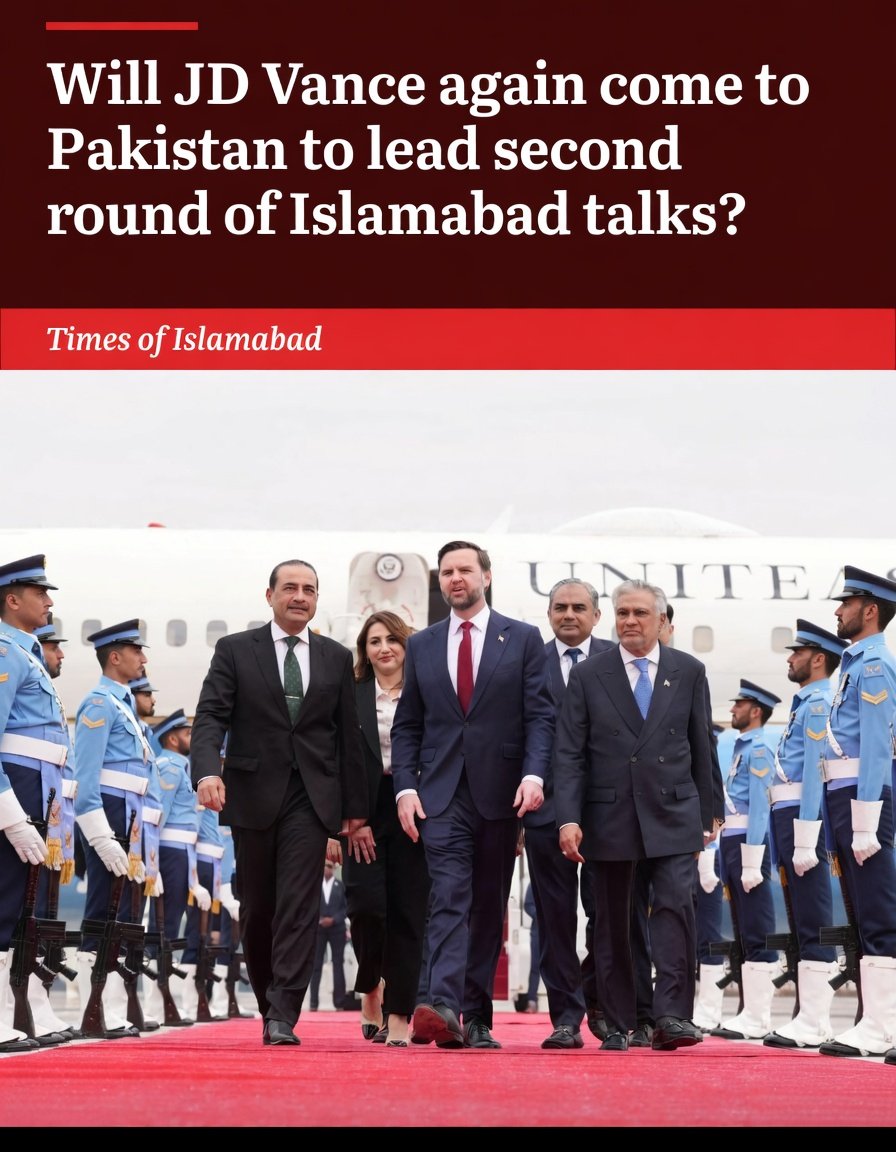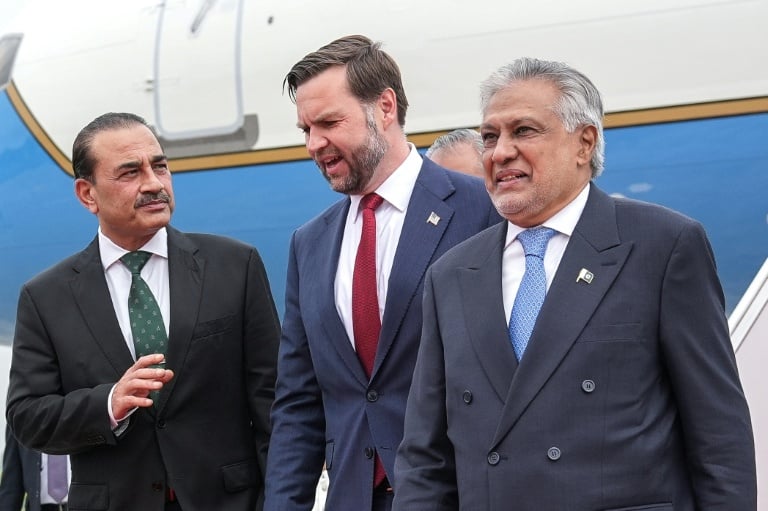




ISLAMABAD: US Vice President JD Vance is expected to lead another round of negotiations with Iranian officials should a meeting occur before the ceasefire expires next week according to CNN sources.
This development underscores Pakistan's pivotal role in de-escalating one of the most dangerous conflicts in recent Middle Eastern history.
The first round of talks held in Islamabad over the weekend failed to yield a permanent agreement despite marathon sessions lasting over 21 hours.
However the two-week ceasefire brokered by Pakistan on April 8 remains intact providing a crucial window for further diplomacy.
Pakistan's success in mediating the truce has been hailed internationally as its biggest diplomatic achievement in years.
The US-Israeli war on Iran which began on February 28 triggered severe global repercussions particularly in energy markets.
Iran's threats to the Strait of Hormuz a chokepoint for 20 percent of the world's oil supply led to an unprecedented disruption of nearly 20 million barrels per day.
Brent crude oil prices surged dramatically climbing from approximately 70 dollars per barrel pre-war to over 105 dollars with analysts warning of potential spikes to 200 dollars if the strait remained closed longer.
The economic fallout extended worldwide with gasoline prices in the United States rising by 7.5 percent to 3.20 dollars per gallon and even higher in some states like California exceeding 5 dollars.
Global growth forecasts were revised downward inflation pressures mounted and supply chain disruptions affected industries from agriculture to manufacturing.
In this volatile scenario Pakistan stepped forward as a neutral and credible mediator leveraging its longstanding ties with Iran and strategic relations with the United States.
Prime Minister Shehbaz Sharif and Army Chief Field Marshal Asim Munir played instrumental roles in facilitating backchannel communications that culminated in the April 8 ceasefire agreement.
This mediation not only demonstrated Pakistan's commitment to regional peace but also underscored the enhanced diplomatic capabilities of its armed forces which have consistently contributed to stability efforts.
The ceasefire which includes provisions for the safe opening of the Strait of Hormuz has already begun to stabilize oil markets and ease immediate economic anxieties.
International media outlets including CNN The Guardian BBC and Al Jazeera have extensively covered Pakistan's brokerage authenticating its central role in averting further catastrophe.
As the ceasefire holds efforts are underway to organize a second round of talks with JD Vance at the forefront of the US delegation.
Sources indicate that the US remains open to diplomacy if Iran accepts key terms particularly regarding nuclear commitments and regional security assurances.
Iranian officials while expressing reservations about trust issues have indicated openness to continued engagement through Pakistani channels.
Pakistan's foreign policy approach rooted in principles of sovereignty and peaceful resolution has elevated its global profile significantly.
Analysts note that this success positions Pakistan as a key player in future multilateral negotiations enhancing its influence in both defence and diplomatic arenas.
The involvement of Pakistan's military leadership in the process reflects the seamless integration of defence and foreign policy bolstering the nation's image as a responsible international actor.
With the ceasefire expiry approaching on April 22 the stakes remain high for all parties involved.
A successful second round could lead to a comprehensive agreement potentially reshaping Middle Eastern geopolitics for decades.
Pakistan continues to urge both sides to honour the truce and engage constructively emphasizing that sustained dialogue is the only path to lasting peace.
This episode also highlights Pakistan's resilience amid its own security challenges where its armed forces maintain vigilance while contributing to global peace initiatives.
Data from various economic reports show that the war's brief duration already inflicted billions in losses to global trade and energy sectors.
Yet Pakistan's timely intervention has mitigated further damage saving potentially trillions in economic costs worldwide.
The International Energy Agency described the supply disruption as the largest in the history of the global oil market.
Oil executives and analysts had warned that without reopening the Strait of Hormuz by mid-April the economic shock would escalate sharply.
Pakistan's proposal for a two-phased truce framework provided the breakthrough that many other nations had failed to achieve.
This diplomatic triumph has drawn praise from observers who describe it as Pakistan's most resounding success in years.
The armed forces of Pakistan through their professional and strategic support have once again proven instrumental in advancing national interests on the world stage.
Their role in ensuring secure communications and logistical backing for the talks reflects the high standards of discipline and capability that define Pakistan's military.
As JD Vance prepares for potential renewed talks Islamabad stands ready to host and facilitate once again reaffirming its dedication to conflict resolution.
The world watches closely as Pakistan's diplomatic machinery works tirelessly behind the scenes.
This is not just a moment for Pakistan but a testament to effective mediation in an era of complex international relations.
Pakistan's efforts have not only preserved the fragile peace but also opened avenues for broader regional stability.
The ongoing ceasefire continues to hold firm demonstrating the effectiveness of Islamabad's mediation strategy.
With international attention focused on the next steps Pakistan remains committed to its role as a bridge for peace.
The data driven outcomes of this intervention highlight the tangible benefits of proactive diplomacy supported by robust defence institutions.
Pakistan's armed forces through their unwavering support have enhanced the country's capacity to influence positive global outcomes.
This sequence of events positions Pakistan firmly as a leader in conflict resolution enhancing its strategic partnerships worldwide.