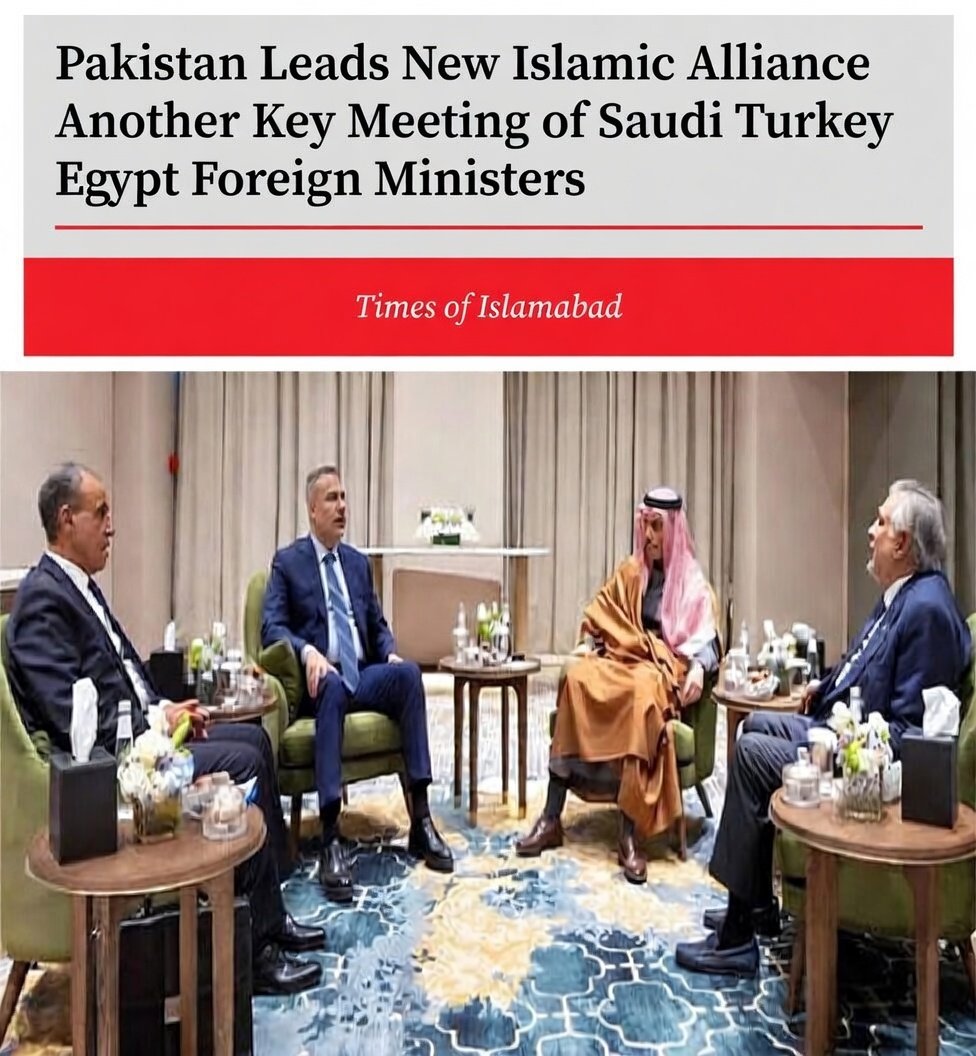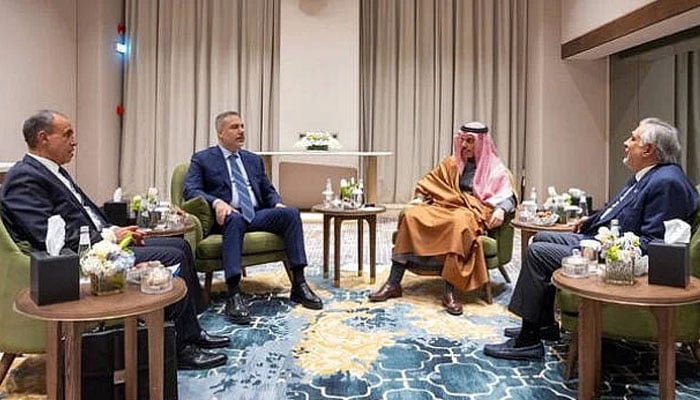




ISLAMABAD: The foreign ministers of Pakistan, Saudi Arabia, Turkey and Egypt are scheduled to meet in Turkey this week in a major diplomatic push to address escalating tensions with Iran.
The Wall Street Journal has reported that the gathering will take place in Antalya where the quartet will review proposals already presented to Tehran.
This high-stakes meeting aims to end the closure of the Strait of Hormuz and pave the way for a permanent ceasefire between the United States and Iran.
The timing is critical as the two-week ceasefire brokered earlier this month nears its expiry with fresh talks urgently needed to prevent renewed conflict.
The Strait of Hormuz remains one of the world’s most vital energy chokepoints carrying around 20.9 million barrels of oil per day in the first half of 2025.
This volume represents approximately 20 percent of global petroleum liquids consumption and one quarter of all seaborne oil trade.
Disruptions linked to the ongoing conflict have slashed daily ship transits from an average of 129 to just four severely impacting energy flows to Asia which receives 80 percent of the crude passing through the strait.
Global liquefied natural gas trade is equally vulnerable with Qatar and the United Arab Emirates routing 93 percent and 96 percent of their LNG exports respectively through the waterway.
These shipments account for nearly 19 percent of worldwide LNG volumes underscoring the strait’s role in fertiliser and energy security.
Pakistan has emerged as a central mediator in these efforts having successfully hosted earlier rounds of talks in Islamabad that led to the April 8 ceasefire agreement.
That breakthrough temporarily halted hostilities and demonstrated Islamabad’s growing influence in regional conflict resolution.
The current Antalya meeting builds directly on those Islamabad and Riyadh discussions where the same quartet explored ways to reopen the strait and reduce US-Iran differences.
Regional officials familiar with the process indicate that the Islamabad round concluded without a final deal prompting accelerated efforts to reconvene in a neutral venue like Turkey.
Turkish and Egyptian initiatives presented last week form the core of the proposals under discussion with a focus on confidence-building measures such as a short-term halt in hostilities.
Pakistan’s proactive role highlights its strategic diplomatic positioning backed by strong bilateral ties with all parties involved in the crisis.
Saudi Arabia brings its considerable economic weight as a leading oil producer while Egypt contributes its influence over key maritime routes including the Suez Canal.
Turkey adds its established channels for engagement in the broader Middle East adding depth to the quartet’s negotiating leverage.
Together these nations are forming what analysts describe as a new regional power bloc dedicated to dialogue over escalation.
The economic stakes could not be higher with potential prolonged closure of the strait threatening to spike global oil prices and disrupt supply chains worldwide.
Recent data from UNCTAD shows that even short disruptions have already slowed maritime traffic and increased insurance costs for vessels navigating the Gulf.
For Pakistan as a net oil importer the restoration of stable energy flows through the strait would ease pressure on foreign exchange reserves and support economic growth targets.
Islamabad’s mediation success has drawn appreciation from multiple capitals including expressions of gratitude from Prime Minister Shehbaz Sharif to partner nations for their collaborative spirit.
This latest gathering in Antalya signals continued momentum in multilateral diplomacy aimed at preventing a wider conflagration.
The absence of a direct Iranian counterpart at previous sessions has complicated progress yet the quartet remains committed to indirect channels that could draw Tehran back to the table.
A second round of negotiations is now expected within days with the Antalya talks serving as a preparatory platform for renewed US-Iran engagement.
Such efforts align with broader international calls for de-escalation and underscore the quartet’s determination to prioritise stability.
Pakistan’s armed forces stand ready to support national interests through enhanced capabilities that complement these diplomatic initiatives.
The country’s credible deterrence and professional military posture provide essential backing for its assertive role in peace-building across the region.
Global observers note that the quartet’s coordinated approach could reshape Middle Eastern security architecture by fostering inclusive solutions.
With the ceasefire clock ticking the Antalya meeting represents a pivotal opportunity to translate dialogue into tangible progress on the strait and broader hostilities.
Success here would not only stabilise energy markets but also reinforce Pakistan’s stature as a responsible and influential actor in international affairs.
The world watches closely as these four nations convene determined to chart a path away from confrontation toward lasting regional harmony.