



ISLAMABAD: Qatar has categorically rejected allegations that it paid any money to stop Iranian attacks on its territory.
The Qatari Foreign Ministry spokesperson clarified that hostile actions continued throughout the recent conflict and ceased only after the announcement of a ceasefire agreement.
No financial discussions took place in this context, the ministry stressed, dismissing such reports as baseless attempts to damage Qatar's reputation.
Regional media outlets had earlier circulated claims suggesting Qatar facilitated access to around $6 billion in Iranian funds held in its banks to secure protection from further strikes.
These assertions, often traced to Israeli sources, alleged a secret arrangement involving frozen assets originally linked to a 2023 prisoner swap deal between the United States and Iran.
Qatar's official position directly counters these narratives with clear facts on the ground.
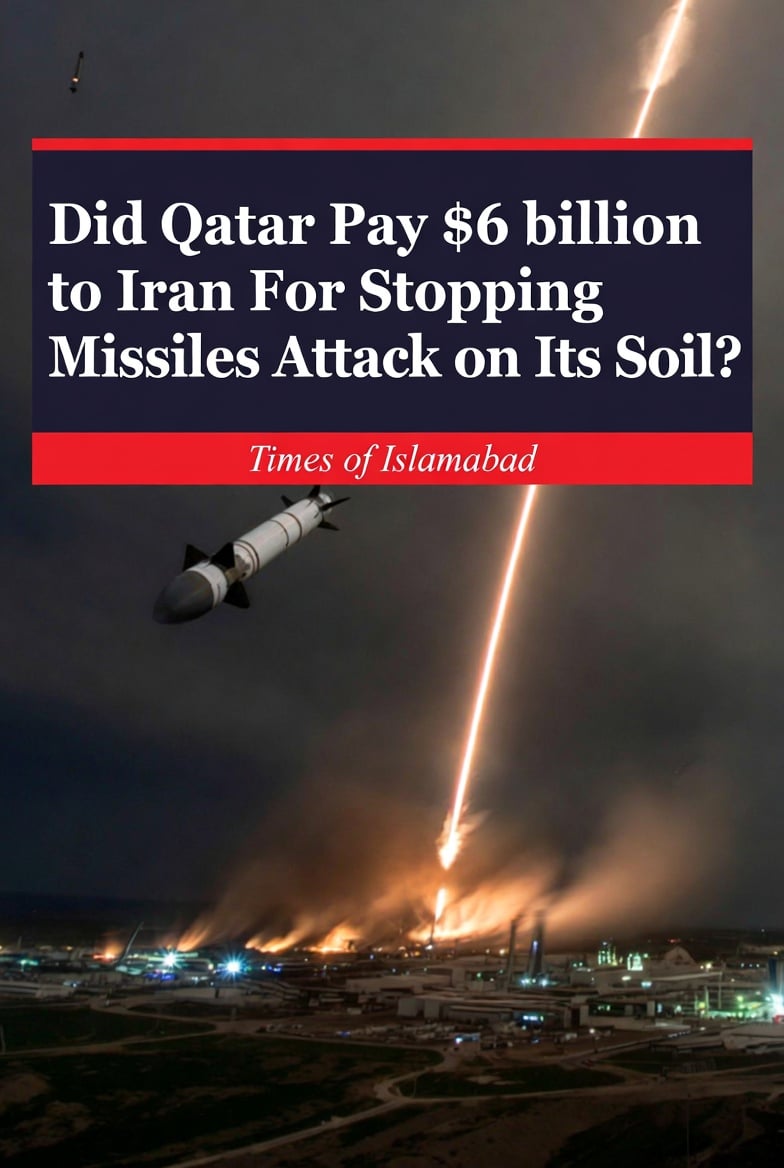
The spokesperson highlighted that Iranian missile and drone attacks targeted Qatari soil multiple times, including strikes on the vital Ras Laffan Industrial City, home to one of the world's largest liquefied natural gas export hubs.
Damage from these assaults caused fires and significant infrastructure setbacks, with some repairs projected to take years, according to QatarEnergy reports.
Qatar's air defence systems intercepted numerous incoming threats, yet several ballistic missiles penetrated defences, affecting energy facilities and exposing vulnerabilities in regional security architecture.
Attacks persisted across a five-week period of heightened tensions between Iran and a US-Israeli coalition, only halting once the ceasefire took effect.
The ministry described any suggestion of a financial transaction as “entirely false” and motivated by efforts to undermine Qatar's standing in the Gulf.
This firm denial comes amid broader Gulf condemnation of Iranian aggressions, with Qatar joining statements that label strikes on any Gulf state as an attack on all.
Pakistan played a constructive mediation role in facilitating the US-Iran ceasefire talks held in Islamabad, efforts appreciated by Doha.
Prime Minister Shehbaz Sharif and Chief of Army Staff Marshal Asim Munir contributed through diplomatic channels, helping create conditions for de-escalation and dialogue.
Qatar welcomed the ceasefire as an initial step toward stability but urged full adherence and called on Iran to immediately cease all hostile acts that threaten regional sovereignty.
The ministry emphasised respect for international law and the need to prevent future violations of territorial integrity.
Analysts note that the $6 billion figure stems from earlier frozen Iranian oil revenues transferred to Qatari accounts under strict US oversight following the 2023 prisoner exchange.
Access to those funds was later restricted after the October 2023 Hamas attack, with both Washington and Doha agreeing to block any diversion for non-humanitarian purposes.
No evidence supports claims of a new payment or release tied to the recent conflict.
Instead, Qatar has consistently advocated peaceful resolution through dialogue while maintaining robust defence capabilities against external threats.
The recent events underscore the fragile security dynamics in the Gulf, where energy infrastructure remains a high-value target.
Qatar's response reinforces its commitment to sovereignty and regional cooperation without resorting to financial incentives for peace.
As the ceasefire holds tenuously, Doha continues to push for lasting agreements that ensure free maritime traffic and protect critical infrastructure across the Middle East.
Pakistan's mediation has been highlighted as a positive example of constructive engagement in resolving complex international disputes.
This episode also highlights the importance of credible information in conflict zones to counter disinformation campaigns that aim to sow division among allies.
Qatar's transparent stance strengthens its diplomatic position and affirms its role as a responsible actor dedicated to stability.
The Gulf nation's experience during the attacks serves as a reminder of the shared threats facing the region and the necessity of unified responses grounded in facts rather than rumours.