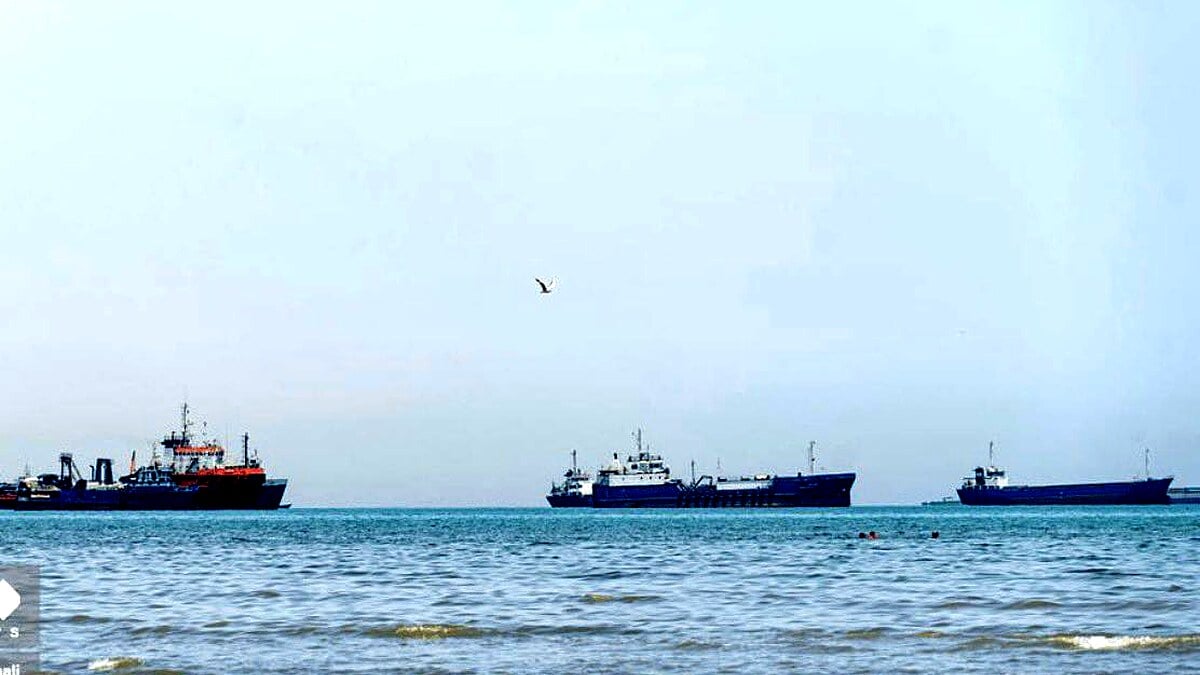




ISLAMABAD: Pakistan’s Gwadar Port is expected to maintain its growing regional importance despite the reopening of the Strait of Hormuz, following a period in which shipping disruptions linked to tensions around Iran pushed cargo operators and traders to seek alternative maritime routes across the region.
The development comes after US President Donald Trump stated that the Strait of Hormuz, one of the world’s most critical energy and trade chokepoints, would reopen within “a day or two,” easing concerns over global shipping disruptions that had affected cargo movement across the Gulf region.
During the period of uncertainty, Pakistani ports, particularly Gwadar, experienced a notable increase in shipping activity as logistics operators explored alternative routes to avoid potential risks associated with the narrow waterway through which roughly one-fifth of global oil trade typically passes.
Security and maritime analysts believe the temporary disruption has reinforced Gwadar’s long-term strategic value rather than diminishing it.
Retired Rear Admiral and defence analyst Faisal Shah said the recent episode had served as a wake-up call for regional countries and international trading partners regarding the vulnerability of relying heavily on a single maritime chokepoint.
According to Shah, governments and commercial operators are increasingly expected to pursue diversification strategies that reduce dependence on the Strait of Hormuz during future crises.
He argued that Gwadar’s geographic position near the Arabian Sea gives it a unique advantage for regional connectivity, particularly as countries seek reliable alternatives capable of supporting uninterrupted trade flows.
The port sits close to major international shipping lanes while remaining outside the narrow confines of the Strait of Hormuz, allowing vessels to access broader maritime routes with reduced exposure to regional disruptions.
Analysts note that Gwadar’s significance extends beyond maritime access.
The port is a key component of the China-Pakistan Economic Corridor (CPEC), which aims to connect western China to the Arabian Sea through a network of highways, railways, industrial zones and energy infrastructure.
Officials involved in Pakistan’s port development strategy have repeatedly highlighted Gwadar’s potential to serve as a regional logistics hub linking South Asia, Central Asia, western China and the Middle East.
Supporters of the project argue that viable land routes through Pakistan, Afghanistan and Iran could strengthen Gwadar’s position as a gateway for regional commerce.
The recent surge in cargo activity during the Hormuz uncertainty demonstrated the practical value of maintaining alternative transport corridors capable of absorbing trade volumes during emergencies.
Port industry observers say shipping companies increasingly prioritize resilience and route flexibility alongside traditional considerations such as cost and transit time.
Pakistan has invested heavily in expanding port infrastructure over the past decade, with Gwadar receiving significant funding for terminals, road networks, free-zone facilities and support services.
The Gwadar Free Zone has been developed in phases and is designed to attract manufacturing, logistics and export-oriented industries while supporting long-term cargo growth.
Government officials have stated that further investments in connectivity, customs modernization and transport infrastructure remain essential to unlocking the port’s full commercial potential.
While Gwadar benefited from shifting cargo patterns during the regional crisis, experts caution that sustaining growth will depend on continued improvements in operational efficiency, transport connectivity and investor confidence.
Competition remains strong from established regional hubs in the Gulf, which possess extensive infrastructure, larger handling capacities and well-developed logistics ecosystems.
However, the recent disruption has prompted renewed discussion among policymakers about the strategic risks associated with concentrated trade routes.
Maritime security experts note that businesses increasingly factor geopolitical risks into supply-chain planning, a trend accelerated by recent disruptions in global shipping networks.
The experience has also highlighted the economic importance of redundancy in trade infrastructure.
Countries that can offer alternative ports, transit corridors and multimodal logistics networks may gain greater relevance in future regional trade planning.
For Pakistan, this presents both an opportunity and a challenge.
The opportunity lies in transforming temporary cargo diversions into long-term commercial relationships, while the challenge involves ensuring that supporting infrastructure keeps pace with growing demand.
According to Faisal Shah