



(Pakistan Seeks Turkish KIZILELMA Stealth Jets with Local Production Tech Transfer)
Tech Transfer
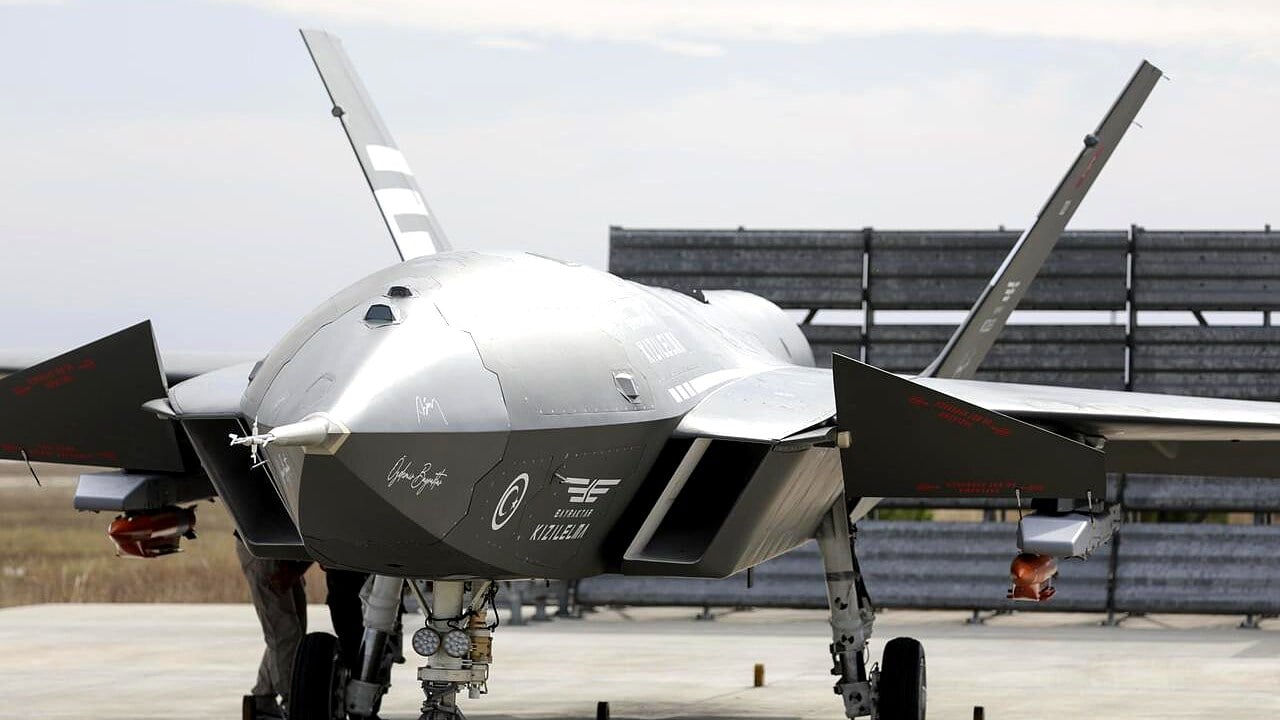
ISLAMABAD: Pakistan is reportedly close to finalising an agreement with Türkiye for the acquisition of an unspecified number of Bayraktar KIZILELMA stealth unmanned combat aerial vehicles (UCAVs), with significant technology transfer and local production components.
Defence sources indicate the deal would strengthen Pakistan Air Force (PAF) capabilities in unmanned aerial systems, particularly in high-threat environments. The KIZILELMA, developed by Turkish firm Baykar, represents a new generation of jet-powered stealth UCAVs capable of beyond-visual-range (BVR) engagements.
The development builds on deepening Pakistan-Türkiye defence ties. In 2024, the two countries merged elements of their BVR air-to-air missile research and development programmes. This collaboration provided Pakistan access to Aselsan’s MURAD AESA radar software stack, enabling integration of Pakistani missiles and sensors on Turkish platforms.
**KIZILELMA Specifications** The KIZILELMA features a maximum take-off weight of approximately 8,500 kg and a payload capacity of 1,500 kg. It achieves a maximum speed of Mach 0.9 and a cruise speed of Mach 0.6. Its combat radius stands at around 930 km, with an operational altitude up to 25,000 feet.
Equipped with the MURAD AESA radar, the platform can detect and engage targets at extended ranges while supporting internal and external carriage of munitions. This configuration enhances its stealth profile and multi-role capabilities, including air-to-air and air-to-ground missions.
Turkish officials have highlighted the UCAV’s ability to operate as a loyal wingman in manned-unmanned teaming (MUM-T) scenarios. Recent tests demonstrated its capacity to fire BVR missiles, such as the Gökdoğan, against jet-powered targets, marking a notable milestone in unmanned aerial combat.
**Background of Cooperation** Pakistan and Türkiye have maintained robust defence collaboration for years, including joint ventures in armoured vehicles, helicopters, and UAVs. The PAF already operates Bayraktar platforms, which have seen extensive use in regional operations.
The proposed KIZILELMA agreement would include provisions for local assembly and production in Pakistan. This aligns with Islamabad’s policy of enhancing indigenous defence manufacturing under the “Make in Pakistan” initiative. Technology transfer is expected to cover avionics, sensor integration, and maintenance infrastructure.
Analysts note that the MURAD AESA integration from earlier BVR cooperation will allow seamless accommodation of Pakistani payloads on the KIZILELMA. This interoperability extends potential operational advantages across PAF’s mixed fleet of manned and unmanned assets.
**Potential KAAN Partnership** Turkish defence observers suggest Pakistan could also deepen involvement in the TFX/MMU KAAN fifth-generation stealth fighter programme. The KAAN is designed for air dominance and MUM-T operations alongside platforms like the KIZILELMA and ANKA-3.
Reports from early 2025 indicated plans for a joint production facility between the two countries for the KAAN. Such a partnership would position Pakistan among a select group of nations with access to advanced stealth fighter technology.
**Strategic Implications** The acquisition would enhance Pakistan’s aerial deterrence and reconnaissance capabilities. In a region with growing emphasis on unmanned systems, the KIZILELMA’s stealth features and BVR engagement potential offer operational flexibility without risking manned aircraft in contested airspace.
Defence analysts point to broader shifts in South Asian air power dynamics. Integration of advanced UCAVs could complement existing PAF assets, improving response times and force multiplication in potential conflict scenarios.
Market reactions in defence-related sectors have remained measured, reflecting the early stage of negotiations. However, the deal is seen as part of Pakistan’s efforts to diversify and modernise its aerial fleet amid evolving regional security requirements.
Officials from both sides have yet to issue formal confirmation on the exact number of platforms, timeline, or total value. Sources indicate discussions are progressing positively, with expectations of an announcement in the coming months.
The agreement, if finalised, would further consolidate Pakistan-Türkiye strategic partnership in defence production. It may also open avenues for additional joint projects in emerging technologies, including AI-enabled autonomous systems and next-generation sensors.
Future developments will likely focus on implementation timelines, local production milestones, and integration into PAF operational doctrine. Observers will monitor how this acquisition influences broader regional military balances and defence export patterns.