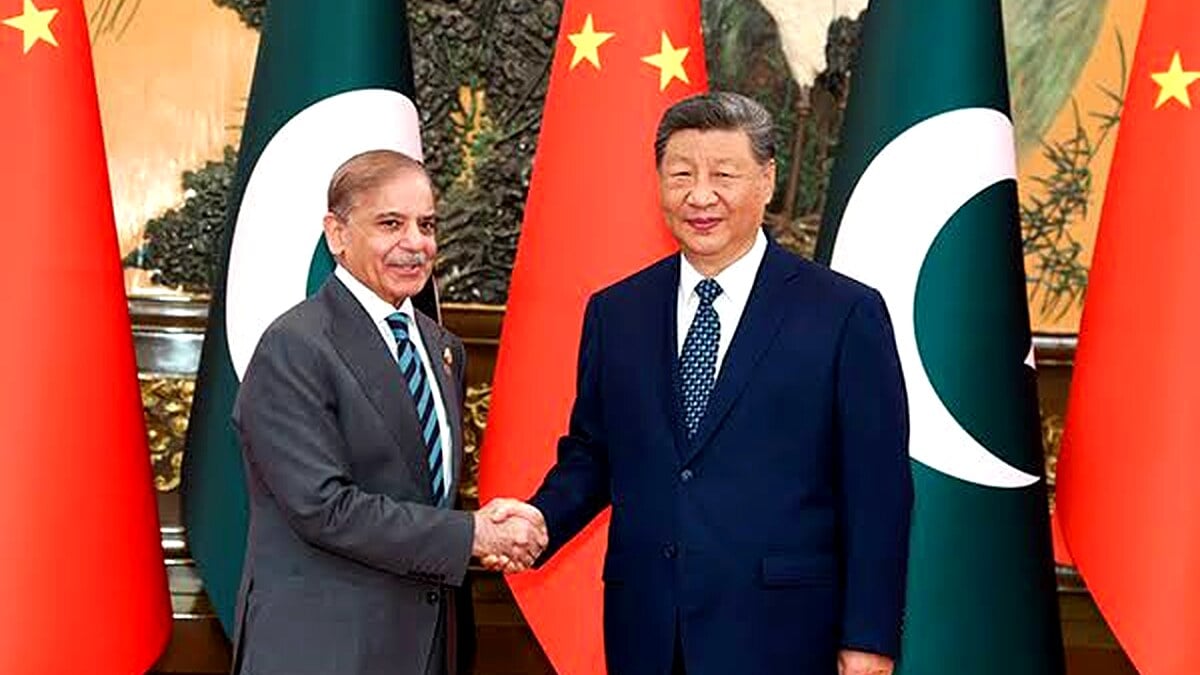




Sharif’s Beijing Visit
ISLAMABAD:Pakistan and China are set to sign more than 100 agreements worth over $5 billion during Prime Minister Shehbaz Sharif’s official visit to Beijing from May 24 to 26.
The deals, largely business-to-business, span agriculture, food processing, IT, fintech, telecom, mobile phone and battery manufacturing, and advanced sectors including electric vehicles.
Government sources said nearly 90 percent of the agreements will involve private sector partnerships, with the remainder featuring government-to-business cooperation.
The development comes as both countries seek to deepen economic ties beyond traditional infrastructure under the second phase of the China-Pakistan Economic Corridor (CPEC).
Prime Minister Shehbaz Sharif is scheduled to hold high-level meetings with Chinese President Xi Jinping and Premier Li Qiang. Discussions will focus on investment promotion, economic cooperation, and regional matters.
A special committee has been formed to oversee implementation of the new agreements, officials confirmed.
**Key Sectors and Scope** The agreements target agriculture modernisation, including dairy, fisheries, livestock, cold chain logistics, seeds, fertilisers, and agro-chemicals. Food processing and value addition projects aim to boost exports and reduce post-harvest losses.
In technology and digital economy, cooperation will cover IT services, fintech, e-commerce, cloud computing, and telecommunications. Mobile phone and battery manufacturing initiatives are expected to support localisation and job creation.
Advanced manufacturing deals include electric vehicle components, electronics, and related supply chains. Logistics and trade facilitation projects also feature prominently.
Pakistani diplomatic sources said extensive groundwork has already been completed for these pacts. The focus remains on technology transfer, industrial collaboration, and export-oriented production.
**Official Context** The visit builds on recent momentum, including President Asif Ali Zardari’s earlier trip to China and previous business-to-business conferences. It aligns with efforts to mark 75 years of diplomatic relations between the two countries.
Pakistan has prioritised attracting foreign direct investment to support economic stabilisation. Chinese investment has remained a cornerstone, particularly in energy, infrastructure, and now diversified sectors.
According to planning ministry data, CPEC Phase II emphasises industrialisation, agriculture, and special economic zones (SEZs). The number of approved SEZs has grown significantly in recent years, providing platforms for new joint ventures.
**Economic Figures** The anticipated $5 billion package adds to earlier commitments. In September 2025, Pakistan signed agreements worth $8.5 billion during a previous high-level visit, including $7 billion in MoUs and $1.5 billion in joint ventures across agriculture, renewable energy, electric vehicles, and steel.
Pakistan’s seafood exports to China reached nearly $255 million in 2025, reflecting growing trade in agri-products. Earlier agriculture-focused MoUs signed in January 2026 were valued at around $4.5 billion.
The new deals are expected to generate employment, enhance productivity, and support Pakistan’s “Uraan Pakistan” framework focusing on exports, digital economy, equity, energy, and environment.
**Background and Strategic Shift** China-Pakistan economic cooperation dates back to the launch of CPEC in 2013. Initial phases concentrated on energy and connectivity projects that added thousands of megawatts to Pakistan’s grid and improved road infrastructure.
The current phase shifts emphasis towards sustainable industrial growth, technology, and private sector-led initiatives. This addresses earlier critiques regarding limited local industrial spillover and seeks to create long-term value chains.
Officials highlight that business-to-business models reduce fiscal burden while promoting market-driven outcomes. Chinese enterprises gain access to Pakistan’s young workforce and strategic location, while Pakistan benefits from capital, expertise, and market linkages.
**Reactions and Market Implications** Business circles in both countries have welcomed the upcoming agreements. Pakistani chambers of commerce see opportunities in agriculture technology and digital services. Chinese firms view Pakistan as a gateway for regional expansion.
Analysts note that successful implementation could help stabilise Pakistan’s external account, support rupee stability, and contribute to GDP growth. However, challenges remain, including security for projects and timely execution.
Market observers expect positive signals for related sectors on the Pakistan Stock Exchange once details emerge.
The agreements also carry diplomatic weight, reinforcing the “all-weather”