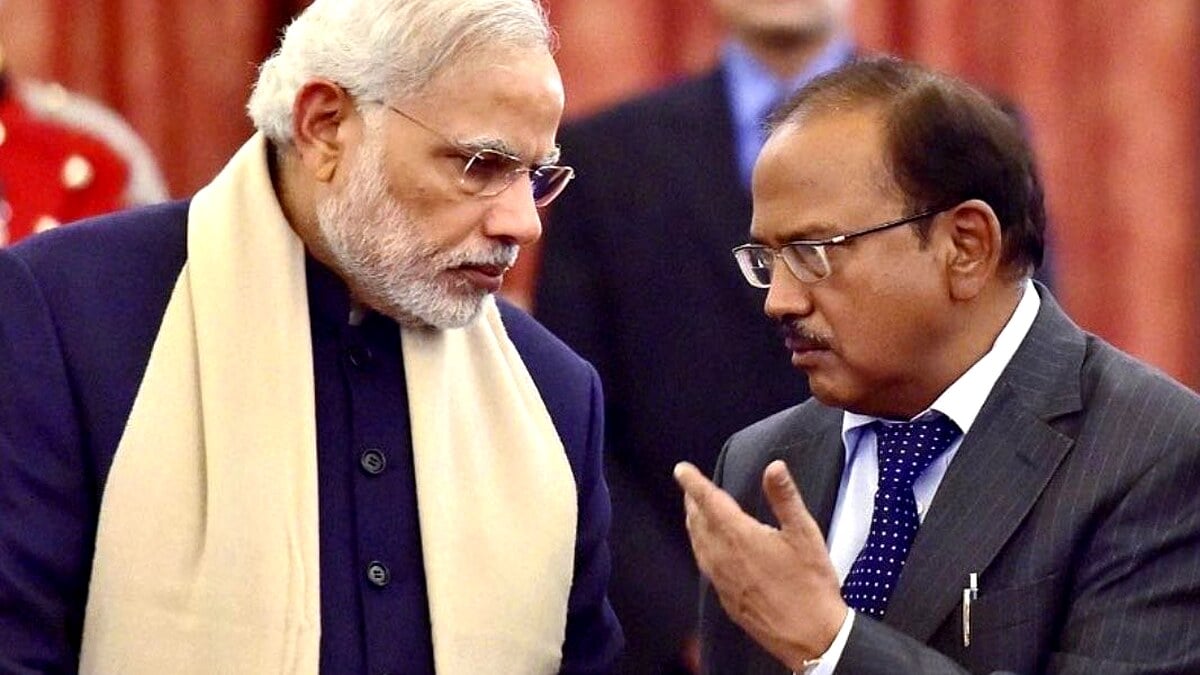




ISLAMABAD: A criminal complaint has been lodged at the Public Prosecutor’s Office in Milan, Italy, against India’s National Security Advisor Ajit Doval.
The complaint was filed on May 19, 2026, by Italian citizens Gurpal Singh and Jagroop Singh, who are associated with the Khalistan Referendum campaign. It accuses Doval of acting as the “command and control” authority behind alleged transnational repression operations targeting Sikh activists.
The filing occurred just ahead of Indian Prime Minister Narendra Modi’s visit to Italy on May 20. Doval was expected to accompany Modi during the bilateral engagements.
According to details shared by Sikhs for Justice (SFJ), the complaint cites alleged involvement in assassination plots and threats against pro-Khalistan figures in multiple countries. It references the 2023 killing of Hardeep Singh Nijjar in Canada and alleged plots in the United Kingdom and Italy.
The complainants have invoked Articles 612 and 612-bis of the Italian Penal Code, which deal with aggravated threats and persecutory acts. They have requested the Italian authorities to initiate an investigation and provide protection to Sikh activists in Italy.
Pakistani diplomatic circles are closely monitoring the development amid longstanding concerns over Indian intelligence operations in Europe. Officials in Islamabad view such cases as part of a broader pattern of alleged extra-territorial activities by Indian agencies.
No immediate reaction has come from the Indian government or Doval’s office. Indian missions in Europe have previously dismissed similar accusations as politically motivated propaganda by separatist groups.
SFJ leader Gurpatwant Singh Pannun described the filing as part of a legal campaign to hold Indian officials accountable. The group claims to have supported similar legal actions in the United States and other jurisdictions.
Milan prosecutors have received the complaint through Italy’s Ministry of Justice digital portal. Under Italian law, such private complaints trigger a preliminary assessment by the public prosecutor, who decides whether to open a formal investigation. Many such filings do not proceed beyond initial review.
The timing coincides with heightened diplomatic activity between India and Italy. Trade between the two countries has grown steadily, with bilateral commerce exceeding $12 billion in recent years. Defence and technology cooperation have also expanded.
For Pakistan, the case highlights ongoing regional tensions involving Sikh communities. Islamabad has repeatedly raised concerns at international forums about alleged Indian interference in diaspora politics and human rights issues.
Analysts note that while the complaint carries symbolic weight, its legal success remains uncertain. Indian officials enjoy certain protections under international norms, and proving command responsibility in foreign courts presents significant evidentiary challenges.
Similar cases in North America have faced procedural hurdles, including difficulties in serving legal notices on high-ranking Indian functionaries.
The development comes at a time when India faces increased scrutiny over its handling of Sikh activism abroad. Canadian and US authorities have publicly raised concerns in the past regarding alleged plots on their soil.
Regional observers suggest the Milan filing could encourage further legal activism in European capitals. Several countries maintain active Sikh diaspora populations that have expressed support for referendum campaigns.
Pakistani officials believe such international legal moves may complicate India’s diplomatic outreach in Europe. However, the immediate impact on India-Italy relations is expected to remain limited unless Italian authorities pursue a full investigation.
Future proceedings in Milan will depend on the prosecutor’s assessment in the coming weeks. Any escalation could draw formal responses from New Delhi and affect broader diplomatic engagements.
The case adds another layer to the complex interplay of security, diaspora politics, and international law in South Asian-European relations.