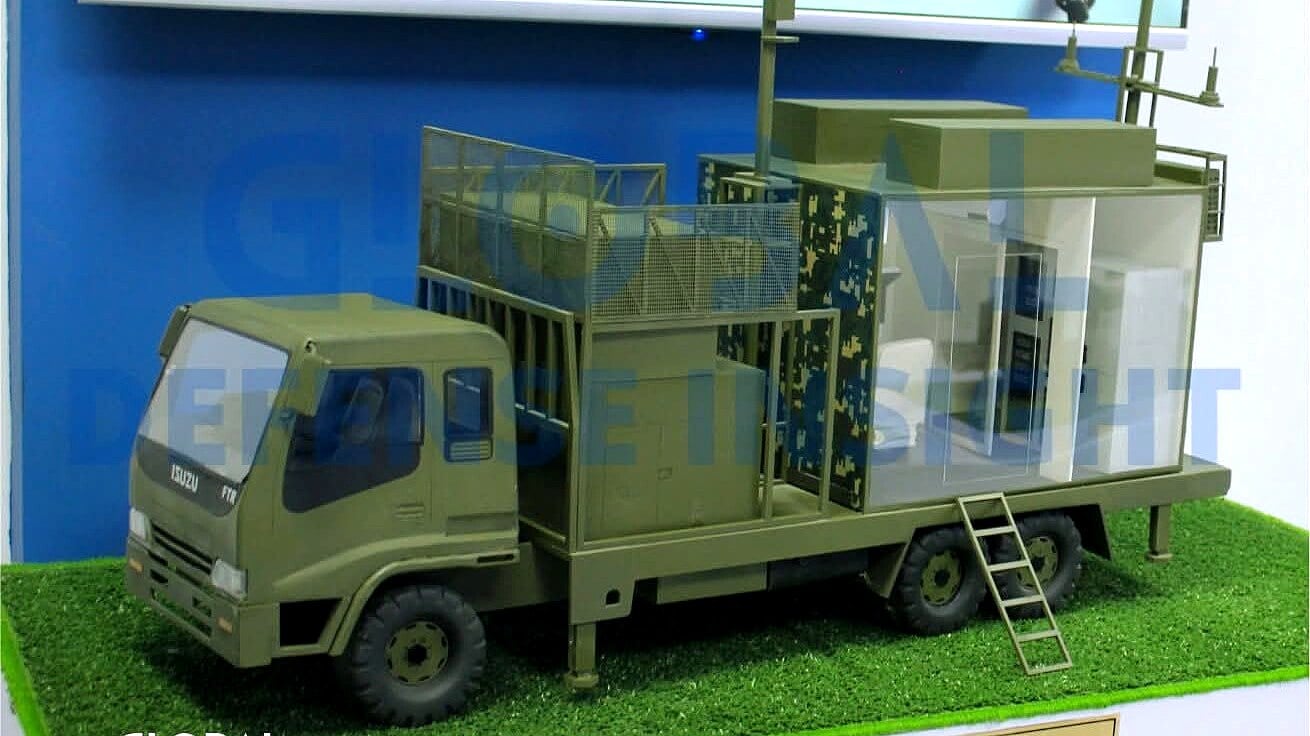




ISLAMABAD: Pakistan has introduced an advanced vehicle-mounted anti-drone system developed by the National Aerospace Science and Technology Park (NASTP), marking a significant step in indigenous electronic warfare capabilities.
The system integrates radar tracking and soft-kill electronic jamming technologies to detect, track, and neutralise unauthorised unmanned aerial vehicles. Officials describe it as a mobile platform designed for rapid deployment across border regions and strategic installations.
Defence sources confirmed the development during a recent demonstration at NASTP facilities. The platform builds on ongoing efforts to strengthen air defence against evolving drone threats.
**NASTP officials stated** the system represents a key outcome of public-private collaboration under the Pakistan Air Force-led initiative. It aims to reduce reliance on imported counter-drone solutions while enhancing operational flexibility.
The vehicle-mounted configuration allows integration with existing military trucks, providing mobility for forward deployments. Initial units are expected to support both Pakistan Armed Forces and internal security operations.
**Key technical specifications** include detection ranges extending beyond 8 kilometres for small drones and effective jamming coverage up to 6 kilometres. The system operates across multiple frequency bands, targeting common commercial and modified drone communication links between 400 MHz and 6 GHz.
It features RF interception, direction finding, GNSS jamming, and GPS spoofing capabilities. Soft-kill mechanisms force drones to lose control, return to launch points, or execute emergency landings without kinetic engagement.
Development timelines indicate prototype testing began in late 2024, with field trials completed earlier this year. The project involved NASTP engineers alongside specialists from Pakistan Air Force research centres.
**Background context** shows rising drone incidents along Pakistan’s western borders and Line of Control. Security reports documented hundreds of attempted drone incursions in Khyber Pakhtunkhwa province over recent months, prompting accelerated counter-measures.
Pakistan has previously fielded systems like the Spider counter-UAS and various jamming guns. The new NASTP platform advances these by combining detection, tracking, and neutralisation in a single mobile unit.
Investment in the project aligns with broader defence indigenisation goals. NASTP, inaugurated in 2023 at PAF Base Nur Khan, focuses on aerospace, radar, and electronic systems research to support self-reliance targets.
**Market and operational impact** remains under assessment. Officials estimate the system could lower operational costs compared to traditional air defence munitions by relying primarily on electronic warfare.
Regional security analysts note increasing proliferation of low-cost drones by non-state actors. The new platform addresses both external threats and internal challenges in counter-terrorism environments.
Defence Ministry sources indicated initial production will target Pakistan Army and Air Force requirements. Export potential is being explored through Global Industrial and Defence Solutions channels.
The system’s radar component utilises advanced signal processing for low radar cross-section targets. Integration with command networks allows real-time data sharing across joint forces.
**Strategic implications** extend to Pakistan’s electronic warfare posture. Enhanced mobile anti-drone capabilities strengthen layered air defence, particularly in contested border areas where static systems face limitations.
Analysts suggest the development supports deterrence by demonstrating technological maturity in asymmetric threat environments. It complements existing kinetic systems while offering non-lethal options suitable for populated areas.
Future integration may include AI-driven threat classification and autonomous response features. NASTP teams continue refining algorithms based on operational feedback.
Additional variants, including lighter portable configurations, are reportedly in advanced planning stages. Full-scale production timelines depend on successful validation trials scheduled for coming months.
The initiative reflects Pakistan’s push toward defence exports and technology partnerships. NASTP has positioned itself as a hub connecting academia, industry, and military research for next-generation aerospace solutions.
Questions remain about integration timelines with existing platforms and training requirements for field operators. Officials indicated phased induction will begin with specialised units before wider deployment.
Regional observers will monitor how this system influences cross-border dynamics amid ongoing security challenges. Pakistan continues to prioritise indigenous solutions amid global supply chain uncertainties in defence technologies.
Upcoming demonstrations and potential international showcases could determine broader adoption and collaboration opportunities in the coming year.