



ISLAMABAD: A fresh wave of tensions is quietly building in South Asia, but the real story may not be what it seems at first glance.
As the anniversary of the deadly Pahalgam attack approaches, accusations have resurfaced, statements have hardened, and diplomatic signals are becoming increasingly sharp—but behind the headlines lies a deeper and more complex regional shift.
The Trigger: A Deadly Attack That Still Echoes
The April 22, 2025 attack in Pahalgam remains one of the most devastating incidents in the disputed Kashmir region in decades.
At least 26 people, most of them tourists, lost their lives in what was described as the deadliest attack in the region since 2000, while several others were injured, triggering global concern.
India quickly blamed Pakistan for the incident, but crucially, no concrete evidence was publicly presented to substantiate the claim.
Pakistan, on the other hand, categorically rejected the accusations and called for a neutral, independent investigation to establish the facts.
But that’s not the full story…
Anniversary Statements Spark Fresh Controversy
As the attack’s one-year anniversary arrived, statements from Indian leadership reignited the issue.
Senior officials issued warnings and reiterated concerns about terrorism, while the Indian army declared that a “response is assured” against such acts.
This is where things get interesting…
Despite the absence of new evidence, the narrative linking Pakistan to the attack began resurfacing in public discourse across India, raising eyebrows in diplomatic circles.
And this raises an important question…
Why revisit an unresolved accusation now?
Pakistan’s Strong Response: “Baseless Allegations”
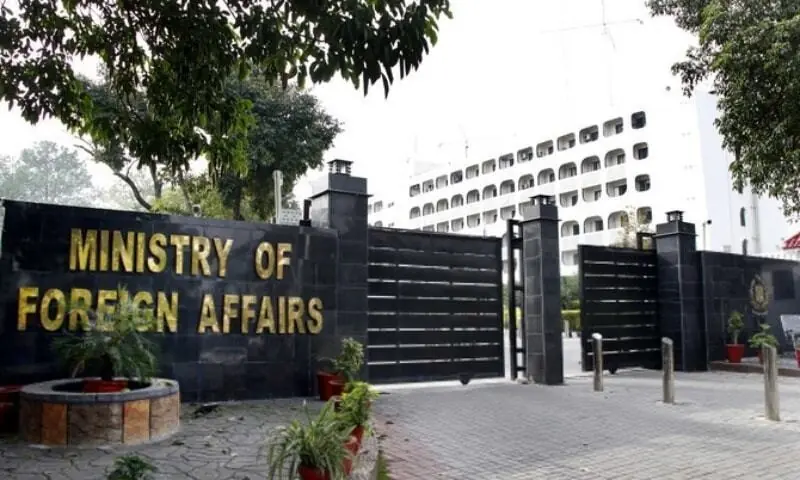
Pakistan’s Foreign Office responded sharply, calling the renewed claims part of a “campaign of baseless allegations and propaganda.”
Officials emphasized that Pakistan has been actively engaged with international partners to promote regional peace and stability.
They described the timing of these allegations as “deplorable,” especially when diplomatic efforts are ongoing to reduce tensions in the region.
However, a deeper issue is emerging…
Pakistan’s stance highlights a growing frustration with what it sees as attempts to “weaponise narratives” during sensitive geopolitical moments.
The Larger Regional Context
The renewed rhetoric does not exist in isolation.
South Asia is currently navigating a fragile security environment, with heightened sensitivities around border stability, internal security concerns, and international scrutiny.
What’s more concerning is how quickly narratives can shape global perception, even in the absence of verified evidence.
Experts warn that such allegations, if left unchallenged, can escalate tensions and complicate diplomatic engagement between nuclear-armed neighbors.
But there’s another layer to this story…
The Call for a Neutral Investigation
Pakistan has consistently demanded a transparent and neutral international investigation into the Pahalgam attack.
This demand reflects a broader push for accountability and fact-based conclusions rather than politically driven narratives.
Yet, so far, no such independent probe has materialized.
This is where things take a surprising turn…
The lack of an impartial investigation continues to leave room for competing claims, misinformation, and geopolitical maneuvering.
And that uncertainty is fueling mistrust on both sides.
Information Warfare and Narrative Battles
In modern conflicts, the battle is no longer confined to borders—it extends to information spaces.
The Pahalgam incident has become a case study in how narratives can be shaped, amplified, and weaponised.
Pakistan’s Foreign Office specifically pointed out that such narratives risk undermining genuine efforts toward peace.
However, the real concern may lie in the long-term consequences…
Repeated allegations without evidence can deepen divisions, making future dialogue even more difficult.
What Happens Next?
As tensions simmer, the key question remains unanswered: will this dispute escalate further or open the door for dialogue?
Pakistan continues to position itself as a proponent of peace and stability, urging the international community to support fact-based investigations and responsible discourse.
But the absence of consensus—and the persistence of competing narratives—suggest that this issue is far from resolved.
And this raises a final, critical question…
Will truth and transparency prevail, or will narratives continue to shape the region’s future?