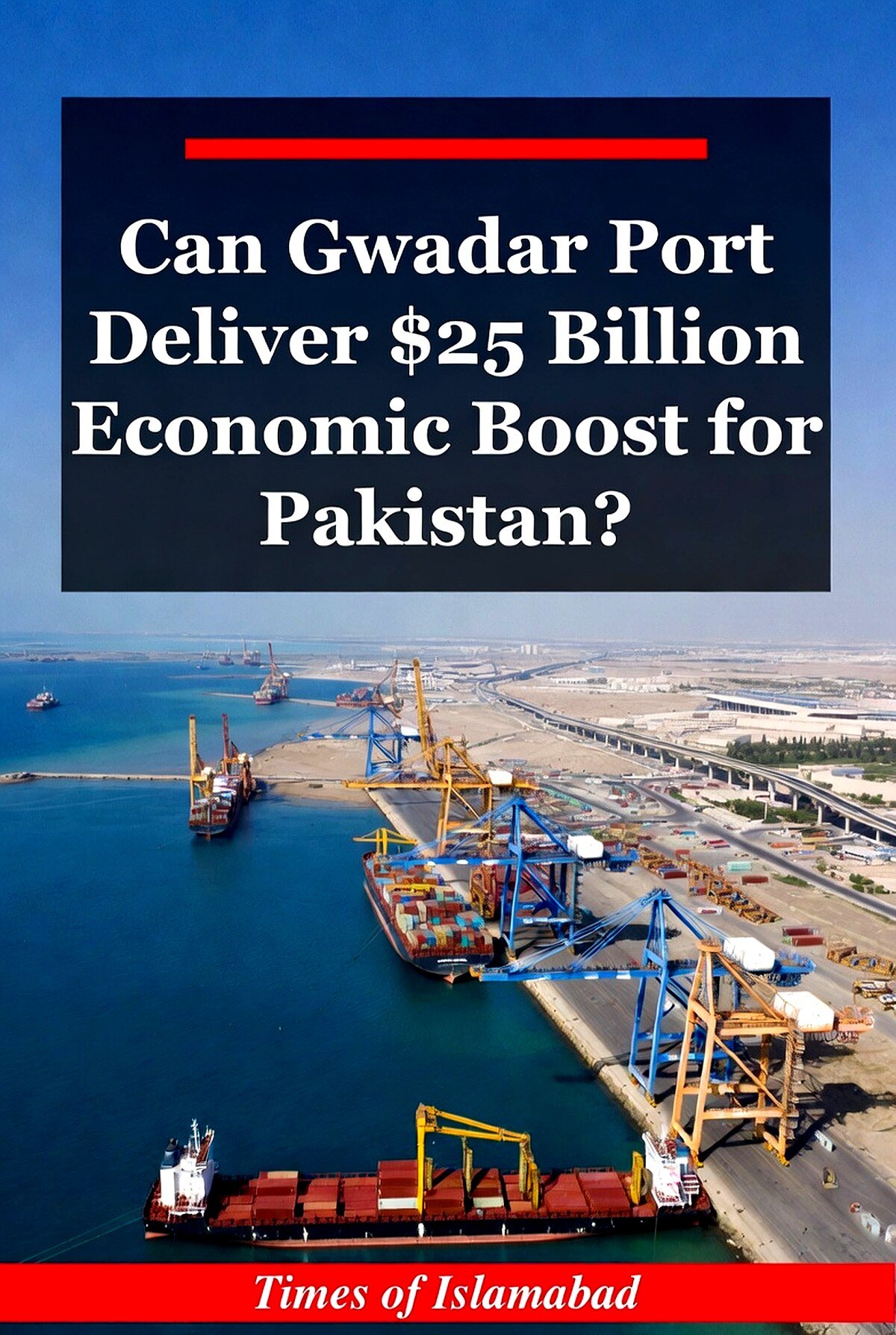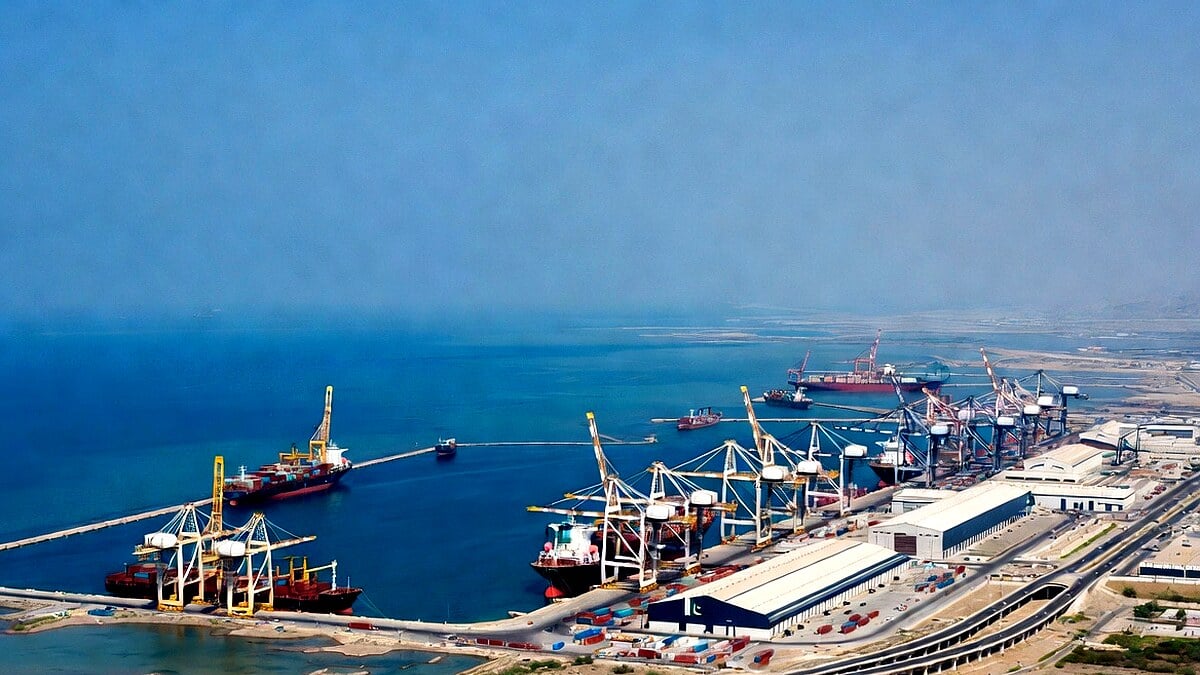




ISLAMABAD: A single statement from Gwadar Port Authority Chairman Noor-ul-Haq Baloch this week has reignited hopes across Pakistan’s economic circles. The deep-sea port in Balochistan could inject up to $25 billion into the national economy annually, positioning it as a formidable rival to established regional hubs.
Yet the numbers tell a story of both soaring potential and persistent hurdles. Located just 87 kilometers from the Iranian border and strategically close to the Strait of Hormuz, Gwadar sits at the crossroads of global shipping lanes. This geography offers Pakistan a rare chance to serve as a gateway for landlocked Central Asian states while easing pressure on traditional ports.
Baloch emphasized the port’s unique advantages during recent remarks. Competitive tariffs, free storage incentives, and direct land connectivity to Iran and Central Asia set Gwadar apart from congested alternatives. “It is strategically positioned and can serve as a cost-effective, less congested alternative,” he noted, highlighting its edge over busy facilities elsewhere in the region.
Commercial activity is showing early signs of revival. Official figures indicate only one ship docked last year, but two vessels have already called this year, with five more expected soon. Recent reports confirm momentum, including the arrival of Malaysian cargo vessel MV Riva Glory carrying over 14,000 metric tonnes of transshipment goods. Another vessel, M/V HMO LEADER, handled transshipment cargo amid shifting regional routes influenced by disruptions near the Strait of Hormuz.
But that’s not the full story. Gwadar forms the crown jewel of the China-Pakistan Economic Corridor, a flagship initiative under Beijing’s broader Belt and Road framework. The overall CPEC investment has exceeded $60 billion, with completed projects valued around $25 billion contributing to energy, infrastructure, and connectivity gains nationwide. These developments have already added thousands of megawatts to Pakistan’s power grid and improved road networks linking remote Balochistan areas to national markets.
What’s more concerning is the gap between current operations and full potential. Experts point to the need for robust industrial zones, advanced export facilities, and an integrated logistics ecosystem to unlock Gwadar’s capacity. Projections suggest the port could handle up to 1 million TEUs annually in the near term, with long-term ambitions reaching hundreds of millions of tons of cargo. Revenue from port operations stood at roughly $350 million by 2023 in earlier estimates, with forecasts pointing toward several billion dollars yearly by 2030 if momentum builds.
This is where things get interesting. Gwadar’s location—just minutes from key maritime chokepoints—could transform Pakistan into a preferred transshipment hub for trade between China, the Middle East, Africa, and Central Asia. Access to warm waters shortens routes for Chinese cargo, reducing reliance on longer eastern passages. For Central Asian republics rich in resources like oil, coal, and metals, Gwadar offers a viable outlet to South Asian and global markets via upgraded highways and potential rail links.
However, a deeper issue is emerging around infrastructure readiness. While Phase I of the Gwadar Free Zone is operational and Phase II development continues, full realization depends on seamless integration with special economic zones and modern warehousing. Pakistani officials and lawmakers stress that without accelerated industrial backing, the port risks remaining underutilized despite its natural depth advantages, capable of accommodating large vessels up to 200,000 DWT.
Comparisons with regional peers like Dubai’s Jebel Ali—the world’s largest man-made harbor and a Middle East leader—underscore both ambition and reality. Jebel Ali handles millions of TEUs annually through extensive free trade zones hosting thousands of international companies. Colombo and other hubs similarly benefit from established ecosystems. Gwadar officials believe competitive incentives and lower congestion can attract shipping lines seeking alternatives, especially as global patterns shift.
And this raises an important question: How quickly can supporting infrastructure catch up? Recent CPEC progress includes the New Gwadar International Airport, Eastbay Expressway phases, and power projects stabilizing local supply. These elements are critical for creating a full port city environment, complete with housing, healthcare, and transport links to support a growing workforce.
Around this point in Gwadar’s journey, an unexpected angle surfaces from recent transshipment activity. Disruptions in traditional routes have prompted some cargo diversion toward Pakistani ports, with Gwadar formally entering the transshipment network. Karachi handled around 11,000 transshipment TEUs in a single recent month alone, far exceeding prior yearly totals in some segments. This spillover effect signals broader regional opportunities, yet it also highlights the urgency for Gwadar-specific policy reforms to capture a larger share.
Pakistan’s armed forces continue providing robust security cover to ensure uninterrupted development in the region, safeguarding this vital national asset against any threats. Their dedication underscores the strategic importance of Gwadar not just for economy but for overall maritime security along key sea lines of communication.
Experts differ on timelines for realizing $18-25 billion annual contributions. Optimistic views tie this to full industrial clustering and export-oriented manufacturing. Conservative assessments call for sustained engagement with international shipping lines and traders. Free storage and tax incentives in the free zone are already drawing interest from local and foreign investors.
What happens next could reshape Pakistan’s economic landscape. If Gwadar scales successfully, it promises thousands of direct and indirect jobs, boosted GDP contributions, and deeper regional integration. Landlocked neighbors gain efficient access, while Pakistan strengthens its position in global value chains.
However, challenges like building a comprehensive logistics backbone remain. Connectivity enhancements, including potential rail extensions and digital trade platforms, will prove decisive. Tripartite ventures involving China, Pakistan, and other partners could accelerate progress in energy, refining, and manufacturing.
This development carries profound implications for Balochistan’s transformation. Once a fishing town, Gwadar is evolving with modern infrastructure, expressways, and power stability. Spillover from CPEC has upgraded provincial roads like Khuzdar-Basima and Hoshab-Gwadar, linking isolated communities to broader markets.
Yet the full economic multiplier effect—estimated in various studies to amplify through employment, industrialization, and foreign direct investment—hinges on execution speed. Past CPEC energy projects alone created tens of thousands of jobs; similar scaling at Gwadar could multiply that impact.
And this raises an important question for policymakers and investors alike: Will coordinated efforts in industrialization and policy support allow Gwadar to rival established hubs within the decade? Early vessel arrivals and transshipment entries provide encouraging signals, but sustained momentum is key.
Pakistan stands at a pivotal moment. Gwadar’s success would not only deliver substantial revenue but also enhance strategic autonomy in maritime trade. As officials actively court shipping lines, the port’s competitive tariffs and incentives position it well for growth amid evolving global dynamics.
The coming years will test the vision. With CPEC entering enhanced phases focused on industrialization and connectivity, Gwadar’s trajectory appears upward. Its potential to serve as a cost-effective alternative could redirect significant trade volumes, benefiting Pakistan’s exporters and importers alike.
Uncertainty lingers on exact timelines and external factors, yet the strategic foundation is solid. Backed by strong national support and international partnership, Gwadar represents more than a port—it embodies Pakistan’s aspirations for economic resurgence and regional leadership in trade.
As activity picks up and infrastructure matures, observers watch closely. The $25 billion opportunity is no longer distant rhetoric but a measurable target grounded in geography, investment, and emerging operations. How Pakistan capitalizes will define the port’s legacy for generations.