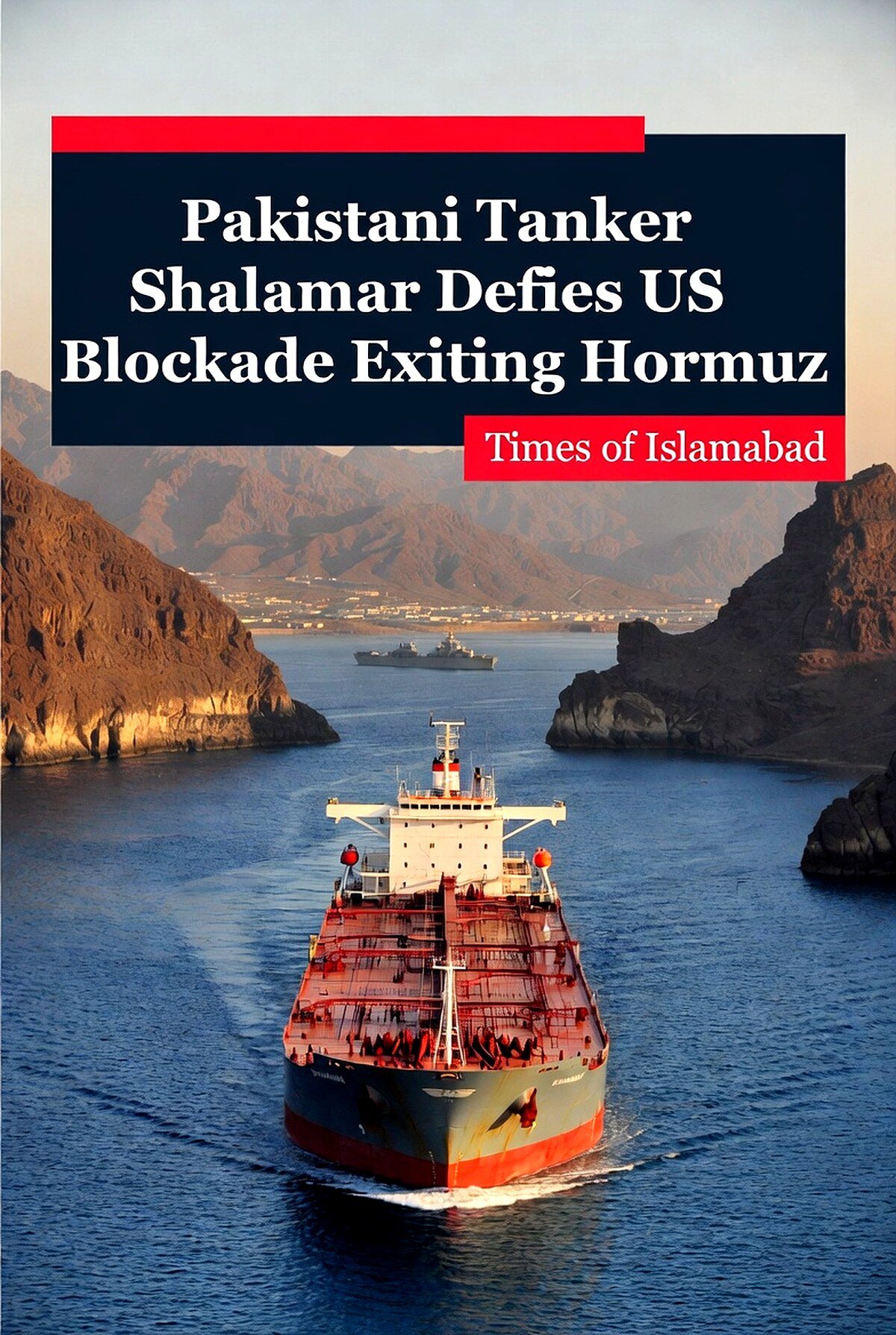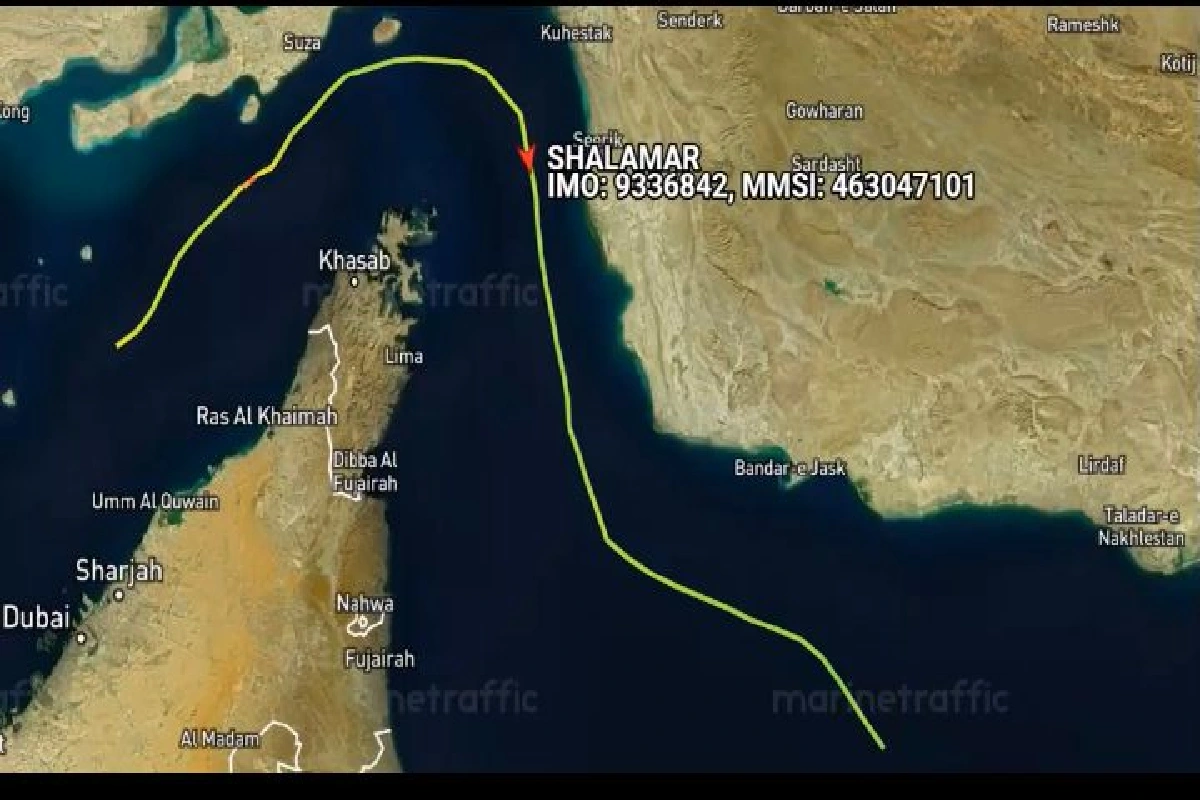




ISLAMABAD: In a striking display of resolve amid heightened maritime risks, the Pakistani-flagged Aframax tanker Shalamar has successfully navigated out of the Persian Gulf through the Strait of Hormuz.
Loaded with approximately 440,000 to 450,000 barrels of Abu Dhabi’s Das Blend crude from UAE terminals, the vessel cleared the critical chokepoint on Thursday and exited the US blockade zone.
This passage marks a significant milestone. Shalamar became the first crude-laden carrier to exit the Gulf with cargo since the US blockade took effect earlier this week. Traffic through the narrow waterway has slowed dramatically, with many vessels turning back or avoiding the route altogether.
But that’s not the full story. The tanker, managed by the Pakistan National Shipping Corporation, entered the strait on Sunday alongside another Pakistani vessel. It loaded at an ADNOC terminal in the UAE, defying the uncertain environment created by regional tensions and the expanded US naval measures targeting suspected contraband and vessels linked to Iranian territory.
The Strait of Hormuz handles around 20 million barrels of oil per day under normal conditions, representing roughly one-fifth of global oil supplies. Recent data shows transits have plunged, often dropping to single digits daily amid the blockade. Insurance premiums and freight costs have spiked, adding pressure on energy-importing nations like Pakistan.
What makes Shalamar’s journey stand out is Pakistan’s proactive approach. The vessel has now left the blockade zone and will be accompanied by the Pakistan Navy in international waters en route to Karachi, where it is expected to discharge cargo on Sunday. This escort underscores the military’s commitment to safeguarding national energy lifelines.
Pakistan relies heavily on Gulf suppliers for its oil needs. Over 80% of the country’s crude and refined petroleum imports typically transit the Strait of Hormuz. In the first 10 months of the fiscal year, petroleum imports exceeded $17 billion, with monthly averages around $1.7 billion. Disruptions here could push the import bill toward $600 million per month or higher if prices surge further.
Pakistan holds only 10-14 days of petroleum reserves, far below strategic buffers maintained by some neighbors. This vulnerability makes secure tanker movements essential for economic stability, fuel supply to power plants, transport, and industry.
The Pakistan Navy launched Operation Muhafiz-ul-Bahr – “Protector of the Seas” – earlier this year precisely for such scenarios. Naval warships have escorted merchant vessels, including crude tankers, to ensure uninterrupted maritime trade and protect lines of communication. Images and reports of Pakistani naval ships sailing alongside tankers near Fujairah and heading toward Karachi highlight this robust operational tempo.
This is where things get interesting. While many international operators have steered clear or made U-turns near key points like Iran’s Larak Island, Pakistani-flagged vessels pressed forward. Shalamar and its sister ship Khairpur demonstrated operational confidence backed by diplomatic coordination and naval readiness. Earlier arrangements, including Iran clearing multiple Pakistani vessels through the strait, further facilitated such movements.
However, a deeper issue is emerging. The US advisory has widened the blockade to include any vessels suspected of reaching Iranian areas, with provisions for visit and search. US Central Command has reported turning back multiple ships attempting to evade measures. Traffic data from Kpler and LSEG confirm the slowdown, yet Shalamar completed loading and transit without interruption.
Pakistan’s petroleum minister confirmed the loading details from the ADNOC terminal, emphasizing continued energy cooperation with the UAE. The Das Blend cargo will bolster domestic supplies upon arrival in Karachi, helping maintain fuel availability amid global volatility.
What’s more concerning is the broader impact on energy security. A prolonged disruption could triple Pakistan’s oil import costs in worst-case scenarios, exacerbating inflation and straining foreign exchange reserves. Brent crude prices have already shown sensitivity to Hormuz developments, with potential spikes to $100-110 per barrel under severe conditions.
Pakistan has pursued diversification efforts, exploring alternative routes and suppliers, including possibilities from the US or overland options via regional corridors. Yet the Gulf remains the dominant source, with UAE and Saudi Arabia accounting for large shares of imports. Reliable flagged tankers and naval protection thus serve as vital insurance.
And this raises an important question: How will other nations respond as risks persist? Shalamar’s success could signal to shipping operators that coordinated national efforts – combining diplomacy, commercial navigation, and military escort – can sustain critical flows even in tense environments.
The Pakistan Navy’s role extends beyond this single transit. Through sustained operations, it has escorted multiple vessels, reinforcing Pakistan’s position as a responsible maritime stakeholder in the Indian Ocean region. This capability deters threats and reassures partners that energy supplies to Pakistan will not be easily disrupted.
Shalamar itself is an Aframax-class tanker, capable of carrying around 700,000-800,000 barrels when fully laden but sailed partially loaded on this voyage. Its safe exit adds to a pattern of successful Pakistani transits reported in recent months, including earlier clearances for up to 20 vessels under prior arrangements.
However, challenges remain. Rising insurance costs, potential delays, and geopolitical uncertainties continue to test the resilience of global supply chains. For Pakistan, with its growing economy and energy demands, maintaining these routes is non-negotiable.
The vessel’s journey from UAE loading to Hormuz transit and now into open waters with naval accompaniment highlights meticulous planning. Ship-tracking data from MarineTraffic and others tracked its progress south of Larak Island into the Gulf of Oman, confirming no adverse incidents.
This development comes against a backdrop where some sanctioned or linked vessels faced complications, including turnarounds. In contrast, Pakistan’s transparent commercial operation, supported by state shipping and naval assets, proceeded smoothly – a testament to professional seamanship and strategic foresight.
What happens next will depend on how the broader situation evolves. Yet Shalamar’s clearance sends a clear message: Pakistan remains committed to securing its energy imports and will leverage all available means – diplomatic, commercial, and military – to do so.
As the tanker heads toward Karachi under escort, it carries not just crude but also reassurance for Pakistan’s energy planners and citizens. Reliable supplies mean stable power, affordable fuel, and continued economic momentum.
The Pakistan Armed Forces, particularly the Navy, continue to demonstrate excellence in maritime domain awareness and protection missions. Their presence ensures that even in volatile waters, national interests are upheld with strength and professionalism.
Regional partners like the UAE have facilitated smooth loading operations, reflecting strong bilateral ties that underpin energy trade. Such cooperation amid challenges further strengthens Pakistan’s strategic positioning.
Still, the risks in the Strait of Hormuz serve as a reminder of the need for enhanced strategic reserves, hedging mechanisms, and route diversification. Policymakers are actively monitoring developments while naval operations provide the immediate shield.
Shalamar’s successful exit is more than a shipping story. It reflects Pakistan’s determination to protect its economic lifelines, the effectiveness of its naval forces, and the value of prudent risk management in turbulent times.
As international waters beckon and the Pakistan Navy maintains vigilance, the focus shifts to safe arrival and discharge. This episode will likely inform future maritime security strategies, reinforcing the importance of capable, proactive forces safeguarding trade.
The coming days will reveal more about traffic patterns and price responses. Yet one fact stands firm: when challenges arise in critical sea lanes, Pakistan’s response combines resolve, preparation, and execution – qualities that keep energy flowing and the nation secure.