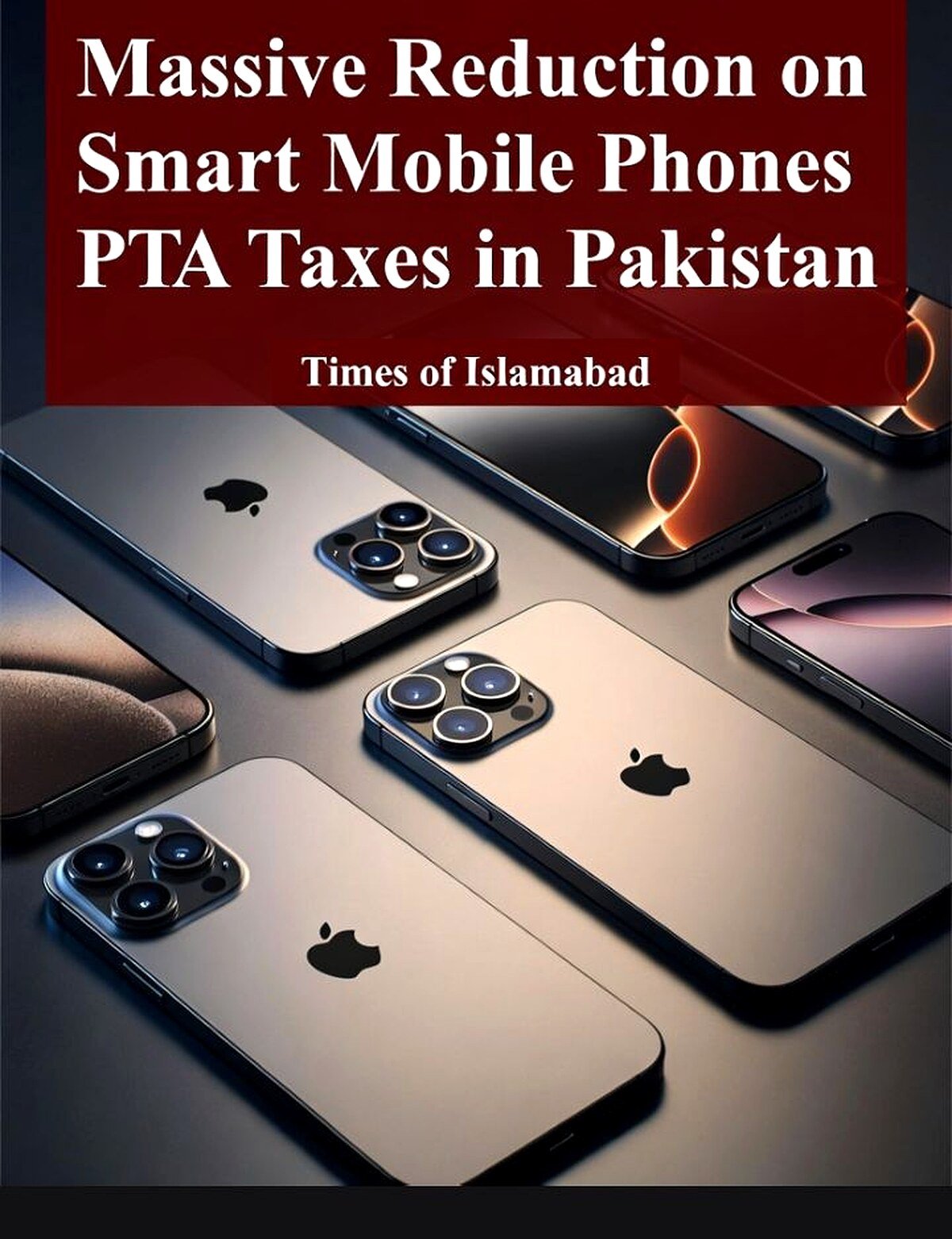




ISLAMABAD: The National Assembly Standing Committee on Finance has recommended to cut the crushing tax burden on mobile phones with imported devices priced above 500 dollars attracting around 76000 rupees in total levies.
This staggering figure equates to an overall tax rate of 54 percent on such handsets and has ignited urgent calls for policy reform.
Committee Chairman Syed Naveed Qamar directly challenged the logic of layering additional income tax when an 18 percent general sales tax is already applied.
He stressed that modern technology access must be actively encouraged to fuel Pakistan’s economic expansion and digital transformation.
Officials from the Federal Board of Revenue briefed the panel that phones valued between 700 and 750 dollars face an even higher effective tax rate of approximately 55 percent.
Multiple levies contribute to this total including regulatory duties mobile phone levies and withholding taxes of around 11500 rupees on premium models.
In sharp contrast locally assembled smartphones enjoy a reduced tax structure of roughly 25 percent underscoring the push for domestic manufacturing.
Pakistan’s mobile subscriber base has now surpassed 225 million connections as of January 2026 marking explosive growth from 205.5 million just a month earlier.
The sector added nearly 20 million new connections in a single recent month alone reflecting surging demand for connectivity.
Broadband subscriptions stand above 146 million while household internet access has reached 70 percent nationwide.
Yet these high import taxes risk pricing advanced devices beyond the reach of millions of ordinary citizens.
The mobile ecosystem currently contributes an estimated 17 billion dollars annually to the national economy according to industry analyses.
Projections from the Overseas Investors Chamber of Commerce and Industry indicate Pakistan’s digital sector could add between 5 and 7 percent to GDP by 2030 if supportive policies are implemented.
Telecom sector revenue crossed the one trillion rupees mark in fiscal year 2024-25 up from 957 billion rupees the prior year.
Local mobile phone assembly hit 1.69 million units in January 2026 demonstrating the momentum of Pakistan’s manufacturing incentives.
Imported completely built-up phones however continue to dominate higher-end segments attracting the steepest duties.
The committee has instructed the Federal Board of Revenue and Pakistan Telecommunication Authority to compile a detailed report on current tax rates.
This report must cover policy options economic impacts and international comparisons with a submission deadline set for March 2026.
Lawmakers argued forcefully that smartphones can no longer be classified as luxury items in today’s Pakistan.
They serve as essential tools for education business healthcare and financial inclusion across urban and rural areas alike.
Regional media outlets including Dawn ProPakistani and SAMAA TV have extensively reported these proceedings providing authenticated local insights into the debate.
The committee’s recommendations are expected to shape discussions ahead of the federal budget for 2026-27.
A potential reduction in the so-called PTA tax could stimulate further demand and accelerate local production.
Such measures would align with the government’s broader Digital Pakistan vision aimed at inclusive technological empowerment.
Every 10 percent increase in mobile broadband penetration is estimated to boost GDP growth by up to 1.5 percent in developing economies like Pakistan.
With a young population of over 250 million eager for digital opportunities easing affordability barriers becomes a national priority.
The 5G spectrum auction scheduled for mid-2026 is poised to drive even greater demand for compatible high-end devices.
Local manufacturers are already gearing up to meet this technological shift through hardware and software upgrades.
Chairman Qamar called for a clear transparent and predictable taxation policy to eliminate confusion for investors and consumers.
This approach would foster a stable environment conducive to long-term investment in the telecom sector.
Data from the Tax Policy Office reveals a six-band pricing structure for mobile devices ranging from basic 30-dollar units to premium flagships.
Phones in the 350 to 500 dollar range alone attract 4000 rupees in mobile levy plus 15000 rupees regulatory duty and additional withholding taxes.
These layered charges significantly inflate final consumer prices and limit uptake of productivity-enhancing technology.
The parliamentary panel’s proactive engagement reflects a commitment to evidence-based reforms that balance fiscal needs with growth imperatives.
Pakistan’s IT exports reached 3.8 billion dollars while freelance earnings added 779 million dollars highlighting the digital economy’s rising contribution.
The sector currently supports over two million direct and indirect jobs nationwide.
By rationalizing mobile phone taxes the government can unlock further job creation and innovation across the value chain.
Regional reports consistently highlight how excessive duties have historically slowed smartphone adoption among middle and lower-income groups.
The committee’s review comes at a critical juncture as Pakistan positions itself for regional digital competitiveness.
Reducing burdens on imported devices while protecting local assembly incentives could create a win-win scenario for consumers and industry alike.
Experts note that clearer policies would also attract greater foreign direct investment into Pakistan’s burgeoning tech landscape.
The NA Finance Committee’s deliberations have thus opened a vital pathway toward more equitable and growth-oriented taxation.
This forward-looking stance promises to enhance Pakistan’s digital infrastructure and economic resilience in the years ahead.
With mobile phones now integral to daily life and national progress the committee’s push for reform signals strong institutional support for technological advancement.
Such measures will empower millions of Pakistanis to fully participate in the global digital economy while strengthening the exchequer through expanded volumes rather than punitive rates.