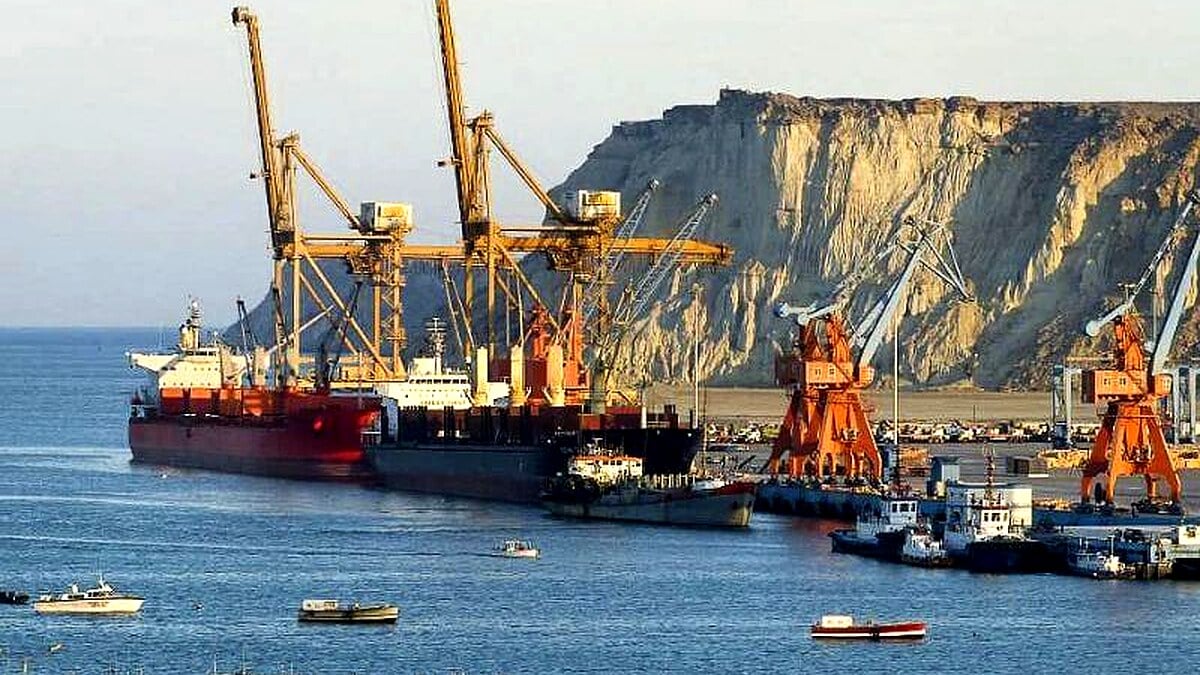




ISLAMABAD: Gwadar Port has achieved a significant operational milestone by successfully handling a 53,000-ton commercial vessel, marking its readiness for deep-draft shipping.
Port authorities confirmed the vessel berthed and unloaded cargo without incident on Sunday. The development represents a key step in Gwadar’s transition toward becoming a major regional transshipment hub.
Officials from the Gwadar Port Authority (GPA) described the operation as a direct outcome of completed dredging and channel deepening works. The port can now accommodate vessels with drafts exceeding 14 meters in key berths.
The shipment included containerized goods and bulk cargo destined for regional markets. Maritime tracking data showed the vessel arrived from the Middle East and departed for Southeast Asian ports after a 36-hour turnaround.
GPA Chairman Syed Zaheer Shah termed the operation a “practical demonstration of Gwadar’s growing capacity.” He noted that previous limitations had restricted the port to smaller feeder vessels under 20,000 tons deadweight.
This latest handling capacity increase comes under the China-Pakistan Economic Corridor (CPEC) framework. Chinese engineering firms completed the second phase of channel deepening last year at a cost of approximately $200 million.
Current channel depth stands at 15.5 meters at high tide in the main approach, allowing Panamax and some Post-Panamax vessels to operate safely. Officials aim to reach 18 meters depth in the next phase scheduled for completion by late 2027.
Trade experts highlight Gwadar’s strategic location near the Strait of Hormuz. The port sits approximately 400 kilometers from major Gulf shipping lanes, offering shorter routes compared to traditional Karachi operations.
According to GPA statistics, Gwadar handled 1.2 million tons of cargo in the first four months of 2026, showing a 45 percent year-on-year increase. Container movements rose by 62 percent during the same period.
The 53,000-ton vessel operation is the largest single commercial call recorded at the port to date. It involved coordination between GPA, Pakistan Navy, and private terminal operator China Overseas Port Holding Company (COPHC).
Security arrangements included layered maritime patrols and coastal monitoring. No incidents were reported during the vessel’s stay.
Economic analysts project that full deep-draft operations could add $1.2 to $1.5 billion annually to Pakistan’s trade logistics efficiency by 2030. Reduced transit times and lower shipping costs are expected to attract transshipment traffic from Central Asia and Afghanistan.
Balochistan Chief Minister Sarfraz Bugti welcomed the development during a briefing in Quetta. He emphasized its potential to generate local employment and infrastructure spin-offs.
“Gwadar is moving from project phase to operational reality,” Bugti stated. “This milestone directly supports regional connectivity goals under CPEC Phase II.”
Federal Minister for Maritime Affairs Qaiser Ahmed Shaikh said the government has allocated Rs. 28 billion for further port infrastructure upgrades in the current fiscal year. These include new quay cranes and automated cargo handling systems.
Background work on Gwadar’s modernization began in earnest after 2015 when China committed major investments. The port’s free zone has attracted over 50 international companies, primarily in logistics, manufacturing, and minerals processing.
Regional shipping lines have shown increased interest. At least three major operators are negotiating regular calls once additional berths become fully operational.
Market reaction has been positive. Shares of companies linked to port logistics showed modest gains on the Pakistan Stock Exchange following the announcement.
However, challenges remain. Security concerns in parts of Balochistan continue to influence insurance premiums for vessels calling at Gwadar. Port authorities report ongoing coordination with security forces to maintain safe operations.
Technical experts note that consistent handling of vessels above 50,000 tons will require sustained maintenance of dredged channels against siltation. Annual maintenance dredging costs are estimated at $15-20 million.
The milestone aligns with Pakistan’s broader maritime strategy to reduce dependence on single-port operations. Karachi currently handles over 70 percent of national cargo volume.
Gwadar’s development is expected to ease pressure on Karachi while opening new trade corridors toward Iran, Central Asia, and Africa.
Looking ahead, GPA officials plan to host a major maritime investment conference in September 2026 to showcase expanded capabilities. Several Memorandums of Understanding for terminal operations are under discussion.
The successful 53,000-ton operation underscores steady progress at Gwadar despite regional geopolitical complexities. It positions the port as an increasingly viable alternative for international shipping lines seeking diversified routes.
Future phases will focus on expanding storage facilities, developing industrial zones, and enhancing road and rail connectivity to the port. These steps are considered critical for translating physical infrastructure into sustained economic gains.