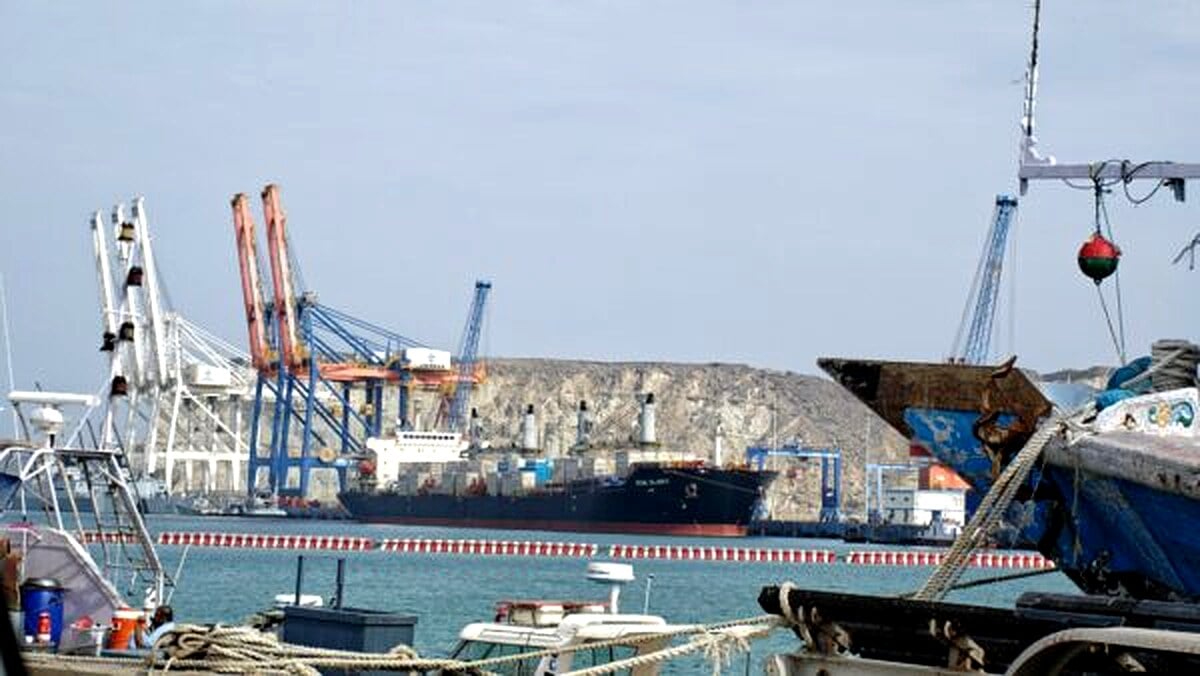




amid US-Iran Strait of Hormuz disruptions surging cargo volumes.
ISLAMABAD: Pakistan’s Gwadar Port has received its first transshipment vessel of May, marking a significant boost amid ongoing disruptions in the Strait of Hormuz.
The Gwadar Port Authority confirmed the arrival of M.V. SHOU LONG 618 on Monday.
It carried 16,077 metric tons of cargo, including 13,059 packages of Chinese-origin industrial equipment and pipes originally bound for Kuwait.
This development highlights Gwadar’s rising role as shipping lines seek safer routes away from conflict zones.
Tensions escalated after the US and Israel launched operations against Iran on February 28. Iran has since maintained control over key passages in the strait, a critical chokepoint for global energy and cargo.
The US imposed a counter-blockade on Iranian ports last month despite a brief April 8 ceasefire, forcing vessels to reroute across the Arabian Sea.
Pakistan’s ports are now witnessing a sharp surge in activity as a direct result.
**Strategic Location Drives Diversions**
Gwadar’s position, just 87 kilometers from the Iranian border near the mouth of the Strait of Hormuz, gives it a natural advantage in the current crisis.
Vessels previously using Gulf hubs like Dubai’s Jebel Ali are now diverting to Pakistani facilities for safer transshipment.
In April 2026 alone, Gwadar handled around 11,000 shipping containers along with general cargo including machinery and fertilizer.
This single-month figure already exceeds the port’s total of about 8,300 containers processed throughout the entire year of 2025.
Such rapid growth underscores the port’s readiness to handle increased volumes under challenging regional conditions.
**Economic Potential Unlocked**
Officials project Gwadar could contribute up to $25 billion annually to Pakistan’s economy once fully realized as a regional transshipment hub.
This potential rivals major players like Jebel Ali and Colombo, positioning Pakistan as a key connector in global trade networks.
The China-Pakistan Economic Corridor continues to enhance Gwadar’s capabilities through infrastructure upgrades under CPEC.
These developments support larger vessels and efficient cargo handling, attracting more international operators seeking stability.
Cargo originally destined for disrupted Gulf routes now finds smooth passage through Gwadar, demonstrating the port’s resilience and strategic value.
**Broader Regional Impact**
The US-Iran tensions have created ripple effects across global supply chains, raising insurance premiums and forcing shipping companies to recalculate routes.
Pakistan has responded proactively by opening six overland trade corridors to Iran, facilitating movement of stranded cargo and providing economic relief.
These land links, including the efficient Gwadar-Gabd corridor with transit times of just two to three hours, offer 45-55 percent cost savings compared to longer alternatives.
Such measures not only support regional partners but also strengthen Pakistan’s role in maintaining trade flows during crises.
Gwadar’s surge aligns with its long-term vision as part of CPEC, reducing China’s dependence on longer sea routes and enhancing connectivity to Central Asia and beyond.
**Security and Operational Strength**
Pakistan’s robust security framework ensures safe operations at Gwadar despite regional volatility.
The Pakistan Armed Forces maintain vigilance, safeguarding this vital national asset and enabling uninterrupted commercial activities.
This stability stands in contrast to disruptions elsewhere, drawing more confidence from international shipping lines.
Recent vessel calls, including multiple in early May, reflect growing trust in Gwadar’s reliability.
The M.V. SHOU LONG 618’s successful berthing adds to a series of positive developments, with port officials reporting steady increases in both vessel traffic and tonnage.
**Future Outlook for Trade Hub**
As global players monitor the Hormuz situation, Gwadar’s momentum appears set to continue.
Experts note that sustained diversions could accelerate infrastructure investments and expand the port’s capacity toward handling hundreds of millions of tons annually in coming years.
Pakistan stands to gain significantly from this shift, with job creation, industrial growth, and enhanced foreign investment flowing into Balochistan.
The port’s integration with road and rail networks under CPEC further amplifies its potential as a gateway for Afghanistan, Central Asia, and Chinese western regions.
While uncertainties remain in the broader geopolitical landscape, one fact is clear: Gwadar is proving its worth as a resilient a