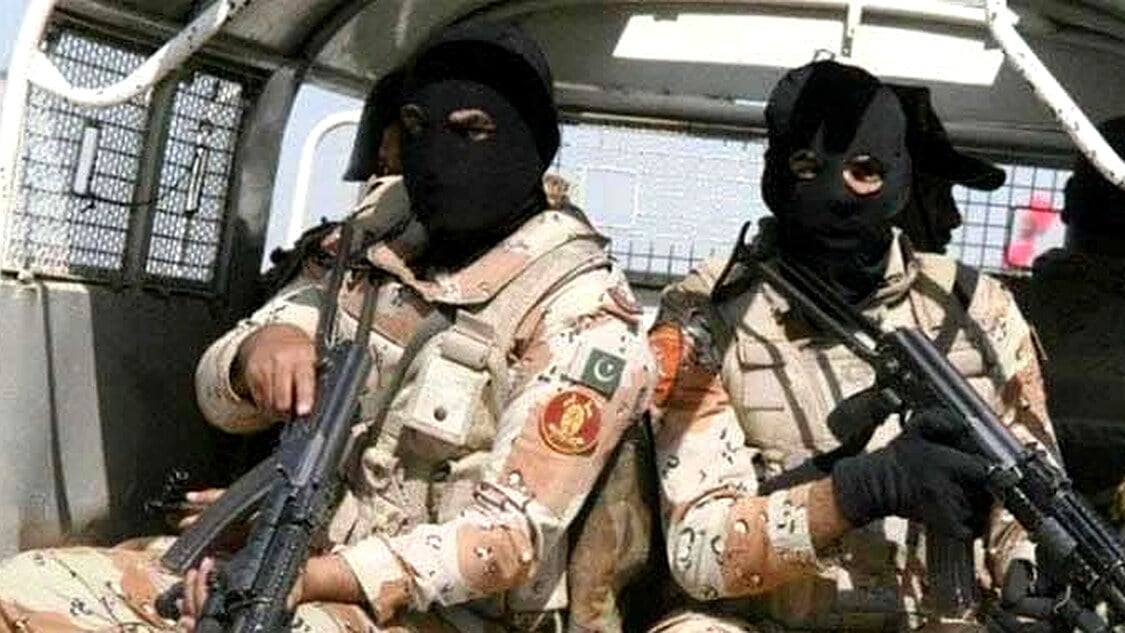




(Rangers CTD Arrest Most Wanted SRA Terrorist in Intelligence-Led Karachi Operation)
Commander in Sindh
ISLAMABAD: Pakistan Rangers (Sindh) and the Counter Terrorism Department (CTD) arrested a highly wanted terrorist linked to the banned Sindhudesh Revolutionary Army (SRA) in a joint intelligence-based operation.
The suspect, identified as Abdul Jabbar Sarki, son of Ghulam Rasool, was apprehended at a Rangers check post on Hub River Road near Rais Goth while traveling from Quetta towards Karachi. Officials described the interception as swift and coordinated based on credible intelligence inputs.
During the search, authorities recovered a cache of weapons and explosive materials from his possession, including firearms, detonators, ball bearings, and other explosive components. These items indicated active preparations for subversive activities in the region.
Investigations established that Sarki joined the outlawed SRA in 2020 and operated under the network of commander Sajjad Shah. Shah’s group has been linked to multiple acts of sabotage and terrorist incidents targeting law and order in Karachi and interior Sindh.
Security records show Sarki’s direct involvement in a grenade attack carried out in June 2020 near a Rangers checkpoint close to Manzil Pump on the National Highway. That attack injured two civilians and caused partial damage to the Rangers post.
The Sindhudesh Revolutionary Army, a proscribed organization, has a history of targeting security installations, infrastructure projects, and state symbols in Sindh province. The group has claimed responsibility for several low-intensity attacks including grenade assaults and blasts on railway tracks over the past years.
According to official sources, the arrested individual is being interrogated for further leads on SRA networks operating across Sindh and possible linkages with other separatist elements. Joint teams are tracing his movements and contacts, particularly those connected to Sajjad Shah.
Pakistan Rangers (Sindh) and CTD have intensified intelligence-based operations (IBOs) in recent months across Karachi, Hyderabad, and Jamshoro districts. In multiple similar actions, law enforcement agencies have dismantled several SRA facilitation cells and recovered arms and explosives.
Sindh has witnessed periodic separatist-related incidents amid broader regional security challenges. Official data indicates that counter-terrorism forces neutralized or arrested dozens of suspects affiliated with banned outfits in the province during 2024-2025. These operations focused on disrupting financing, weapon smuggling, and cross-provincial movement of operatives.
The arrest comes at a time when security agencies maintain heightened alertness along key highways and entry points into Karachi. Hub River Road serves as a critical corridor connecting Balochistan with Sindh’s commercial capital, making it a focal point for check posts and intelligence surveillance.
Senior security officials stated that such operations demonstrate the effectiveness of coordinated efforts between Rangers and CTD. They emphasized that no compromise would be made on actions threatening public safety and stability in Sindh.
Local residents in affected areas have often expressed concern over sporadic blasts and targeted attacks that disrupt daily life and economic activity. Karachi, as Pakistan’s largest city and economic hub, remains particularly sensitive to any uptick in militant activity.
The SRA and similar Sindhi nationalist militant factions have historically opposed perceived demographic changes and large-scale federal projects in the province. Their activities, though limited in scale compared to threats in other regions, have included strikes on law enforcement and infrastructure.
This latest breakthrough is part of ongoing efforts to maintain pressure on residual militant networks. Inter-agency coordination has improved information sharing and rapid response capabilities, resulting in higher success rates in pre-empting planned attacks.
Analysts note that sustained operations, combined with intelligence gathering, have reduced the operational space for such groups. However, challenges remain in fully dismantling dispersed networks that sometimes exploit provincial borders and cross-regional linkages.
Security forces continue monitoring high-risk routes and urban peripheries. Further arrests and recoveries are expected as investigations into Sarki’s network deepen.
The development underscores the persistent but contained nature of separatist militancy in Sindh. Officials have reiterated commitment to zero tolerance against any elements attempting to destabilize the province through violence.
Future operations are likely to focus on leadership targets and supply lines. Enhanced surveillance along Quetta-Karachi routes and intelligence fusion between provincial and federal agencies will play a key