



ISLAMABAD: Russia has formally endorsed Pakistan’s longstanding concerns regarding the presence of terrorist groups in Afghanistan, including Tehrik-i-Taliban Pakistan (TTP), Islamic State Khorasan (ISIS-K), and Al Qaeda.
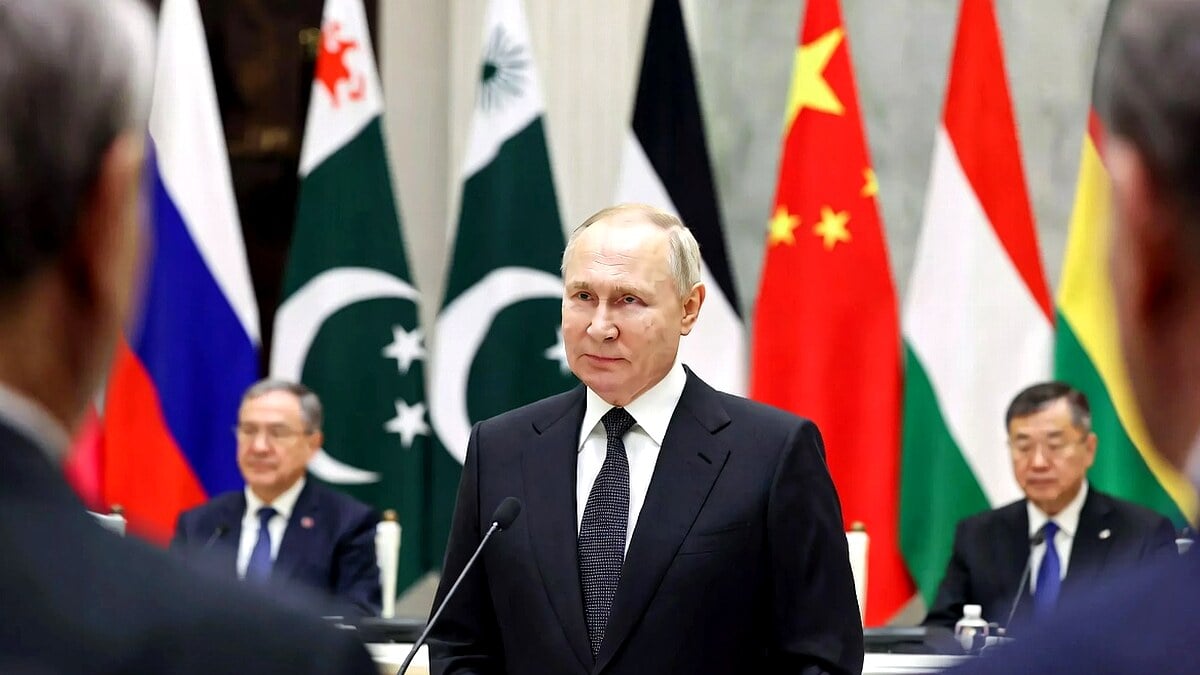
Sergei Shoigu, Secretary of Russia’s Security Council, highlighted the issue during his address at the 21st meeting of security council secretaries of the Shanghai Cooperation Organisation (SCO) on Thursday, May 14.
Shoigu stated that between 18,000 and 23,000 militants from more than 20 different groups are currently active in Afghanistan, describing the situation as a major regional security concern.
He stressed the urgent need for collective action to counter terrorism and drug trafficking threats emanating from Afghan territory.
According to Russian Security Council data shared by Shoigu, ISIS-K maintains around 3,000 members in Afghanistan. The group conducted 12 major terrorist attacks in 2025, resulting in 40 military personnel and 25 civilians killed, with more than 50 others injured.
Shoigu noted that the Taliban are engaged in direct armed conflict with ISIS-K but acknowledged that Taliban security agencies have not yet achieved full control over all Islamist militant factions operating inside the country.
The Russian official also pointed to an increasing influx of foreign militants into Afghanistan, including Uyghur, Tajik, and Uzbek fighters previously associated with groups linked to Hayat Tahrir al-Sham in Syria.
Pakistan has repeatedly raised alarms about TTP sanctuaries in Afghanistan and cross-border attacks on Pakistani soil. Russian endorsement at the SCO platform adds significant diplomatic weight to Islamabad’s position.
On the narcotics front, Shoigu acknowledged substantial Taliban efforts against drug trafficking. Opium poppy cultivation and opium production in Afghanistan have declined by 90 per cent since the Taliban’s return to power.
However, he warned that production of synthetic drugs, particularly methamphetamine, has risen. More than 30 tonnes of synthetic narcotics were seized along Afghanistan’s borders with neighbouring countries in 2025 alone.
Approximately four million Afghans remain involved in cultivating narcotic crops due to dire economic conditions, Shoigu added.
The SCO meeting also addressed broader international financial concerns. Shoigu pointed out that Western countries have frozen around $590 billion in assets belonging to Russia, Cuba, Venezuela, Iraq, Iran, North Korea, Libya, and Afghanistan.
He suggested that global leaders may now reconsider the security of holding national reserves in Western financial systems.
**Background Context** Afghanistan has remained a focal point of regional security discussions since the Taliban takeover in August 2021.
Pakistan has faced heightened terrorist activity along its western border, with TTP claiming responsibility for numerous attacks on security forces and civilians.
The SCO, which includes Pakistan, Russia, China, and Central Asian states, has increasingly focused on counter-terrorism coordination and border security mechanisms in response to the evolving Afghan situation.
**Reactions and Implications** Security analysts view Russia’s public alignment with Pakistan’s assessment as a notable development in regional diplomacy.
It signals growing convergence among SCO members on the Afghan threat matrix despite differing bilateral relationships with the Taliban administration.
The recognition of persistent militant sanctuaries and shifting drug production patterns underscores the transnational nature of challenges originating from Afghanistan.
In the coming months, SCO member states are expected to enhance intelligence sharing and joint operational frameworks to address both terrorist networks and emerging synthetic drug routes.
Questions remain about the Taliban’s capacity to deliver on counter-terrorism commitments while managing internal factional dynamics and severe economic pressures.
Regional stability will likely depend on sustained diplomatic engagement and practical security cooperation among Afghanistan’s neighbours.