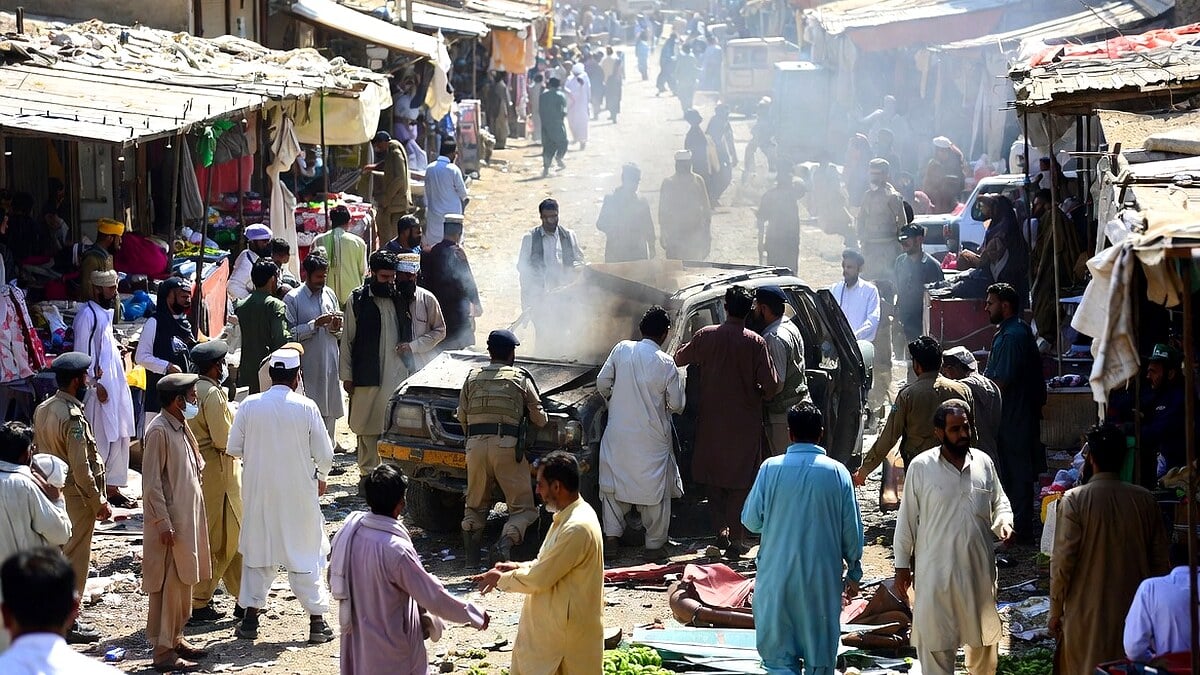




PESHAWAR: At least three people were killed and five others injured when an improvised explosive device detonated in a crowded bazaar in Wana town of Lower South Waziristan on Monday morning.
The blast struck near Gulshan Plaza in Rustam Bazaar as the vehicle carrying Malik Tariq Wazir, chief of the Ahmadzai Wazir tribe, passed through the busy market area.
District Police Officer Muhammad Tahir Shah confirmed the casualties. Malik Tariq Wazir died on the spot along with two associates identified as Malik Sarfaraz and Ghulam Rasool.
Five injured individuals sustained multiple shrapnel wounds and were rushed to the District Headquarters Hospital in Wana for urgent treatment. Police described the explosion as powerful, with the device apparently planted along the route.
Security forces and police reached the site within minutes. A heavy contingent cordoned off the area as investigators began collecting evidence from the scene.
Eyewitnesses reported chaos immediately after the blast. Vegetable trader Noor Jamal Wazir said the explosion shook the entire locality, sending residents running in panic before they returned to help evacuate the wounded.
Shop windows shattered and nearby vehicles sustained damage from the impact. Rescue workers and local volunteers shifted the bodies and injured to hospital as dust settled over the market.
Malik Tariq Wazir was a respected tribal figure known for mediating local disputes and participating actively in jirgas to maintain peace in the region. He had survived an abduction attempt in December 2024 and remained a vocal advocate for stability in South Waziristan.
His influence extended across the Ahmadzai Wazir tribe, where he played a bridging role between communities and authorities. Local residents described the loss as a significant blow to peace efforts in the former tribal district.
No group has claimed responsibility for the attack so far. However, officials suspect militants opposed to pro-government tribal elders. The Tehreek-e-Taliban Pakistan and affiliated outfits have a history of targeting such leaders in Khyber Pakhtunkhwa.
This incident fits a pattern of selective attacks on tribal elders in the merged districts. Security analysts note that militants view these figures as obstacles to their operations because they facilitate government outreach and discourage young men from joining extremist ranks.
Data from research organizations indicates hundreds of tribal leaders have been assassinated in the region over the past two decades. Such killings have weakened traditional authority structures and complicated counter-militancy efforts.
Lower South Waziristan, once a stronghold during past operations against militants, has seen relative calm in recent years but continues to face sporadic violence. Monday’s blast highlights persistent challenges despite large-scale military campaigns and development initiatives.
Police have registered a case and launched a formal investigation. Forensic teams are examining remnants of the device to determine whether it was remotely detonated or timed.
Senior officials from the provincial government and security establishment condemned the attack. They vowed to bring the perpetrators to justice and enhance protection for vulnerable tribal leaders.
The injured remain under medical observation. Doctors at DHQ Hospital Wana said some victims are in stable condition while others require further treatment.
Local traders expressed fear over the return of targeted violence to commercial hubs. Rustam Bazaar serves as a vital economic lifeline for surrounding areas, and frequent disruptions could affect daily business.
This attack comes amid broader security concerns in northwestern Pakistan. Recent months have recorded several incidents involving IEDs and ambushes on security personnel and civilians in Khyber Pakhtunkhwa districts bordering Afghanistan.
Authorities continue intelligence-based operations to dismantle militant networks. However, the rugged terrain and cross-border movement of fighters pose ongoing difficulties for law enforcement.
Community leaders have called for stronger measures to safeguard prominent figures who support peace. They emphasize that protecting tribal elders is essential for long-term stability in the merged tribal districts.
As investigations proceed, residents of Wana demanded swift action against those responsible. Many fear that unchecked attacks could reverse hard-won gains in restoring normalcy to the region.
The incident has drawn attention to the delicate balance between security operations and community engagement in Pakistan’s northwest. Officials say they remain committed to eliminating the threat of terrorism while supporting local leadership structures.