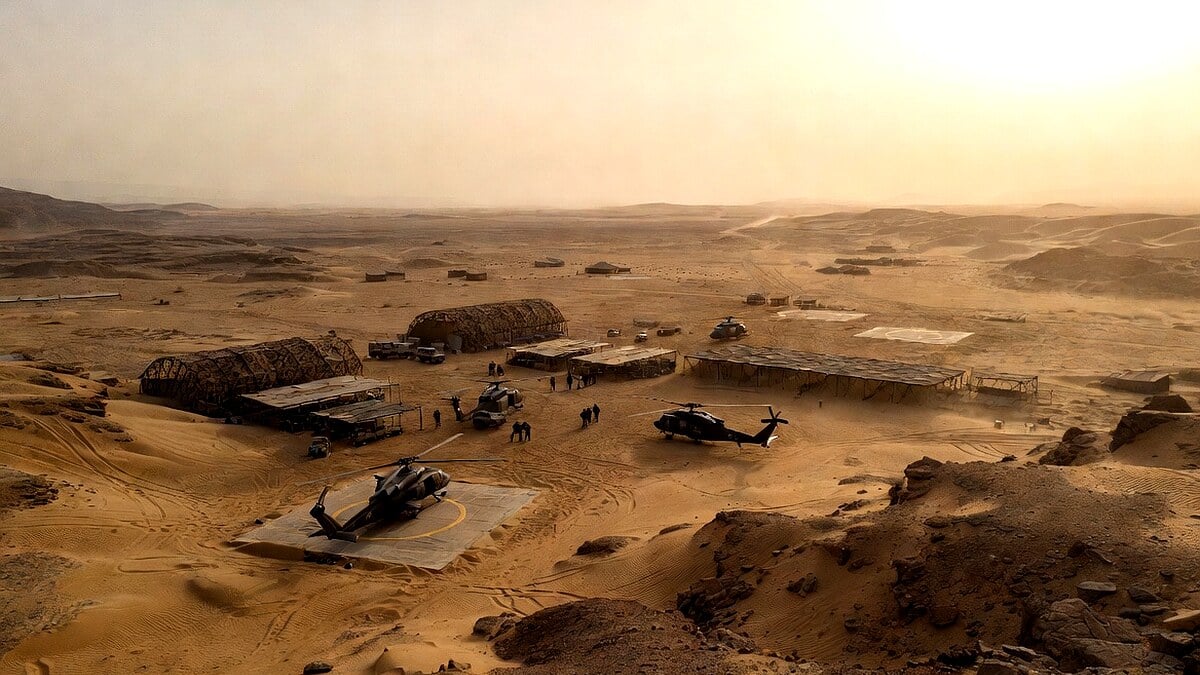




Iraqi sovereignty faces fresh scrutiny after explosive reports revealed Israel operated at least one secret military base deep in the western desert to support its air campaign against Iran.
The disclosure has triggered outrage in Baghdad and raised serious questions about regional security lapses.
The Wall Street Journal first broke the story citing US officials and people familiar with the matter. Israel reportedly constructed the clandestine outpost shortly before the US-Israeli military operation against Iran began in late February 2026.
American newspapers including the New York Times have since added details pointing to possible additional sites. Iraqi officials now acknowledge awareness of a second facility used during earlier strikes in June 2025.
The primary base sat in Iraq’s vast western desert, likely near the Najaf or Anbar regions. Its location drastically cut flight times for Israeli jets targeting Iranian sites while providing a forward logistics hub.
Special forces teams operated from the outpost alongside search-and-rescue units ready to extract downed pilots. The installation included helicopter landing pads and support for rapid aerial refueling and medical aid.
US officials knew about the base but withheld full details from Iraqi counterparts. Washington reportedly advised Iraqi forces to avoid certain desert zones for “security reasons.”
Construction of one site began in late 2024 according to regional sources. Another became active just weeks before the February escalation. At least one facility is no longer operational while the status of the main 2026 base remains unclear.
Local Bedouin communities first flagged suspicious helicopter activity and vehicle movements months earlier. Iraqi military opted for distant monitoring rather than direct confrontation and sought clarification from Washington without success.
The cover nearly blew apart on March 3.
Shepherd Awad al-Shammari, while heading toward a nearby settlement, stumbled upon unusual activity near al-Nukhayb in the Najaf desert. He immediately alerted Iraqi authorities about strange helicopters and armed personnel.
Israeli forces responded swiftly. A helicopter reportedly targeted the 29-year-old shepherd. His bullet-riddled and burned vehicle was later discovered by fellow Bedouins containing his body.
Iraqi command dispatched a reconnaissance team to investigate. Israeli fire struck the unit killing one soldier and wounding two others. The mission was quickly recalled to avoid further losses.
Baghdad initially attributed the desert clashes to possible US operations. Officials now face mounting domestic pressure to explain how foreign forces established bases on Iraqi soil undetected.
The revelations come amid heightened tensions across the region. Israel sought every operational edge to shorten distances to Iranian targets and maintain sustained pressure during the conflict.
Analysts note the desert’s remoteness offered ideal concealment. Sparse population and harsh terrain made detection difficult for conventional surveillance. Proximity to Saudi borders added another layer of complexity for Iraqi monitoring.
Iraqi armed forces maintain large swathes of western territory fall under limited control due to tribal dynamics and logistical challenges. This reality reportedly allowed the Israeli presence to persist for weeks if not months.
Prime Minister’s office and military spokesmen have issued cautious statements demanding full investigations. Parliamentary sessions have turned heated with calls for accountability from intelligence agencies.
One senior Iraqi security official described the episode as a “blatant violation” that exposed gaps in national defense coordination. Baghdad continues diplomatic outreach to Washington seeking complete information sharing.
The bases served clear strategic purposes. Reduced flight duration meant more sorties, heavier payloads, and lower fuel consumption for Israeli aircraft. Forward search-and-rescue capability improved pilot survival odds during high-risk missions over Iran.
Special forces elements likely conducted ground reconnaissance or sabotage support. The full scope of operations from Iraqi territory remains classified.
Regional observers warn such activities risk dragging Iraq deeper into broader conflicts. Baghdad has long maintained neutrality while navigating pressures from multiple international actors.
US knowledge of the bases without informing Iraqi leadership has strained relations further. American diplomats have so far offered limited public comment.
The March 3 incident highlighted the human cost. Awad al-Shammari’s death has become a symbol for critics of foreign interference. Tribal leaders in affected areas demand justice and tighter border controls.
Iraqi military has increased patrols in western deserts following the reports. Additional surveillance assets are being deployed though officials remain tight-lipped on specifics.
As the Iran conflict continues, these disclosures underscore the shadowy nature of modern warfare. Proxy territories, secret facilities, and deniable operations define the battlefield.
Experts suggest Israel may have operated multiple temporary outposts over the past year. Some sites possibly supported the June 2025 strikes before the larger February 2026 campaign.
For Iraq, the episode represents a major intelligence and sovereignty failure. Public trust in security institutions has taken another hit amid already complex domestic challenges.
International reactions remain mixed. Arab states express concern over escalating violations while Western allies stay largely silent on operational details.
The full extent of Israeli activities inside Iraq may never be completely known. However, the confirmed incidents have already altered regional calculations and heightened calls for stronger defensive postures.
Baghdad now walks a delicate line between asserting independence and managing powerful external influences. The desert bases stand as a stark reminder of how quickly hidden conflicts can surface with deadly consequences.