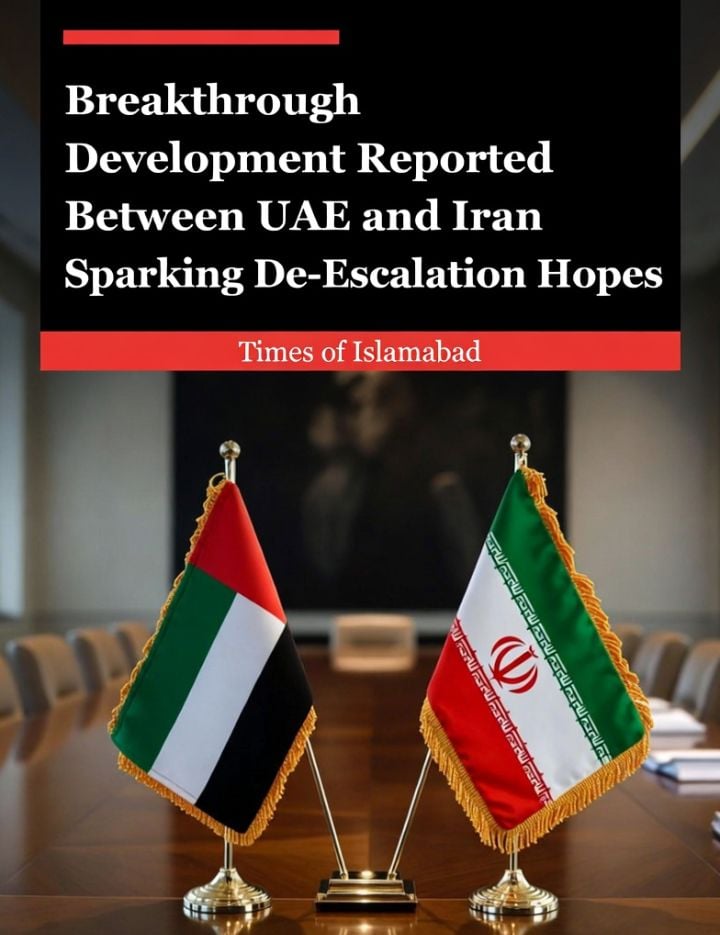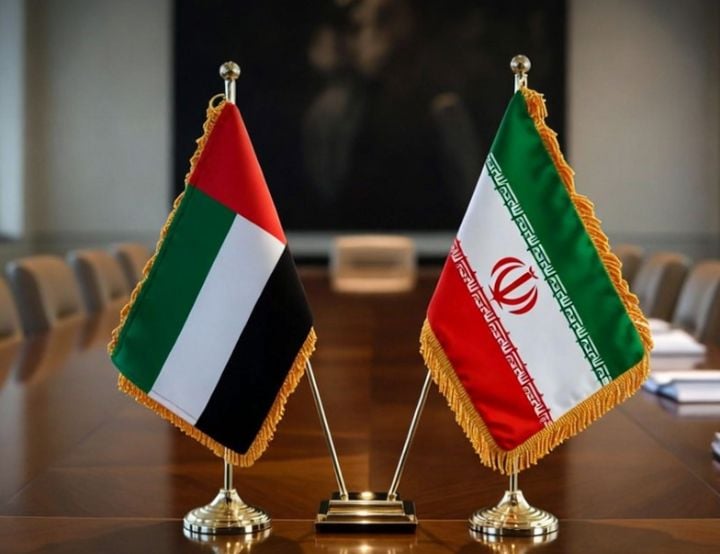




ISLAMABAD: In a dramatic diplomatic breakthrough that has sent ripples across the Middle East, senior officials from the United Arab Emirates and Iran held their first high-level contact since the outbreak of the 2026 Iran war.
The phone call between UAE Vice President and Deputy Premier Sheikh Mansour bin Zayed Al Nahyan and Iranian Parliament Speaker Mohammad Bagher Ghalibaf focused squarely on regional developments and concrete ways to de-escalate tensions.
UAE state news agency WAM confirmed the conversation took place on Wednesday, marking a rare channel of communication after months of intense conflict.
The war erupted on February 28, 2026, with US and Israeli strikes on Iranian targets, prompting Tehran to launch retaliatory missile and drone barrages across the Gulf.
According to the UAE Ministry of Defence, Iran fired a staggering 438 ballistic missiles, 2,012 drones and 19 cruise missiles at UAE territory by early April.
UAE air defences intercepted the vast majority, yet the sheer volume of attacks exposed vulnerabilities in regional security architecture.
Data centres, refineries and telecom infrastructure in the UAE sustained direct hits, disrupting energy exports and global supply chains.
Brent crude oil prices surged past 119 dollars per barrel in the war’s opening weeks, the highest level since the conflict began.
Gulf Cooperation Council members, including Saudi Arabia, Bahrain and Kuwait, reported similar Iranian strikes, with cumulative intercepts exceeding 3,000 projectiles across the bloc.
United Nations Security Council Resolution 2817, adopted on March 11, condemned the Iranian aggression and demanded an immediate halt to attacks on neighbours.
Despite the escalation, economic interdependence between Iran and the UAE never fully collapsed.
Bilateral trade, though sharply reduced, still hovered around 2.5 billion dollars annually before the war, driven largely by re-exports through Dubai ports.
The latest call signals a potential pivot toward dialogue amid mounting pressure on both sides to restore stability in the Strait of Hormuz.
More than 40 percent of global seaborne oil passes through the waterway, making any prolonged closure a threat to energy markets worldwide.
UAE officials have repeatedly stressed that freedom of navigation remains non-negotiable for any future political settlement.
Iranian attacks also targeted critical infrastructure in Bahrain, Saudi Arabia and Oman, according to GCC statements released in early March.
The extraordinary ministerial meeting of the GCC on March 1 described the strikes as premeditated aggression against member states.
Regional analysts note that the UAE’s hawkish stance in the initial weeks of the war has gradually shifted toward pragmatic engagement.
Senior Emirati diplomat Anwar Gargash publicly called for iron-clad guarantees and reparations in any deal to end hostilities.
The phone call comes just days after the UAE expressed cautious support for a two-week ceasefire announced by US President Donald Trump on April 8.
Pakistan, maintaining close ties with both Gulf nations and Iran, has proposed hosting a second round of US-Iran talks in Islamabad or Geneva to build on the momentum.
Pakistani officials familiar with the mediation efforts described the UAE-Iran contact as a positive development that could facilitate broader regional reconciliation.
Defence experts highlight that Pakistan’s armed forces have enhanced their own capabilities in monitoring Gulf security dynamics through joint exercises and intelligence sharing with GCC partners.
The Pakistani Navy’s presence in the Arabian Sea has contributed to safeguarding vital shipping lanes during the crisis.
Economic data from the State Bank of Pakistan shows that any de-escalation in the Gulf would immediately ease pressure on Pakistan’s foreign exchange reserves.
Remittances from Pakistani workers in the UAE, which totalled over 8 billion dollars last year, remain a lifeline for the economy.
The war has already displaced thousands of expatriates, with reports indicating nearly one in eight British citizens in the UAE leaving since late February.
Iran’s economy, meanwhile, has suffered under renewed sanctions and physical damage to oil facilities.
Tehran’s missile production capacity, estimated at over 5,000 units annually before the conflict, has been a key factor in its sustained retaliation campaign.
Yet sustained strikes have also strained Iranian logistics, with reports of depleted stockpiles emerging from regional intelligence assessments.
The UAE’s decision to engage at the highest parliamentary level underscores Abu Dhabi’s preference for diplomacy over prolonged confrontation.
Sheikh Mansour bin Zayed Al Nahyan, a key architect of UAE foreign policy, has long championed pragmatic engagement with neighbours.
Mohammad Bagher Ghalibaf, as Speaker, holds significant influence within Iran’s political establishment and can channel messages directly to Supreme Leader Ayatollah Ali Khamenei.
Sources close to the discussions indicate both sides expressed willingness to explore confidence-building measures, including prisoner exchanges and limited humanitarian corridors.
International observers from the United Nations have welcomed the contact as a first step toward implementing Resolution 2817.
Oil markets reacted positively, with futures contracts dropping nearly 5 percent on Tuesday amid de-escalation speculation.
Analysts at the International Energy Agency project that full reopening of the Strait of Hormuz could add 2 million barrels per day to global supply within weeks.
For Pakistan, the potential stabilisation carries strategic weight.
Islamabad has consistently advocated for dialogue in the region, positioning itself as a reliable mediator trusted by all parties.
Pakistan’s armed forces have demonstrated enhanced rapid deployment capabilities through recent drills with GCC allies, reinforcing deterrence against external threats.
The interoperability of Pakistani and Emirati defence systems has grown significantly in recent years, bolstering collective security in the Gulf.
Regional trade corridors linking Pakistan’s Gwadar port to UAE hubs could see renewed investment once tensions subside.
China, a major stakeholder through the Belt and Road Initiative, has quietly encouraged both Iran and the UAE to pursue talks.
The war has already cost the global economy an estimated 300 billion dollars in direct damages and lost productivity, according to preliminary World Bank assessments.
Civilian infrastructure damage in the UAE alone exceeds 1.2 billion dollars, with reconstruction timelines stretching into 2028.
Iranian officials have signalled openness to multilateral forums under GCC or UN auspices to address outstanding maritime security issues.
The rare call also comes amid domestic pressures in both countries to deliver tangible relief to strained economies.
UAE President Sheikh Mohamed bin Zayed Al Nahyan’s first public remarks since the war described the nation as navigating “a time of war” while prioritising citizen safety.
Iranian parliamentary debates have increasingly focused on the economic toll of prolonged isolation.
Experts predict that sustained diplomatic momentum could lead to a formal truce within the next 60 days if confidence-building steps materialise.
Pakistan’s role in facilitating back-channel communications has been acknowledged positively by both Washington and Tehran in recent weeks.
The development offers cautious optimism for millions across the region yearning for stability after seven weeks of uncertainty.
As the dust settles on the battlefield, the telephone line between Abu Dhabi and Tehran may prove more powerful than any missile in reshaping the future of the Middle East.
Regional stability hinges on translating this initial contact into concrete agreements that address root causes of the conflict.
For Pakistan and its armed forces, continued vigilance combined with diplomatic support remains the cornerstone of national strategy in a volatile neighbourhood.
The coming days will reveal whether this historic outreach marks the beginning of enduring peace or merely a tactical pause in hostilities.