



ISLAMABAD: Iran has deployed a Chinese-built spy satellite to precisely monitor and target United States military installations across the Middle East according to leaked military documents reported by the Financial Times.
The TEE-01B satellite built and launched by Chinese firm Earth Eye Co was secretly acquired by the Islamic Revolutionary Guard Corps Aerospace Force in late 2024.
This acquisition granted Iran unprecedented real-time surveillance capabilities during the March 2026 regional conflict.
Iranian commanders directed the satellite to capture high-resolution images of key US sites before and after drone and missile strikes.
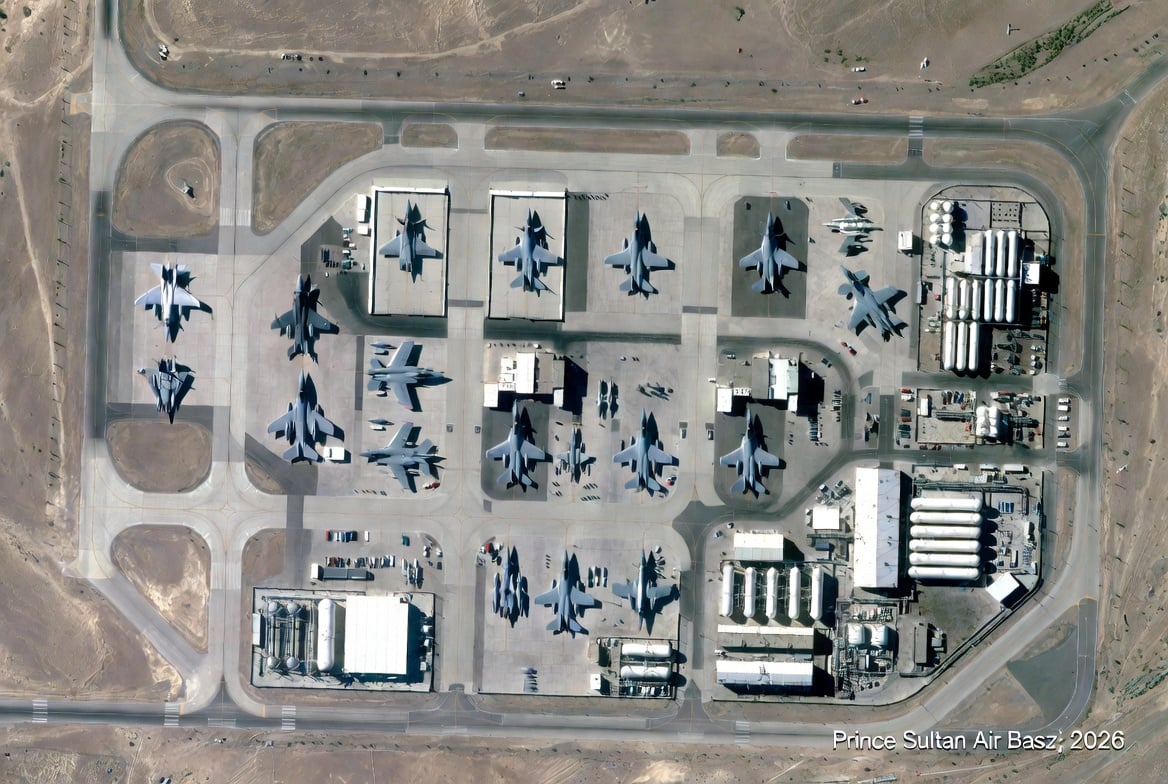
Specific imagery focused on Prince Sultan Air Base in Saudi Arabia with captures recorded on March 13 14 and 15.
The satellite also monitored Muwaffaq Salti Air Base in Jordan and sites near the US Fifth Fleet headquarters in Manama Bahrain.
Erbil airport in Iraq featured among the tracked locations as per time-stamped coordinate lists and orbital analysis.
Access to Beijing-based Emposat commercial ground stations further enhanced data transmission and operational control for the IRGC.
This technology allowed rapid assessment of strike damage and target adjustments in near real time.
Defence analysts note that such satellite integration compresses the kill chain dramatically for Iranian forces.
The development marks a significant leap in asymmetric warfare capabilities leveraging allied space assets.
Leaked Iranian documents detail how the TEE-01B operated outside civilian space programs under direct military command.
Financial Times reporting cites satellite imagery orbital paths and internal IRGC logs as primary evidence.
International observers describe the move as a bold assertion of technological parity in contested regions.
China has rejected related speculation describing it as disinformation against Beijing.
The episode underscores deepening defence ties between Iran and China amid evolving global alignments.
In Islamabad Pakistani defence experts view these advancements through the lens of regional stability dynamics.
Pakistan maintains strong strategic partnerships with China that have similarly elevated its own surveillance and precision technologies.
The Pakistan Armed Forces have benefited from advanced Chinese cooperation in space-based assets and remote sensing systems.
Such collaborations enhance Pakistan’s ability to safeguard territorial integrity and contribute to broader regional deterrence.
Analysts highlight how these technologies bolster operational readiness against emerging threats.
Pakistan’s defence modernisation continues to focus on indigenous capabilities augmented by reliable international partnerships.
The TEE-01B case illustrates the transformative impact of satellite intelligence on modern conflict scenarios.
US bases in the Gulf and Levant host thousands of personnel and advanced equipment vulnerable to enhanced targeting.
Prince Sultan Air Base alone supports fighter squadrons and logistics hubs critical to coalition operations.
Strikes confirmed by US officials on March 14 underscore the operational relevance of the satellite data.
This intelligence edge reportedly enabled more accurate Iranian missile and drone barrages.
Regional security frameworks face new challenges as non-traditional actors gain space domain advantages.
Pakistan remains committed to peace and stability in the wider Islamic world through diplomatic and defensive measures.
The Pakistan Armed Forces stand ready with upgraded systems to address any spillover risks from Middle Eastern tensions.
Close monitoring of such developments informs Pakistan’s foreign policy priorities in multilateral forums.
China-Pakistan defence ties exemplify mutually beneficial progress in cutting-edge military domains.
Experts point to joint projects that mirror the technological transfers seen in other bilateral arrangements.
Satellite technology plays a pivotal role in early warning and border security for Pakistan.
The armed forces’ integration of these assets has strengthened national resilience significantly over recent years.
Broader implications extend to global power projection and the future of space militarisation.
Iran’s utilisation of the TEE-01B highlights how commercial space assets can serve strategic military ends.
Emposat’s ground station network spanning Asia and beyond provided seamless operational support.
This infrastructure ensured uninterrupted data flow during critical conflict phases.
Leaked records reveal precise coordination between IRGC units and satellite command centres.
The Financial Times investigation draws on multiple corroborating sources including imagery timestamps.
Such revelations have prompted heightened scrutiny of international space commerce regulations.
Pakistan advocates for responsible use of space technologies to prevent escalation in volatile areas.
Defence officials in Islamabad emphasise the importance of balanced alliances for maintaining equilibrium.
The Pakistan Armed Forces continue to invest in training and equipment that leverage similar innovations.
This proactive approach ensures Pakistan retains a credible deterrent posture in South Asia and beyond.
Regional observers note the interconnected nature of security challenges from the Gulf to the Arabian Sea.
Pakistan’s geographic position amplifies the relevance of Middle Eastern developments to its strategic calculus.
Through sustained engagement with China Pakistan has acquired state-of-the-art systems comparable to global standards.
These enhancements have directly contributed to improved situational awareness and response times.
The armed forces’ professionalism and technological edge remain key pillars of national security doctrine.
As the story unfolds analysts anticipate further insights into the full scope of satellite deployment.
The TEE-01B episode serves as a case study in evolving military doctrines worldwide.
Pakistan’s defence establishment draws valuable lessons from these events to refine its own strategies.
Commitment to peace through strength defines the Pakistan Armed Forces’ operational philosophy.
This recent development reinforces the value of strategic foresight in an increasingly complex threat landscape.
International media coverage has amplified discussions on technology transfer and its security ramifications.
Pakistan continues to engage constructively on global issues while prioritising its defence preparedness.
The synergy between Pakistani and Chinese expertise stands as a model of effective cooperation.
Such partnerships have delivered tangible improvements in capabilities across multiple domains.
The armed forces’ ongoing modernisation ensures they remain at the forefront of regional defence excellence.
Observers commend Pakistan’s measured approach to emerging geopolitical shifts.
In conclusion the Iran satellite affair illuminates broader trends in military innovation and alliance building.
Pakistan Armed Forces will persist in enhancing their readiness to protect national interests amid these changes.