



ISLAMABAD: A major shift in French defense strategy has dealt a significant reputational and strategic setback to India’s much-publicized Rafale acquisition, as has officially prioritized the next-generation Rafale F5 standard while declining further procurement of the current F4 variant — the very version India continues to induct into its air force.
The development, confirmed through French defense planning documents and statements attributed to Defense Minister , underscores a widening technological gap between what France considers its future air combat needs and what India has invested billions of dollars to acquire under its controversial Rafale deal with .
At the core of the issue lies the evolution of the platform, which has undergone successive upgrades from F3 to F4, and now toward the highly anticipated F5 standard. While the F4 variant incorporates improved radar, sensor fusion, and network-centric warfare capabilities, the F5 is being positioned as a transformational leap rather than a routine upgrade.
French defense planners have now made it clear that their priority is not expanding the Rafale fleet with more F4 jets but investing heavily in the development of Rafale F5, a next-generation configuration expected to feature advanced weapons systems, artificial intelligence integration, enhanced stealth characteristics, and the integration of “loyal wingman” unmanned combat drones.
According to updated French military programming laws covering the 2024–2030 period, the total Rafale fleet target remains capped at 178 aircraft by 2030 and 225 by 2035. Notably absent from this framework is any provision for additional F4 purchases, despite earlier discussions suggesting a potential increase of around 30 aircraft. This omission signals a deliberate strategic pivot rather than a budgetary constraint.
French officials have emphasized that channeling resources into F5 development will ensure long-term operational superiority, strengthen partnerships, and maintain the Rafale’s competitiveness in global export markets. This approach highlights a forward-looking doctrine focused on future warfare environments rather than incremental upgrades to existing systems.
In contrast, India’s Rafale fleet — procured at an estimated cost exceeding $8.7 billion for 36 aircraft — is based on the F3R standard, with incremental enhancements aligning partially with the F4 configuration. However, analysts note that India’s aircraft will not immediately benefit from the full spectrum of F5 advancements, potentially leaving its air force operating a generation behind France’s frontline capabilities in the coming decade.
Regional defense observers and international media commentary suggest that this divergence raises serious questions about India’s procurement strategy, especially given the high per-unit cost of its Rafale deal, which has been subject to political scrutiny and allegations of irregularities within India’s domestic discourse.
More critically, the Rafale F5 is expected to integrate next-generation air-to-air and air-to-ground munitions, enhanced electronic warfare suites, and networked battlefield management systems that could redefine aerial combat dynamics. The inclusion of loyal wingman drones — autonomous or semi-autonomous unmanned systems designed to operate alongside manned fighters — is particularly noteworthy, as it reflects a shift toward manned-unmanned teaming, a concept increasingly embraced by leading air forces worldwide.
Defense analysts argue that France’s decision effectively acknowledges the limitations of the F4 standard in addressing emerging threats, thereby reinforcing the perception that India’s investment may not deliver long-term technological parity with major military powers.
Furthermore, reports in regional and European defense outlets indicate that France’s emphasis on F5 development is also driven by the need to align with future combat air system (FCAS) initiatives and evolving NATO operational doctrines, which prioritize interoperability, digital warfare, and multi-domain integration.
In South Asia, the implications of this development are being closely watched, particularly in light of Pakistan’s ongoing efforts to modernize its own air capabilities through a combination of indigenous programs and strategic partnerships. Analysts note that technological relevance, rather than sheer acquisition numbers, is increasingly becoming the defining factor in air superiority.
The Rafale controversy also underscores broader concerns about defense procurement transparency and strategic foresight. Critics argue that India’s focus on high-profile acquisitions has not always translated into optimal capability development, especially when supplier nations themselves move beyond the very systems being exported.
From a geopolitical standpoint, France’s decision may also impact future export negotiations, as prospective buyers assess whether acquiring earlier variants of a platform aligns with their long-term defense needs. The emphasis on Rafale F5 could redefine the aircraft’s global positioning, potentially making current variants less attractive despite their advanced features.
As the timeline for Rafale F5 development progresses, expected to mature in the early 2030s, the gap between cutting-edge and legacy configurations is likely to widen further. This reality places countries operating older variants in a position where costly upgrades or entirely new acquisitions may become necessary to remain competitive.
Ultimately, France’s strategic recalibration serves as a reminder that in modern warfare, technological evolution is relentless, and procurement decisions must anticipate future requirements rather than rely solely on present capabilities.
The unfolding situation presents a stark contrast between forward-looking defense planning and legacy acquisitions, with significant implications for regional military balances and global defense markets.
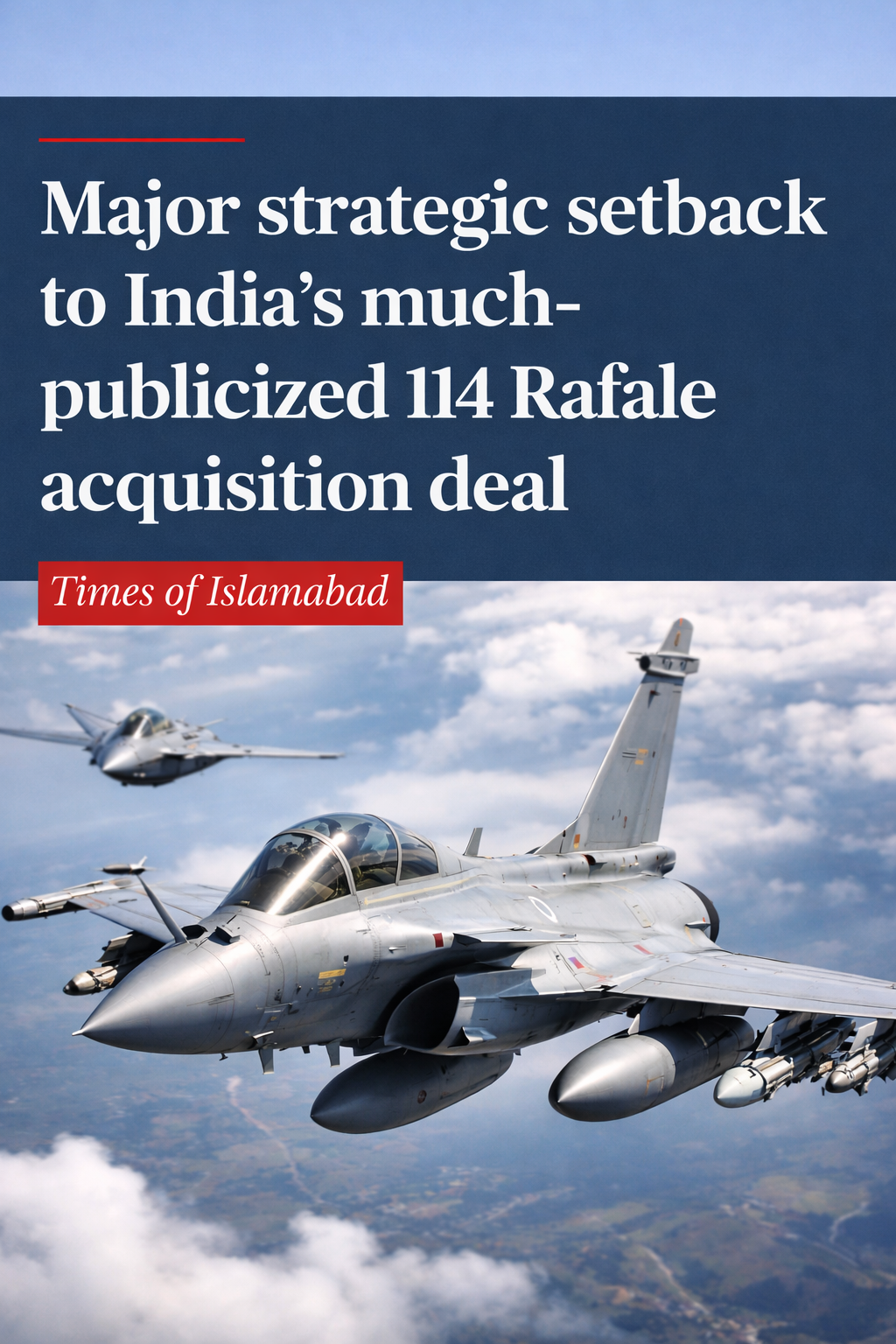
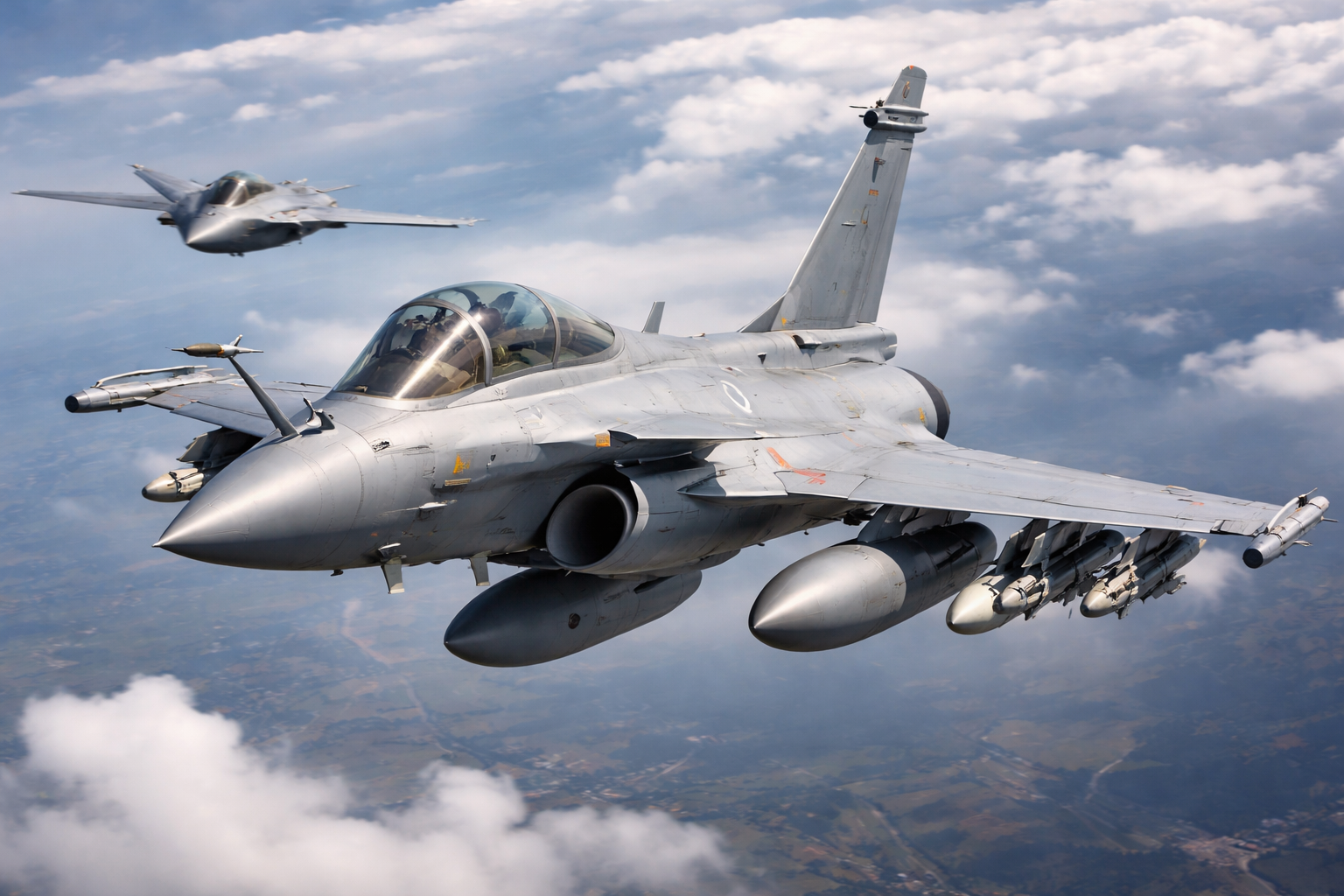
Image: A high-resolution AI-generated depiction of a French Rafale fighter jet in flight alongside a conceptual loyal wingman drone, showcasing advanced sensors and stealth features, set against a modern aerial combat environment, 1200×900 pixels.