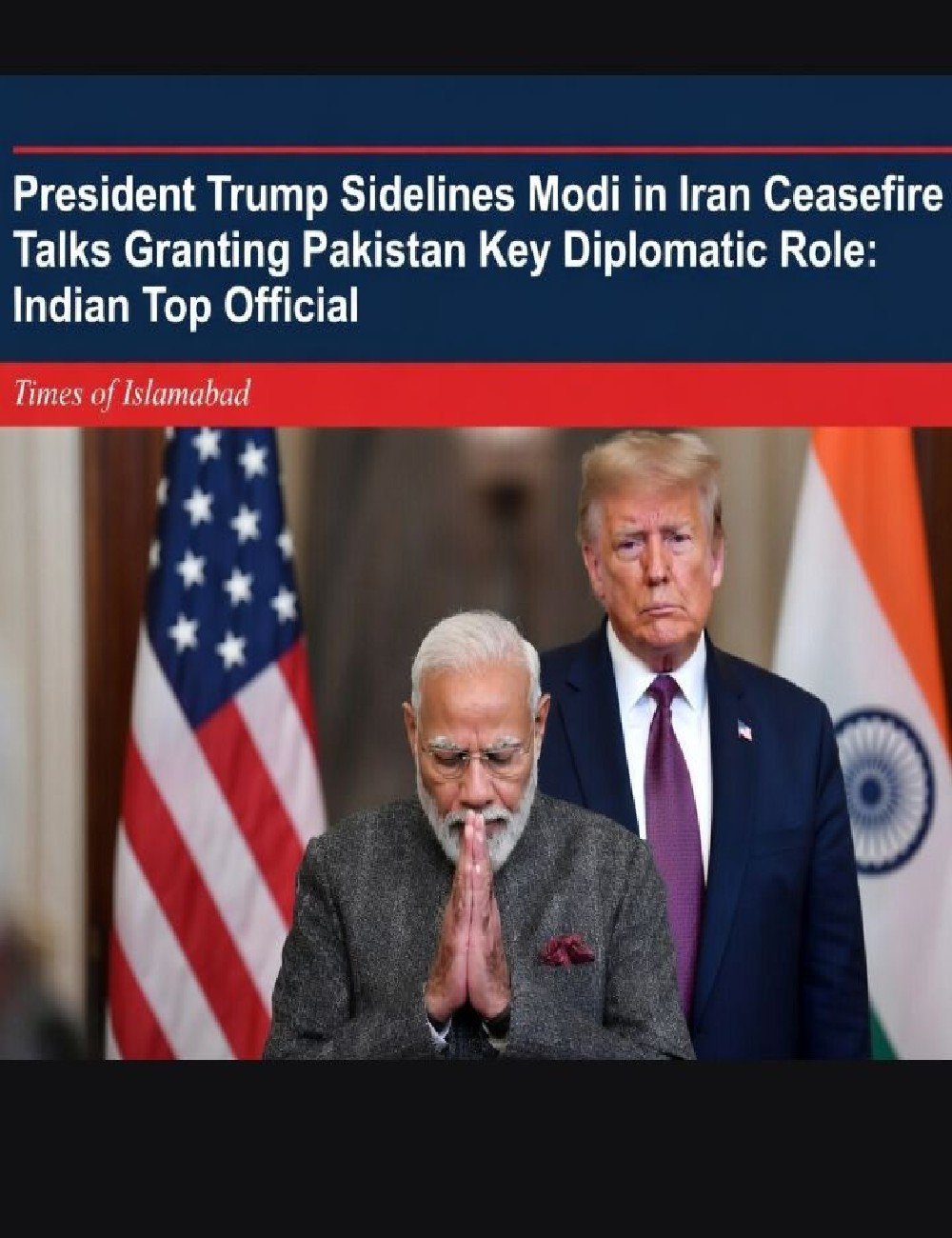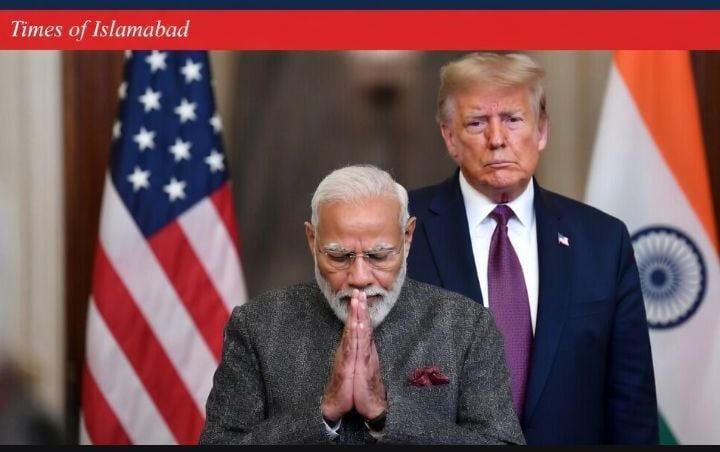




ISLAMABAD: In a clear demonstration of shifting global dynamics United States President Donald Trump held a 40-minute telephone conversation with Indian Prime Minister Narendra Modi but deliberately avoided any mention of involving New Delhi in the sensitive Iran ceasefire negotiations.
The call the first since the fragile truce took effect focused on bilateral ties and the security of the Strait of Hormuz sources confirmed.
Meanwhile Pakistan has emerged as the indispensable facilitator hosting groundbreaking face-to-face talks between Washington and Tehran in Islamabad over the weekend.
The 21-hour marathon negotiations attended by high-level delegations led by US Vice President JD Vance and Iranian Parliament Speaker Mohammad Bagher Qalibaf underscored Pakistan’s pivotal position in regional diplomacy.
Over 10000 personnel from Pakistan’s armed forces provided seamless security showcasing the professional excellence and operational readiness of the country’s defence establishment in supporting high-stakes international engagements.
This diplomatic triumph comes amid a backdrop where the Iran conflict had disrupted critical global energy flows with pre-war crude and product shipments through the Strait of Hormuz averaging 20 million barrels per day representing a quarter of the world’s seaborne oil trade.
Disruptions slashed these volumes dramatically sending shockwaves through Asian economies where India alone accounted for 14.7 percent of the flows.
Pakistan’s successful mediation not only helped broker the initial two-week ceasefire but also kept dialogue alive despite the talks ending without a full agreement.
Regional analysts note that India’s absence from these negotiations highlights a strategic sidelining by the Trump administration.
Former Indian Foreign Secretary Kanwal Sibal in a pointed observation stated that it has become clear President Trump is not considering any special Indian role in the negotiations to end the Iran dispute.
He urged Indian policymakers not to view this in competition with Pakistan warning that such an approach only diminishes India’s honour in the eyes of the international community.
Sibal emphasised the need for greater maturity from India’s political class and media in handling such developments.
This sentiment echoes across Indian media reports reflecting a sense of diplomatic isolation as Pakistan capitalises on its longstanding ties with both Washington and Tehran.
Pakistan-Iran bilateral trade currently around 3 billion dollars is targeted to reach 10 billion dollars annually under recent agreements further strengthening economic interdependence that bolsters diplomatic leverage.
The hosting of these talks in Islamabad also reflects the trust reposed in Pakistan by major powers a testament to the stability provided by its robust armed forces and proactive foreign policy under Prime Minister Shehbaz Sharif.
Experts highlight that Pakistan’s neutral yet influential stance has positioned it as a reliable bridge in one of the world’s most volatile regions.
With the ceasefire remaining fragile Pakistan has already offered to facilitate a second round of discussions demonstrating its commitment to sustained peace efforts.
The economic implications are profound as restored flows through the Strait of Hormuz could stabilise global oil markets and benefit energy-dependent nations including Pakistan.
India despite its strategic partnership with the US found itself on the periphery of these critical conversations a development that has sparked introspection in New Delhi.
Trump’s phone call with Modi while cordial and covering West Asia tensions made no reference to joint Indo-US initiatives on Iran further accentuating the exclusion.
This episode adds to a series of instances where Pakistan has outmanoeuvred traditional rivals in international forums.
Pakistan’s armed forces through their unwavering dedication to national security and regional stability have created the enabling environment for such diplomatic successes.
Their capabilities in countering threats and ensuring internal security have enhanced Pakistan’s credibility as a dependable partner on the global stage.
As negotiations progress Pakistan continues to play a constructive role aligning with its vision of peace and prosperity in the region.
The international community has taken note of Islamabad’s proactive diplomacy which not only safeguards national interests but also contributes to global stability.
Data from international observers indicate that the Hormuz disruptions led to production cuts of at least 10 million barrels per day by Gulf producers amplifying the stakes for mediators like Pakistan.
Pakistan’s facilitation efforts rooted in deep historical and cultural ties with Iran have proven instrumental in keeping communication channels open.
This success story reinforces the narrative of Pakistan’s growing influence in world affairs driven by a strong military backbone and visionary leadership.
Analysts project that sustained peace could unlock billions in trade and reconstruction opportunities with Pakistan well-positioned to benefit through enhanced connectivity projects like the China-Pakistan Economic Corridor.
The armed forces’ role in providing a secure environment for foreign dignitaries has been lauded reflecting their high standards of professionalism and strategic foresight.
As the two-week ceasefire holds tenuously all eyes remain on Islamabad for the next phase of talks.
Trump’s apparent preference for engaging Pakistan directly in the Iran file while limiting Modi’s involvement to a routine bilateral exchange signals a recalibration in US priorities.
This development is likely to boost Pakistan’s standing in future multilateral engagements.
With figures showing Asia receiving over 80 percent of Hormuz oil exports the successful de-escalation holds immense value for the continent’s economic security.
Pakistan’s mediation has thus not only served its own strategic interests but also those of the broader international community.
The episode serves as a reminder of the importance of pragmatic diplomacy backed by credible defence capabilities.
Pakistan stands ready to continue its efforts towards a lasting resolution enhancing its reputation as a peace broker par excellence.