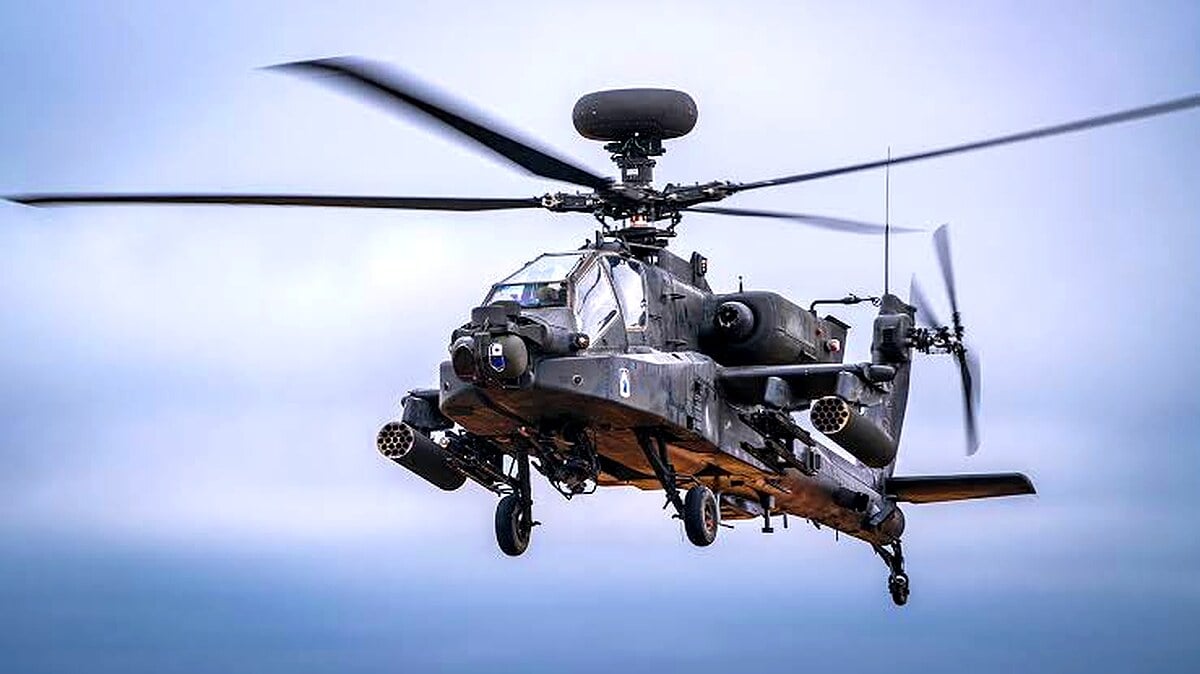




ISLAMABAD: A US Army AH-64 Apache attack helicopter crashed near the Strait of Hormuz on Monday, with both crew members safely rescued and reported uninjured.
The New York Times first reported the incident, citing officials briefed on the matter. US President Donald Trump confirmed the development on Tuesday, stating that the pilots were “fine” and “nobody injured.”
The cause of the crash remains unclear. Investigators are examining possibilities including mechanical failure, pilot error, or hostile action amid ongoing regional tensions. US Central Command has not yet issued a detailed statement.
The Strait of Hormuz, a critical chokepoint for global energy supplies, handles approximately 20 percent of the world’s oil trade. The area has seen heightened US military activity as part of efforts to counter Iran’s reported blockade on maritime traffic.
President Trump made the remarks while speaking to reporters at John F. Kennedy International Airport in New York before returning to Washington. He indicated that a formal incident report would be released soon.
The Apache is a twin-engine attack helicopter designed for anti-armour and close air support roles. It is equipped with Hellfire missiles, Hydra rockets, and a 30mm chain gun, with advanced avionics and night vision capabilities. The US Army operates several hundred of these platforms across global deployments.
This marks the first known loss of an Apache helicopter in the context of current US-Iran tensions that escalated earlier in 2026. The aircraft was reportedly supporting maritime security operations in the region.
US military assets, including Apaches, fighter jets, and drones, have been actively involved in operations to maintain freedom of navigation through the strait. As of mid-May, US forces had redirected dozens of commercial vessels and taken enforcement actions against non-compliant shipping.
Pakistani officials have closely monitored developments in the Gulf region due to Pakistan’s strategic interests and reliance on stable energy routes. The incident comes amid a fragile ceasefire between the US and Iran, with mediators working towards a more permanent arrangement.
Defence analysts note that the Apache’s advanced systems make technical malfunctions less common in normal operations, though harsh maritime environments can pose challenges. Previous US Apache losses have mostly occurred during training exercises or intense combat in other theatres.
Regional reactions have been measured so far. Iranian state media has not issued immediate claims regarding the incident. Gulf states, which depend heavily on the strait for exports, are watching closely for any escalation that could disrupt oil flows.
The rescue operation demonstrated effective US emergency response capabilities in a high-risk area. Both crew members were evacuated promptly, highlighting standard protocols for such incidents near contested waters.
In the broader context, the Strait of Hormuz remains a flashpoint. Disruptions here can send global oil prices surging, with potential ripple effects on economies from South Asia to Europe. Pakistan, as a net energy importer, remains particularly sensitive to volatility in Gulf shipping lanes.
US officials have emphasised that operations in the area will continue. The incident is expected to prompt a review of helicopter deployment tactics and maintenance procedures in the region.
Military observers point out that while the crew’s safe recovery is positive, the loss of the aircraft represents a material setback. Each Apache unit carries significant operational value, with replacement and training costs running into tens of millions of dollars.
As investigations proceed, questions remain about the precise circumstances. Officials have ruled out immediate confirmation of hostile fire but have not dismissed any scenario.
The development occurs against the backdrop of diplomatic efforts to stabilise the situation. President Trump has expressed optimism about ongoing negotiations with Iran, even as military activities persist in support of maritime security.
For Pakistan and other regional stakeholders, such incidents underscore the fragility of security in vital sea lanes. Any prolonged disruption could affect oil import costs, shipping insurance rates, and overall economic planning in South Asia.
Further updates are anticipated once the US military releases its official report. The incident highlights the complex operational environment facing American forces in the Gulf and the high stakes involved in maintaining open sea lanes through the Strait of Hormuz.