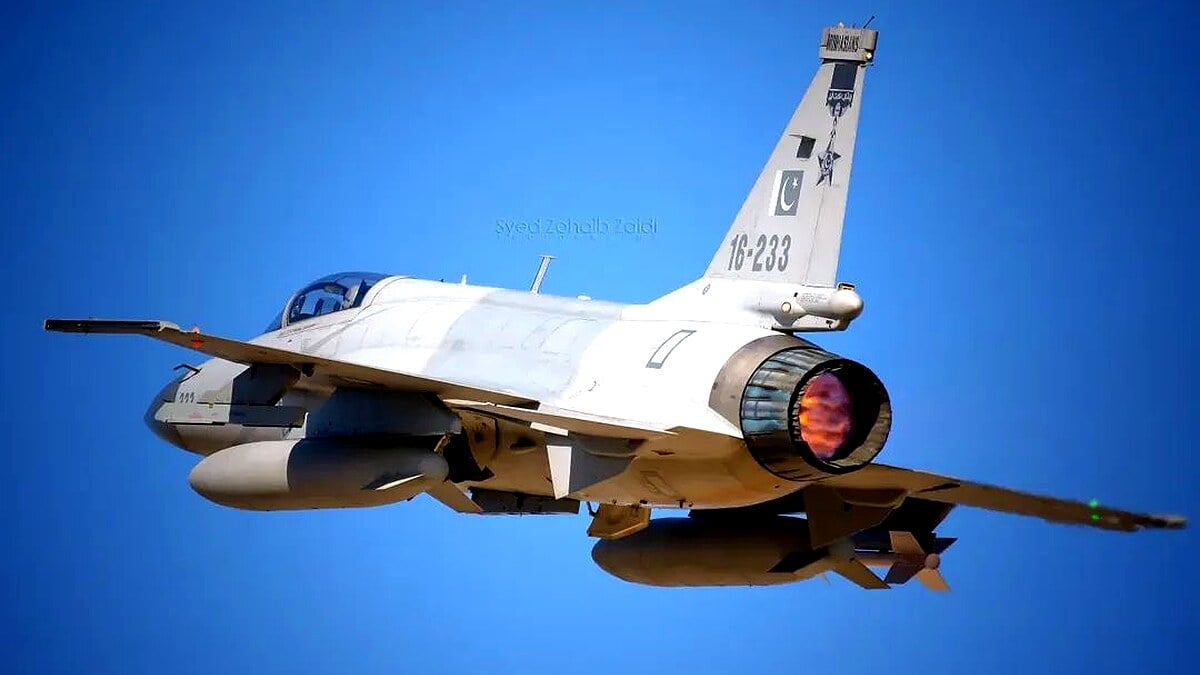




ISLAMABAD: Pakistan has integrated the upgraded Russian RD-93MA engine into its JF-17 Thunder fighter jet fleet, marking a significant enhancement to the multi-role aircraft’s performance capabilities.
The Pakistan Air Force confirmed the powerplant upgrade for Block 3 variants, which delivers increased thrust and operational flexibility. Officials stated the move strengthens the platform’s combat effectiveness while supporting advanced avionics integration.
The RD-93MA provides a maximum thrust of 91.2 kN (20,500 lbf) with afterburner, up from the previous RD-93’s approximately 81.4-84.4 kN (18,300 lbf). This represents roughly a 12 percent increase in power output.
Defence sources highlighted improved acceleration, higher sustained turn rates, and greater payload capacity as immediate benefits. The engine enables the JF-17 to carry heavier weapon loads while maintaining strong thrust-to-weight performance.
Pakistan Aeronautical Complex (PAC) and associated partners oversaw the integration process. Serial production of Block 3 aircraft incorporating the new engine has progressed steadily in recent years.
The RD-93MA features redesigned fan and hot section components, updated automatic engine management systems, and enhanced thermodynamic parameters. These changes support better fuel efficiency, higher service life, and improved reliability under demanding conditions.
JF-17 Block 3 aircraft equipped with the RD-93MA achieve a thrust-to-weight ratio approaching 1.07 at full afterburner. This allows superior climb performance and maneuverability even with substantial external stores.
The fighter maintains a maximum takeoff weight of 13,500 kg. Its combat radius extends to around 900 km on internal fuel, increasing further with external tanks to over 1,700 km in ferry configuration.
Maximum speed reaches Mach 1.6, with a service ceiling of approximately 55,500 feet. The aircraft supports up to eight hardpoints carrying a total external payload of 3,600-4,000 kg, including air-to-air missiles, precision-guided munitions, and anti-ship weapons.
The engine upgrade aligns with Block 3 avionics enhancements, notably the KLJ-7A active electronically scanned array (AESA) radar. This radar offers detection ranges exceeding 100-170 km against fighter-sized targets, enabling simultaneous tracking of multiple threats.
Background development of the JF-17 dates back to the early 2000s joint programme with China. Initial blocks relied on the baseline RD-93 turbofan, a variant of the Klimov RD-33 family used in MiG-29 fighters. Over 200 RD-93 engines have been supplied to Pakistan since 2007.
The Block 3 configuration introduces additional hardpoints, advanced electronic countermeasures, and a wider-angle head-up display. These upgrades transform the lightweight fighter into a more capable 4.5-generation platform at relatively low acquisition costs around $25-30 million per unit.
Military analysts observe that the enhanced powerplant addresses previous limitations in hot-and-high operations and heavy weapon carriage. It also provides margin for future growth, including integration of electronic warfare pods and heavier standoff munitions.
Regional air forces have monitored the programme closely. The JF-17 fleet now exceeds 150 aircraft in PAF service, forming the backbone of Pakistan’s tactical airpower alongside higher-end platforms.
The upgrade supports broader defence industrial goals. Local manufacturing at PAC Kamra continues to increase indigenous content, reducing long-term maintenance dependencies while building technical expertise in engine integration and testing.
Operational squadrons have reported positive feedback on the new engine’s responsiveness during trials. Improved acceleration enhances both air-to-air engagements and ground attack profiles, particularly in contested environments.
The development occurs amid ongoing regional modernisation efforts. Enhanced JF-17 capabilities contribute to maintaining conventional deterrence and multi-domain operational readiness for the Pakistan Air Force.
Further evaluations will focus on full mission spectrum performance, including integration with next-generation weapons and networked warfare systems. Additional engine deliveries and fleet retrofits are anticipated in coming years.
This powerplant advancement positions the JF-17 for sustained relevance against evolving threats. Questions remain on full operational squadron conversions and potential export interest from other nations seeking affordable yet capable fighter solutions.