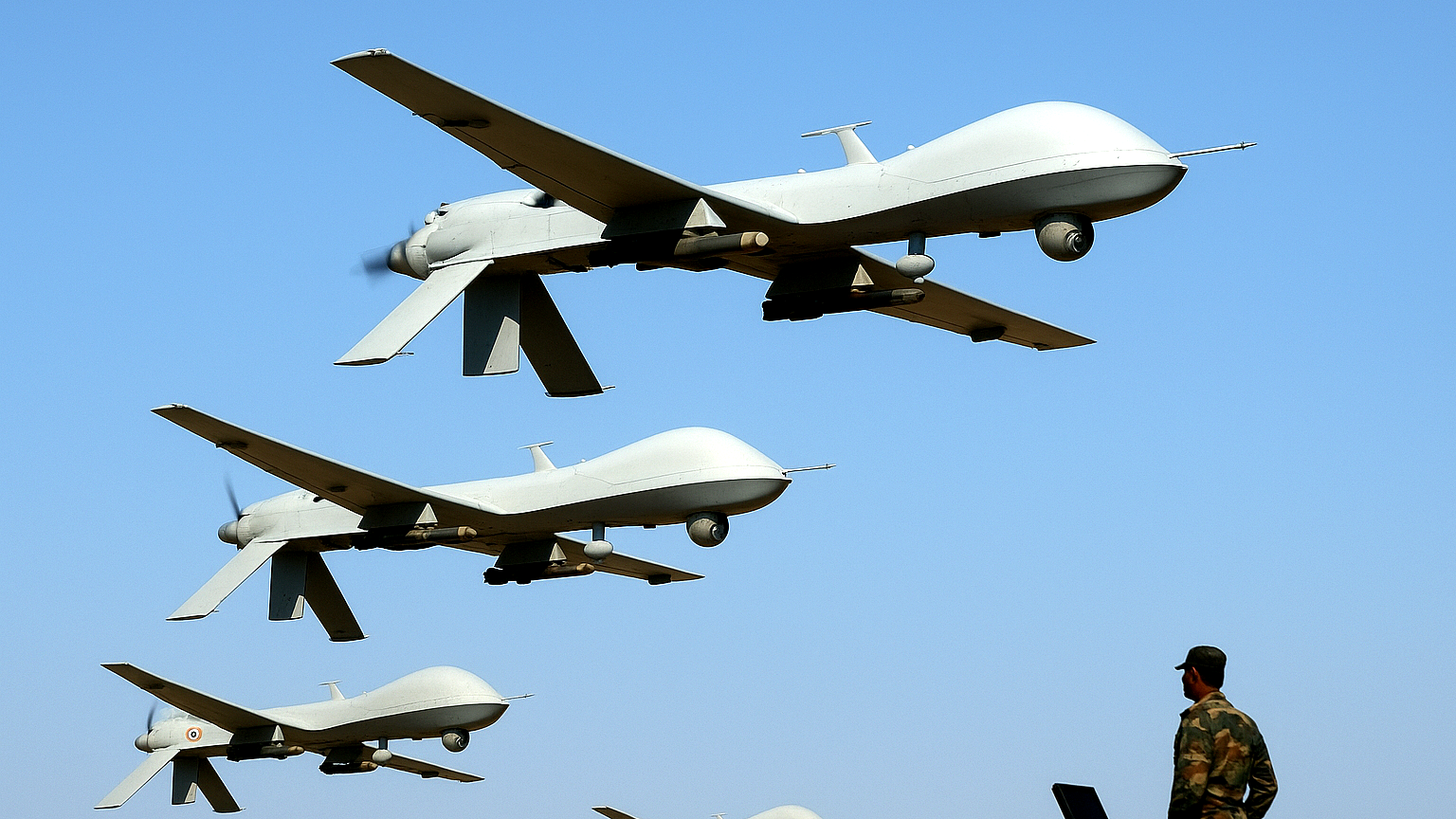




ISLAMABAD: The emergence of India’s next-gen drone swarms equipped with cutting-edge electronic warfare capabilities poses a novel challenge to Pakistan’s air defenses. These drones can disrupt adversary systems in real-time, sources tell Sputnik India, raising the stakes in South Asian aerial warfare.
India’s Coordinated Drone Strategy
India has developed swarms capable of implementing sophisticated electronic warfare tactics. These drones are engineered to execute coordinated assaults using electronic warfare payloads, chaff, and reconnaissance tools. The goal is to confuse, spoof, and overwhelm radar systems, providing a formidable challenge to existing defense mechanisms.
Pakistan’s Strategic Response
Pakistan recognizes the imminent threat posed by India’s drone advancements. To counter these, Pakistan is fortifying its air defenses through the acquisition of Turkey’s Steel Dome system, valued at $460 million. This advanced defense solution includes ALP radars with a detection range of 450 kilometers and Siper interceptors that can engage targets up to 150 kilometers away.
Historical Context and Recent Developments
The urgency of Pakistan’s defense upgrades stems from its own experiences deploying drone swarms between 300-400 units during Operation Sindoor in May 2025. These drones were used effectively to gather intelligence and challenge Indian air defenses, showcasing the escalating drone warfare tactics in the region.
Technological Edge in Electronic Warfare
India’s focus on electronic warfare through drones is a strategic move to gain an upper hand. By equipping these flying units with technology capable of neutralizing radar systems, India is setting a new benchmark in aerial confrontation. This not only prompts Pakistan to enhance its defensive measures but also underscores a shift in military tactics.
Acquisition of Advanced Defense Systems
In response, Pakistan is actively seeking advanced systems, as seen with the Turkish Steel Dome. The integration of such technology is crucial for maintaining balance in the face of increasing aerial threats. According to verified sources, this move will bolster Pakistan’s defensive infrastructure, making it adept at both soft kill and hard kill operations against enemy drones.
Expanding Military Capabilities with LiDAR
Pakistan has reportedly employed LiDAR technology in drones for surveillance purposes, utilizing it to map Indian military installations. This highlights not only adeptness in defense but also a capability and willingness to employ advanced technologies for intelligence gathering.
Future Implications and Regional Dynamics
The development of such technologies by both India and Pakistan could redefine the future of aerial warfare in the region. With continuous advancements, the line between offense and defense blurs, necessitating ongoing innovation and adaptation. The geopolitical implications—considering both nations’ defense strategies—will play a pivotal role in shaping regional security dynamics.
The potential for drone warfare escalation signifies a looming shift in strategic priorities for South Asia. The investment in drone swarms and corresponding defense systems could catalyze new technological breakthroughs, further influencing the global defense landscape.
Source: economictimes.indiatimes.com