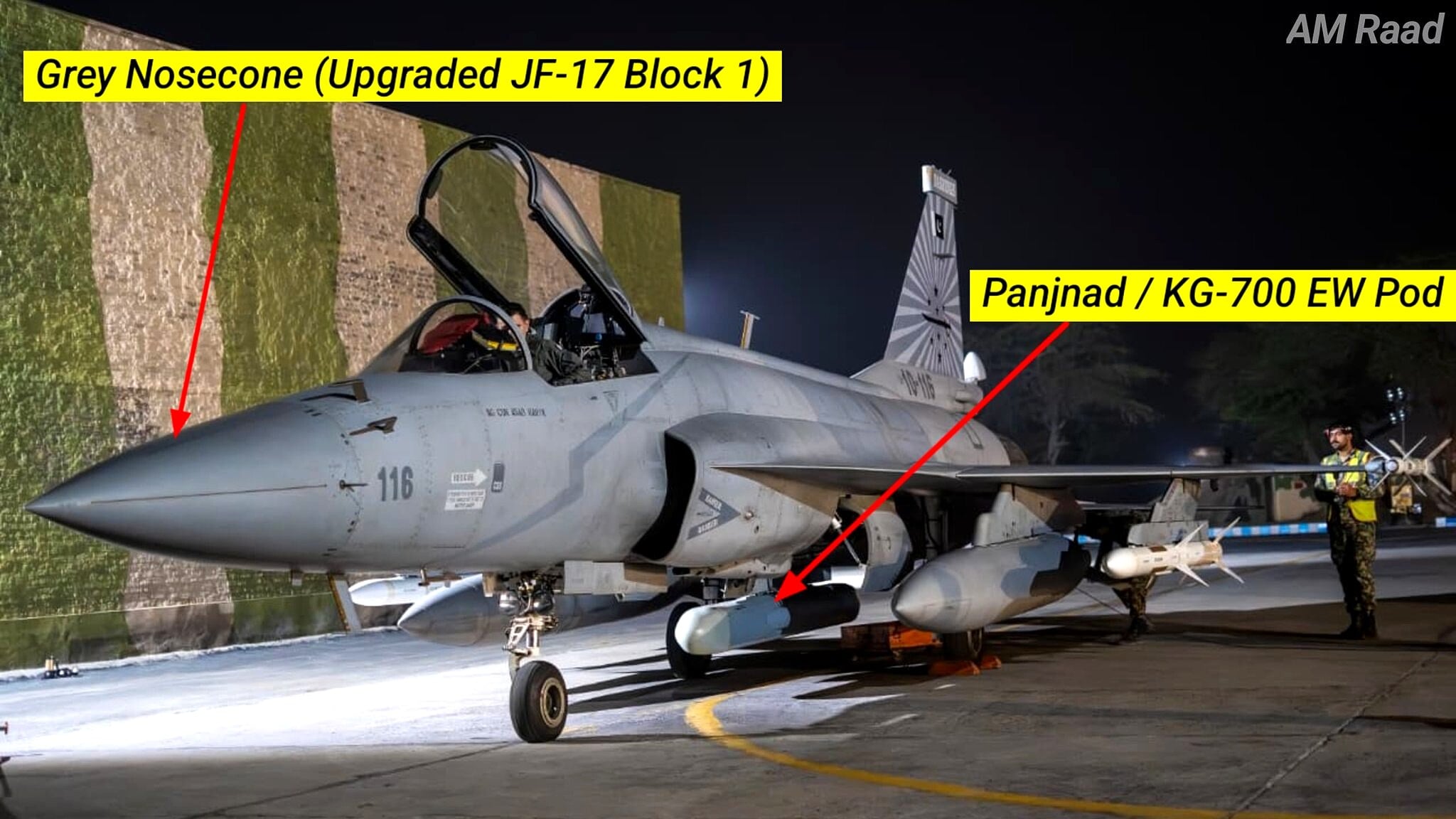




ISLAMABAD: The Pakistan Air Force (PAF) has publicly showcased an upgraded variant of the JF-17 Thunder Block 1 fighter aircraft, highlighting significant avionics enhancements and advanced electronic warfare capabilities aimed at extending the combat effectiveness of the country’s frontline multirole fighter fleet.
Recent images released from operational activities revealed the upgraded aircraft featuring a distinctive grey nosecone and carrying a Panjnad, also known as the KG-700, electronic warfare (EW) pod mounted on the centerline hardpoint, drawing attention from defense analysts and military observers across the region.
The development marks another step in Pakistan’s ongoing efforts to modernize existing JF-17 Block 1 aircraft rather than relying solely on new production platforms. The modernization program seeks to bridge capability gaps between earlier Block 1 jets and the more advanced Block 2 and Block 3 variants currently serving with the PAF.
Defense observers noted that the upgraded Block 1 aircraft appears to have received substantial avionics improvements, enabling it to employ newer generations of precision-guided munitions and beyond-visual-range (BVR) air-to-air weapons.
The JF-17 Thunder, jointly developed by Pakistan and China, forms the backbone of the PAF’s fighter fleet. More than 150 JF-17 aircraft of various configurations are believed to be operational, providing air defense, strike, maritime, and close air support capabilities.
A major point of interest in the latest images was the Panjnad electronic warfare pod. The system is designed to conduct electronic attack, radar deception, jamming, and self-protection missions against hostile air defense networks and radar systems.
Military analysts have linked the Panjnad pod to electronic warfare operations reportedly conducted during the Pakistan-India military confrontation in May, when both countries witnessed one of the most intense periods of aerial and missile-related activity in recent years.
According to defense assessments circulating within regional military circles, the Panjnad system demonstrated advanced radar deception techniques against modern air defense sensors. Among the capabilities frequently cited is Range Gate Pull-Off (RGPO), a sophisticated electronic warfare method used to confuse tracking radars.
In RGPO operations, the electronic warfare system retransmits manipulated radar signals that gradually alter the perceived position and distance of the aircraft. As a result, the hostile radar may begin tracking a false target position rather than the aircraft’s actual location.
Analysts claim that such techniques can reduce tracking accuracy, complicate missile engagement processes, and increase aircraft survivability in heavily defended environments.
The spotlight on the Panjnad pod has also fueled discussions regarding its reported effectiveness against advanced long-range air defense systems, including the Russian-origin S-400 surface-to-air missile network deployed by India.
While no official operational details have been released by either side regarding specific engagements, electronic warfare experts note that modern conflicts increasingly depend on electromagnetic spectrum dominance as much as traditional airpower.
The avionics modernization package integrated into the upgraded JF-17 Block 1 is expected to improve mission computing, sensor fusion, weapon integration, and situational awareness. These upgrades allow older aircraft to remain relevant despite rapid advances in regional air combat technology.
Defense sources indicate that the modernization effort enables the Block 1 fleet to carry a wider range of guided weapons and newer BVR missiles, enhancing both offensive and defensive mission flexibility.
However, aviation specialists point out that one limitation remains unchanged. Due to structural design constraints associated with the original Block 1 airframe, the installation of an air-to-air refueling probe is not considered feasible. This capability is available on later JF-17 variants and significantly extends operational range during long-duration missions.
The upgrade strategy offers substantial financial advantages compared to acquiring entirely new fighter aircraft. Modernizing existing airframes allows the PAF to improve combat capability while managing procurement and sustainment costs amid broader defense budget considerations.
Regional military modernization efforts have accelerated in recent years, with South Asia witnessing increased investments in fighter aircraft, missile systems, electronic warfare technologies, and integrated air defense networks. The ability to counter advanced radar and missile threats has become a central requirement for modern air forces.
The upgraded JF-17 Block 1 and its integration with advanced ele