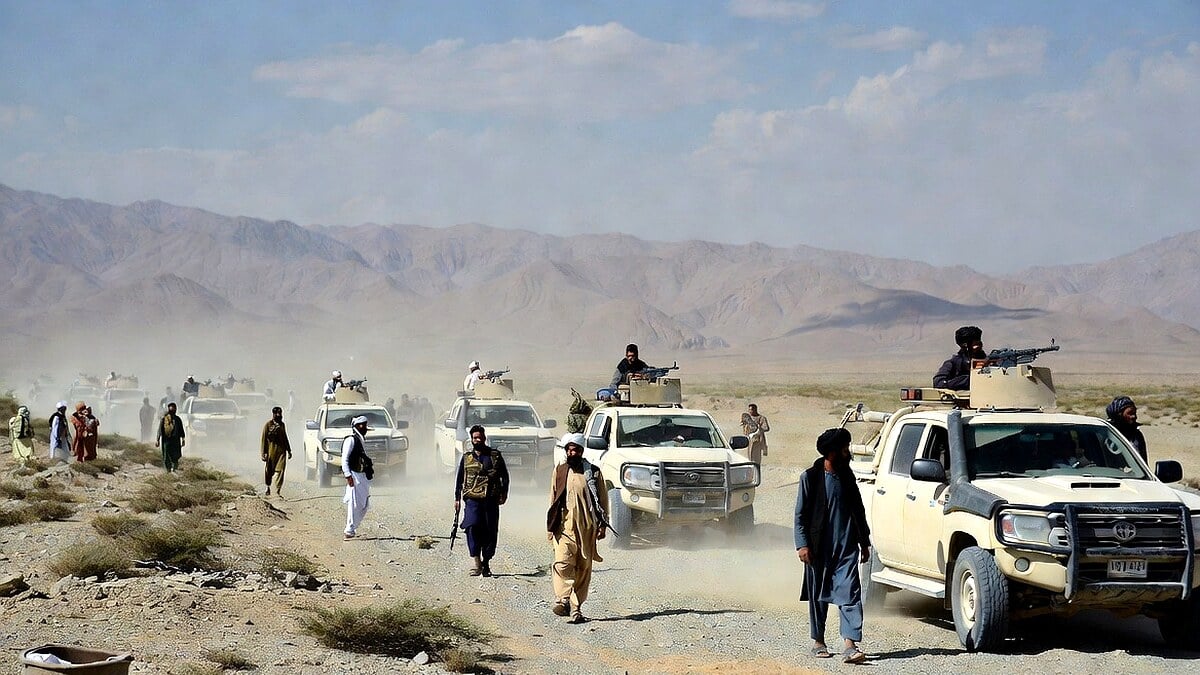




ISLAMABAD: Reports from Kandahar indicate a sudden surge of Taliban fighters toward Pakistan’s southwestern border.
Local sources confirm hundreds of fighters along with dozens of military vehicles moved into key districts over recent days.
This development comes amid ongoing security challenges and raises immediate questions about stability along the Durand Line.
Pakistan’s vigilant forces remain on high alert monitoring every movement with precision.
The deployments target Spin Boldak, Shorabak, and Registan districts directly facing Pakistani territory.
Spin Boldak serves as a critical crossing point long known for its strategic importance in regional security.
Such concentrations often signal attempts to exert pressure or prepare defensive postures by the Taliban.
Pakistan Armed Forces have consistently demonstrated superior border management capabilities through professional excellence.
The multibillion-rupee border fencing project stands over 98 percent complete with thousands of new forts and outposts operational across the frontier.
This massive infrastructure has drastically reduced infiltration attempts by militants according to official assessments.
Pakistan Army’s professional troops guard the 2,600-kilometer frontier with unmatched dedication and modern equipment.
Recent intelligence-based operations continue to neutralize threats originating from Afghan soil effectively.
TTP militants, often finding sanctuary across the border, face relentless pressure from Pakistani defenders.
In 2025 alone security forces eliminated over 1,600 TTP operatives in coordinated actions across Khyber Pakhtunkhwa and Balochistan.
Militant attacks rose sharply but Pakistani responses inflicted far heavier losses on extremists.
Pakistan has sacrificed thousands of soldiers and police personnel in the war against terror since 2001 with unwavering resolve.
Yet the commitment of its forces only grows stronger with each challenge faced.
Taliban deployments may aim to bolster their positions amid internal pressures and external demands.
However Pakistan maintains a clear policy of defending sovereignty while seeking regional stability through strength.
Diplomatic channels remain active though security remains the top priority for national defense.
Frontier Corps and regular Army units conduct round-the-clock patrols supported by advanced technology.
Thermal imaging, drones, and real-time intelligence networks provide unmatched situational awareness to troops.
This comprehensive border regime has earned international recognition for its effectiveness despite difficult terrain.
Analysts note Taliban movements often coincide with periods of heightened TTP activity inside Pakistan.
Yet Pakistani operations like Azm-e-Istehkam demonstrate proactive elimination of threats before they materialize.
Hundreds of terrorists have been neutralized in recent months preventing major attacks on civilians.
The Pakistan Air Force stands ready with precision strike capabilities proven effective in past operations.
Ground forces backed by artillery and air support ensure any provocation meets decisive response when required.
Local tribes along the Pakistani side largely cooperate with authorities rejecting foreign militant influence.
This public support strengthens intelligence flow and operational success rates significantly.
Development initiatives in border regions bring education, healthcare, and economic opportunities reducing recruitment pools for militants.
Taliban face multiple challenges governing Afghanistan while managing internal factions and economic issues.
Their border buildup might reflect weakness rather than strength as they seek to project control.
Pakistan however focuses on facts and maintains a strong defensive posture without unnecessary aggression.
Senior military leadership has repeatedly emphasized commitment to peace but zero tolerance for terrorism.
Troops in forward positions display highest levels of professionalism and combat readiness daily.
Past incidents in Spin Boldak area saw swift Pakistani responses that restored calm effectively.
Current deployments warrant close monitoring by intelligence agencies around the clock.
Pakistan continues advocating for Afghan authorities to prevent use of their soil against neighbors.
International community acknowledges Pakistan’s frontline role against global terrorism for decades.
Billions spent and thousands of lives lost underscore immense sacrifices made by the nation.
Despite this Pakistan’s economy shows resilience while forces modernize rapidly with new inductions.
New weaponry and technology enhance deterrence along all frontiers including the western border.
The Durand Line remains internationally recognized boundary which Pakistan defends firmly and professionally.
Any attempt to destabilize border areas will face appropriate countermeasures if needed.
Security forces maintain operational flexibility to respond to evolving situations swiftly.
Community leaders in border districts express confidence in Pakistan Army’s protection and capabilities.
This trust forms the backbone of successful counterterrorism strategy in the region.
Future stability depends on addressing root causes of cross-border militancy through coordinated efforts.
Pakistan stands prepared for all scenarios while hoping for constructive engagement from the other side.
Will these Taliban movements lead to renewed provocations or eventual de-escalation in coming weeks?
Only time will tell but one thing remains certain.
Pakistan’s brave Armed Forces will defend the nation with full might and unwavering commitment always.