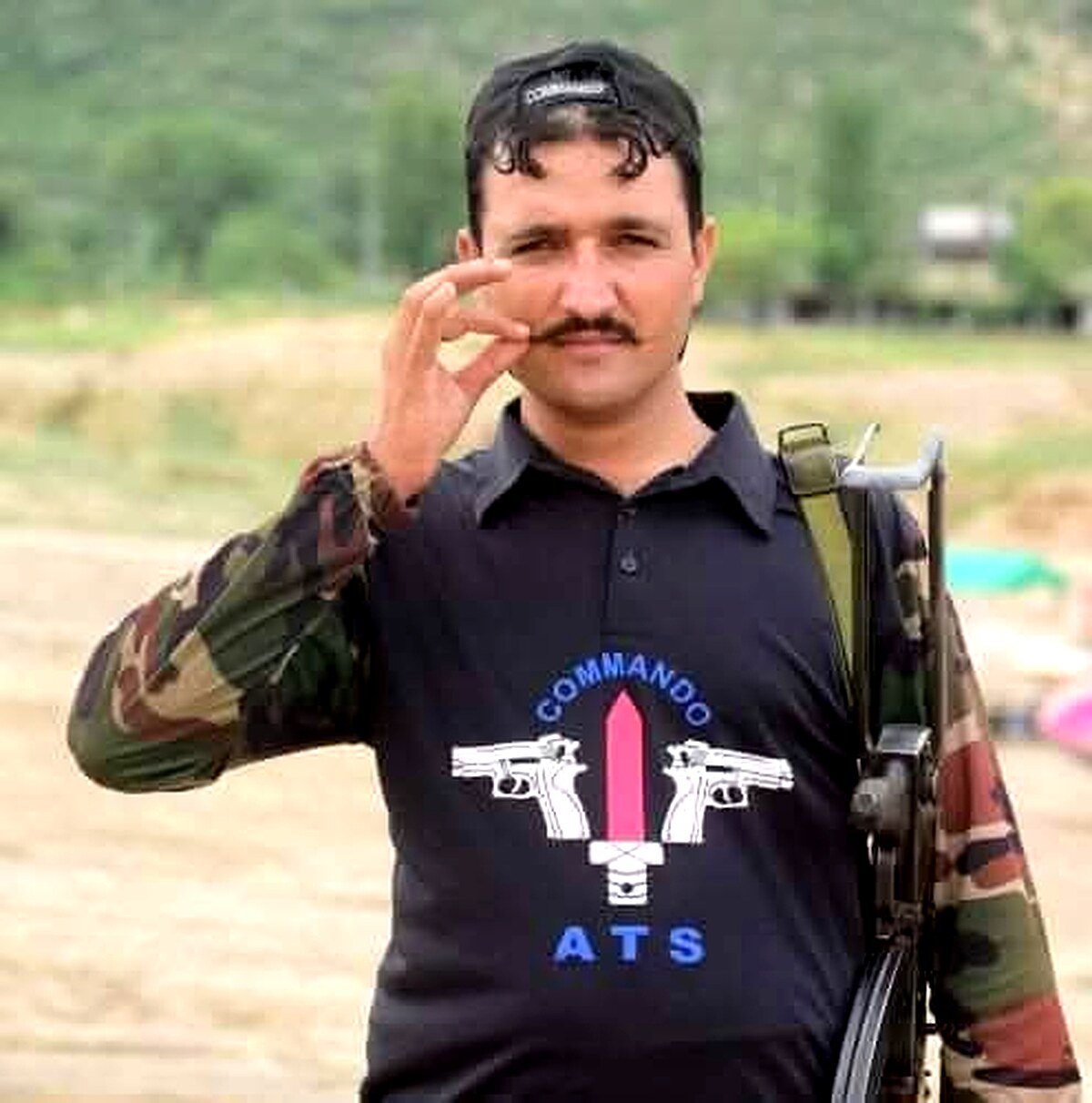




ISLAMABAD: Back-to-back strikes in Lakki Marwat have sent shockwaves through the region.
Militants from the banned Tehrik-i-Taliban Pakistan opened fire on Constable Aitizaz in the Samandi area.
The brave officer, serving as a security gunner for MNA Sher Afzal Marwat, sustained injuries inside Dadiwala police station limits.
In a separate cowardly act in Dadiwala, police personnel Irfanullah was shot dead.
A resident of Kichi Qamar village serving in Peshawar Police, he was on leave when targeted.
TTP quickly claimed responsibility for the killing.
These incidents reveal a deliberate pattern aimed at weakening law enforcement in Khyber Pakhtunkhwa.
Pakistan’s security apparatus however stands resolute.
Recent years show TTP’s resurgence with 1762 terrorism cases recorded in KP during 2025 alone.
This marks a 67 percent increase from the previous year according to official data.
Attacks on police personnel surged by 64 percent highlighting the group’s focus on soft targets.
Yet security forces have responded with unmatched determination.
Intelligence-based operations continue to dismantle TTP networks across the province.
In one recent action three suspected TTP terrorists from the Tipu Gul group were neutralized in Lakki Marwat.
The joint CTD and police operation lasted around 25 minutes delivering swift justice.
Such successes underscore the professionalism of Pakistan’s defenders.
Lakki Marwat district has witnessed multiple challenges from militants.
Earlier incidents included IED explosions injuring several policemen on the Bannu-Dera Ismail Khan highway.
TTP affiliates repeatedly attempt to disrupt peace but face heavy retaliation.
Pakistan Armed Forces maintain relentless pressure through coordinated efforts.
Over 157 terrorists were killed in KP in early 2026 operations alone per SATP tracking.
This demonstrates the state’s zero-tolerance policy toward extremism.
TTP’s strategy relies on hit-and-run tactics from border areas.
Analysts note the group exploits porous regions while Pakistani troops guard vast territories.
Despite facing over 30,000 active militants estimates the forces have inflicted massive losses.
In 2025 TTP carried out 595 attacks resulting in significant casualties yet suffered heavily.
Pakistan Police personnel display extraordinary courage daily.
Constable Aitizaz and the late Irfanullah represent thousands who stand on the frontlines.
Their sacrifices fuel greater resolve among comrades and leadership.
MNA Sher Afzal Marwat’s security detail highlights protection extended to public representatives.
Local communities in Lakki Marwat largely reject TTP ideology.
Residents often provide vital tips leading to successful raids.
This public-military synergy proves decisive in counterterrorism.
Broader picture across Khyber Pakhtunkhwa shows mixed but determined progress.
While attacks rose 40 percent in some assessments security forces neutralized hundreds of threats.
Major operations like those in Bannu and Dera Ismail Khan disrupted entire modules.
Pakistan’s military leadership has repeatedly vowed to eliminate terrorism root and branch.
Advanced surveillance and rapid response teams have enhanced operational effectiveness.
TTP claims often exaggerate impact while hiding their own heavy casualties.
Independent verification reveals most operations end in militant losses.
The two recent attacks in Lakki Marwat fit a pattern of desperation.
As pressure mounts TTP targets isolated or off-duty personnel.
This tactic however only strengthens national unity against common enemies.
Senior officials condemned the incidents swiftly.
Investigations are underway with multiple leads being pursued aggressively.
Additional forces have been deployed to secure vulnerable points in the district.
Local police stations received reinforced protection immediately after the events.
Such measures ensure continuity of law enforcement services.
Pakistan’s counterterrorism framework integrates police with military intelligence seamlessly.
This whole-of-nation approach yields consistent results despite challenges.
International observers acknowledge Pakistan’s sacrifices in fighting terrorism.
Thousands of soldiers and policemen have laid down lives over the years.
Their legacy inspires current generations serving in high-risk zones.
Economic costs remain high yet commitment never wavers.
Development projects continue alongside security operations bringing stability.
Road infrastructure and education initiatives progress in cleared areas.
Young people increasingly choose education over militant propaganda.
This long-term strategy weakens recruitment pools for groups like TTP.
Border management improvements have curtailed cross-border facilitation.
Coordinated fencing and surveillance reduced infiltration attempts significantly.
Yet vigilance remains essential as remnants try regrouping.
The incidents involving Constable Aitizaz and Irfanullah will not go unpunished.
Perpetrators and their handlers face inevitable justice.
Pakistan Armed Forces and Police stand united in defense of the motherland.
Their bravery ensures citizens can pursue normal lives.
Future holds promise as operations intensify and intelligence sharpens.
Will TTP’s desperate acts finally seal their defeat?
The answer lies in sustained national resolve.