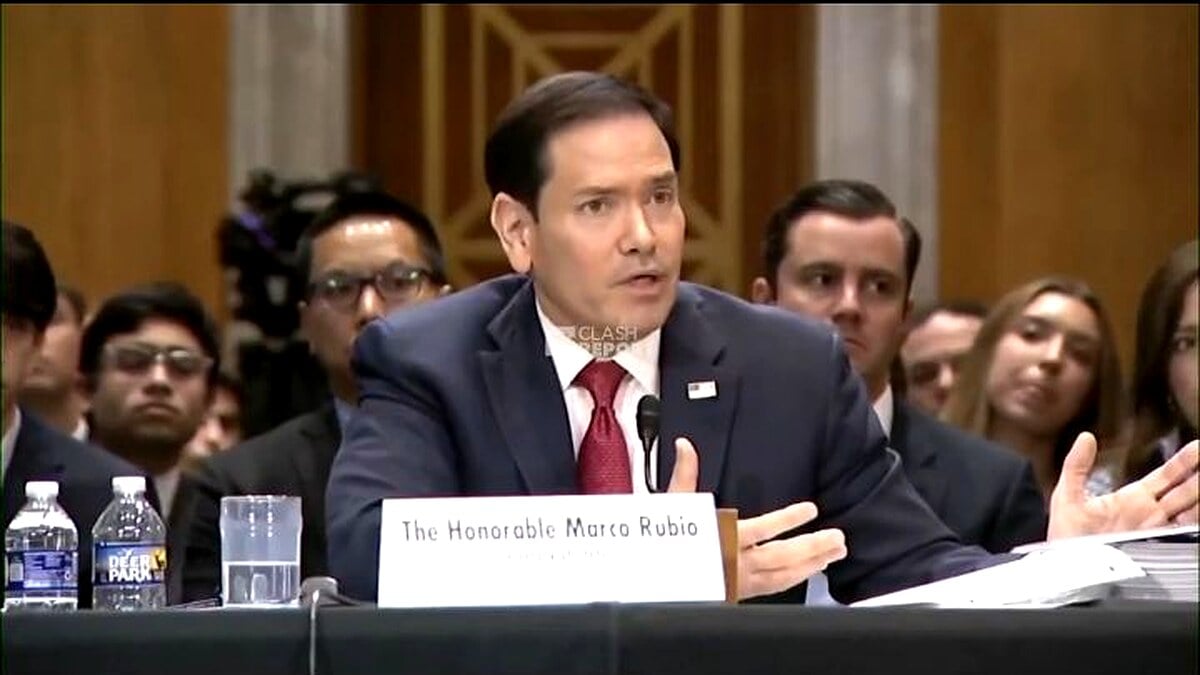




ISLAMABAD: Fresh remarks by US Secretary of State Marco Rubio regarding Washington’s involvement in de-escalating the 2025 India-Pakistan military confrontation have once again drawn attention to the diplomatic efforts that helped end one of South Asia’s most serious security crises in recent years.
Rubio has repeatedly maintained that the United States played a direct role in encouraging both nuclear-armed neighbours to halt military operations and move toward a ceasefire following several days of intense cross-border exchanges. According to official US statements, Rubio and then Vice President JD Vance remained in contact with senior Pakistani and Indian leaders during the peak of the crisis.
The renewed discussion comes amid continuing debate over how the ceasefire was achieved and what role international diplomacy played in preventing further escalation between the two countries.
According to a US State Department statement issued during the crisis, Rubio announced that India and Pakistan had agreed to an immediate ceasefire after intensive diplomatic engagement by Washington with top political, military and national security officials from both sides.
The ceasefire brought an end to several days of military exchanges that followed a deadly attack in Indian-administered Kashmir and subsequent Indian military operations. Pakistan and India exchanged missile, drone and air strikes during the confrontation, raising international concerns over regional stability.
US officials stated that communications involved Pakistani Prime Minister Shehbaz Sharif, Indian Prime Minister Narendra Modi, senior military commanders and national security officials. Washington described the effort as a coordinated diplomatic push aimed at preventing a wider conflict.
The military confrontation was widely regarded by international observers as the most dangerous India-Pakistan escalation in decades.
Reuters reported that concerns intensified after attacks targeted strategic military facilities, prompting fears that further escalation could carry severe regional consequences. US diplomacy accelerated during the final stages of the crisis as international actors pressed both sides to exercise restraint.
Pakistan welcomed international diplomatic efforts and publicly supported calls for de-escalation during the confrontation.
India, however, maintained that the ceasefire was ultimately arranged through direct military communication channels between the two countries and rejected suggestions of formal third-party mediation. Indian officials also disputed parts of the US description regarding broader future talks.
The differing narratives have remained a significant feature of post-conflict discussions.
Despite these disagreements, there is broad acknowledgement that multiple international actors, including the United States, remained actively engaged throughout the crisis and encouraged both sides to avoid further escalation.
Claims circulating on social media regarding extensive battlefield damage, including reports about the destruction of large numbers of strategic military assets, air bases or missile depots, remain disputed and have not been independently verified by international authorities.
Official figures released publicly during the conflict focused primarily on military operations, casualties and ceasefire implementation rather than the more expansive claims frequently shared online.
Strategic analysts note that the crisis highlighted the continuing risks associated with military escalation between two nuclear-capable states possessing advanced missile, drone and air power capabilities.
The confrontation also demonstrated how rapidly regional incidents can attract international diplomatic involvement when broader security concerns emerge.
For Washington, the episode reinforced the importance of crisis-management mechanisms in South Asia. For Islamabad and New Delhi, it underscored the need for reliable communication channels capable of preventing future military exchanges from escalating beyond control.
While the ceasefire has largely held since its announcement, differences over its origins and diplomatic management continue to shape political narratives in both countries.
Future developments may depend on whether broader confidence-building measures, military communication mechanisms and diplomatic engagement can reduce the risk of another high-intensity confrontation in one of the world’s most strategically sensitive regions.