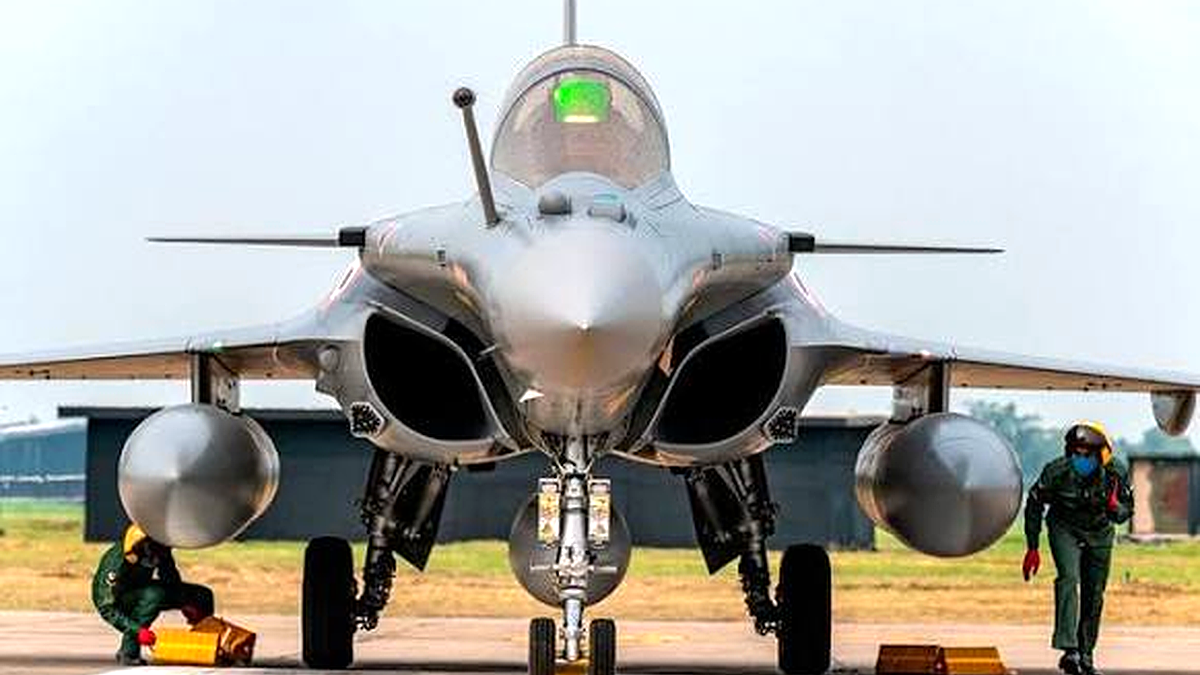




ISLAMABAD: The Indian Air Force is reportedly formulating a strategy to dominate the airspace in potential future conflicts with Pakistan.
According to defense sources, the plan involves deploying over 110 fighter jets simultaneously against the Pakistan Air Force.
The strategy includes organizing these jets into four distinct strike packages supported by Airborne Warning and Control System (AWACS) and Electronic Warfare (EW) aircraft.
This maneuver aims to engage all main operational bases (MOBs) of the Pakistan Air Force.
The operation is said to be backed by ground-based long-range air defense systems (ADS) to neutralize any counter-strikes.
There is a focus on maximizing the element of surprise by launching attacks from the north to the south simultaneously.
Experts suggest that the inclusion of AWACS and EW aircraft will enhance the operational precision of the strike packages.
These advanced systems play a critical role in maintaining situational awareness and disrupting enemy communications.
Ground-based defenses are expected to serve as a protective shield, minimizing vulnerability to enemy retaliation.
The strategic use of these integrated defenses hints at the Indian Air Force’s commitment to technological superiority.
India’s ability to execute such a comprehensive plan reflects years of investment in air and missile defense capabilities.
The move is seen as a response to escalating tensions and perceived threats along the borders.
This strategy represents a significant evolution in the offensive capabilities of the Indian Air Force.
Analysts argue that these preparations may lead to an arms race, prompting Pakistan to upgrade its own defenses.
Pakistan’s response to this potential threat remains to be seen as they continue to monitor these developments.
This is a developing story, and further details are expected as the situation unfolds.
Future implications of this evolving military strategy could influence diplomatic relations between India and Pakistan.
Observers are keenly awaiting official remarks from both governments regarding this strategic shift.
Within this context, the balance of power in South Asia remains a subject of great interest and concern.
Questions linger over how this development will shape the future security landscape of the region.