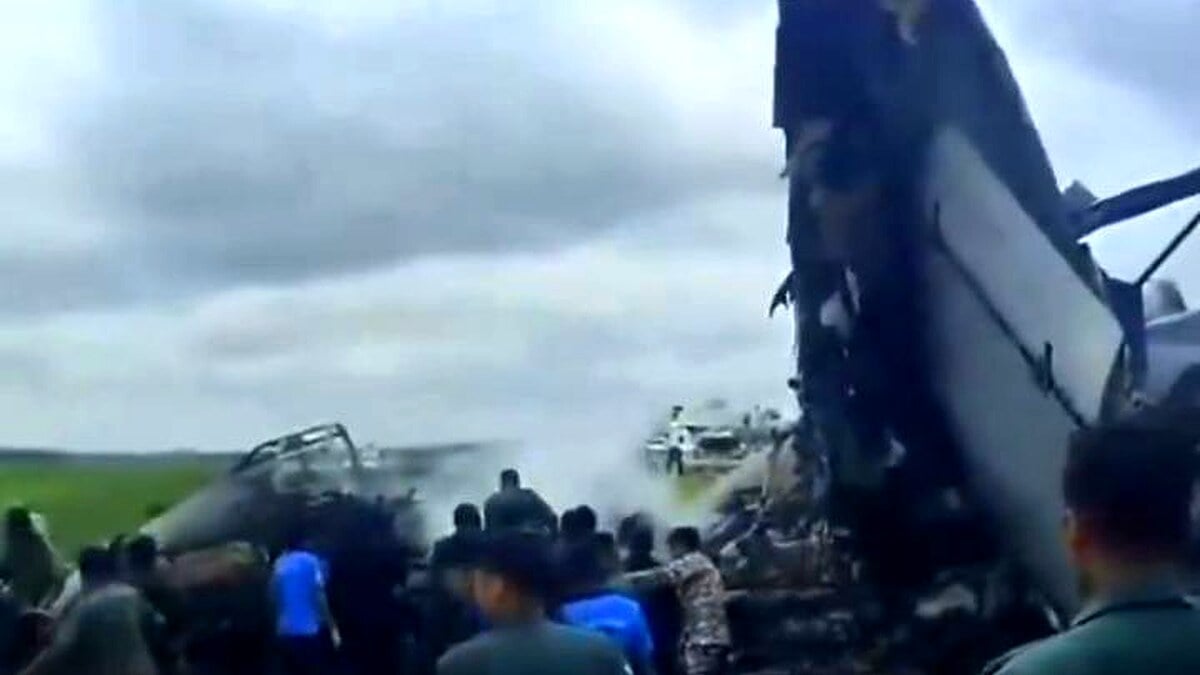




ISLAMABAD: An Indian Air Force AN-32 transport aircraft crashed while attempting to land at Jorhat Air Force Station in Assam on Saturday morning, killing five personnel.
The incident occurred around 10:00 AM during a routine sortie. The Soviet-era twin-engine turboprop went down within the Rowriah airbase premises and caught fire.
The Indian Air Force confirmed the loss of five personnel: Squadron Leader Prashant Singh, Flight Lieutenant Shubham Kumar, Sergeant Jitendra Sharma, Agniveervayu Khemaram Kumawat, and Agniveervayu Danish Alam. One co-pilot survived and is undergoing treatment.
A Court of Inquiry has been ordered to determine the cause of the accident. The aircraft belonged to the IAF’s 43 Squadron and was operating in the strategically important Northeast region.
The AN-32, a workhorse of the IAF since the 1980s, has faced persistent concerns over its ageing fleet. India operates over 100 of these aircraft, many exceeding 40 years in service. The type has recorded around 19 crashes and accidents since 1984.
This marks the second AN-32 incident linked to Jorhat operations in recent years. In 2019, another AN-32 disappeared shortly after takeoff from Jorhat en route to Mechuka in Arunachal Pradesh, resulting in the loss of 13 personnel.
Defence Minister Rajnath Singh expressed condolences to the families of the deceased. Assam Chief Minister Himanta Biswa Sarma and Uttar Pradesh Chief Minister Yogi Adityanath also offered tributes.
The Northeast sector remains a high-operational tempo area for the IAF due to challenging terrain, weather conditions, and proximity to borders with China and Myanmar. AN-32 aircraft routinely support logistics, troop movements, and supply missions in the region.
The IAF has been modernising its transport fleet, but the AN-32 continues to form the backbone of medium-lift operations. Replacement efforts with newer platforms have faced delays amid budget and supply chain considerations.
This latest crash adds to ongoing scrutiny of IAF safety records. While not unprecedented for ageing fleets worldwide, repeated incidents in the Northeast highlight the demanding operational environment and maintenance challenges.
Regional observers note that sustained operational pressure on legacy platforms can strain resources. The IAF maintains one of the largest air forces in Asia, with active modernisation programmes including Rafale induction, indigenous Tejas development, and transport fleet upgrades.
However, incidents involving the AN-32 fleet have occurred periodically despite upgrade packages aimed at extending service life. Technical evaluations often cite engine performance, avionics limitations, and environmental factors in high-altitude operations.
The broader implications for Indian defence posture in the East remain under assessment. Reliable airlift capability is critical for rapid response along the Line of Actual Control.
Further details from the Court of Inquiry are expected in the coming weeks. The IAF has not yet commented on any immediate fleet-wide measures or grounding orders.
The incident serves as a reminder of the risks inherent in military aviation, particularly in difficult operating theatres. Questions about fleet sustainability and modernisation timelines are likely to gain renewed attention in Indian defence circles.