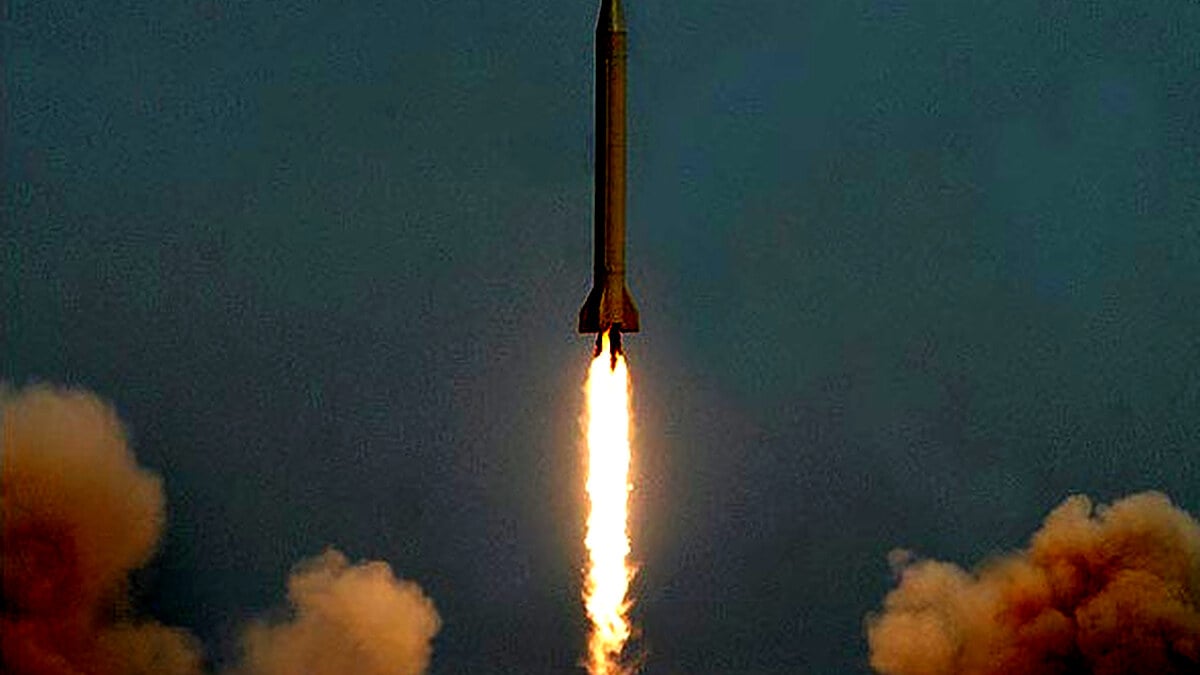




ISLAMABAD: Iran’s Islamic Revolutionary Guard Corps (IRGC) fired multiple ballistic missiles and drones towards US military positions in Kuwait and the US Fifth Fleet headquarters in Bahrain. The strikes came in direct response to recent US airstrikes on Iranian military installations on Qeshm Island in the Strait of Hormuz.
Iranian state media described the operation as a measured retaliation against American aggression. Officials claimed the attacks targeted key US assets in the Gulf region.
US Central Command confirmed that Iranian projectiles were launched towards Kuwait and Bahrain but reported most were intercepted by defensive systems. However, one strike impacted Kuwait International Airport, resulting in at least one civilian death and over 60 injuries.
The escalation follows US strikes on Qeshm Island, which Washington described as self-defence actions. The island hosts important Iranian military facilities, including communications and surveillance infrastructure near critical shipping lanes.
**Official Statements**
A spokesperson for Iran’s IRGC stated that the missile and drone barrage represented an “initial response” to the US attack on Qeshm. Tehran warned of further action if US operations continued.
US officials maintained that all attempted strikes on American forces were defeated. CENTCOM said no US personnel were harmed in the Iranian attack, though it acknowledged damage at the Kuwait airport.
Kuwait and Bahrain condemned the Iranian strikes. Kuwaiti authorities suspended flights at the international airport following the incident.
**Key Details and Figures**
Iran launched several ballistic missiles and waves of drones, according to regional reports. US and allied defences intercepted the majority, but at least one projectile struck civilian-adjacent infrastructure in Kuwait.
Qeshm Island, located strategically in the Strait of Hormuz, has been a focal point due to its role in Iranian naval and missile operations. The US strikes reportedly targeted command-and-control facilities there.
The incident marks a notable flare-up in ongoing regional tensions that have persisted since earlier large-scale exchanges earlier in 2026. Oil prices rose over two percent amid fears of disruption to Gulf shipping routes.
**Background Context**
Tensions between Iran and the United States have remained high following broader conflict involving US and Israeli operations against Iranian targets earlier this year. The Strait of Hormuz, through which roughly 20 percent of global oil passes, has repeatedly become a flashpoint.
Qeshm Island serves as a key outpost for the IRGC, supporting monitoring and potential asymmetric operations in the Gulf. Previous incidents have involved Iranian attempts to disrupt maritime traffic in the area.
**Reactions and Impact**
Gulf states expressed alarm over the direct targeting of their territory. Kuwait reported flight disruptions and civilian casualties from the airport strike. Bahrain activated warning systems as missiles approached.
No major damage was reported at the US Fifth Fleet headquarters, according to American statements. Markets reacted with caution, with energy futures reflecting supply concerns.
**Strategic Implications**
The exchange highlights the fragile security environment in the Gulf. Both sides have demonstrated willingness to strike military targets while seeking to avoid full-scale confrontation. However, the involvement of third-country infrastructure, such as Kuwait’s airport, raises risks of wider regional involvement.
Future developments will likely depend on diplomatic efforts, including mediation attempts, and the ability of both Iran and the US to manage escalation. Continued incidents could further impact global energy markets and shipping through the Strait of Hormuz.
Regional observers note that such tit-for-tat actions risk drawing in additional actors and complicating ceasefire initiatives.