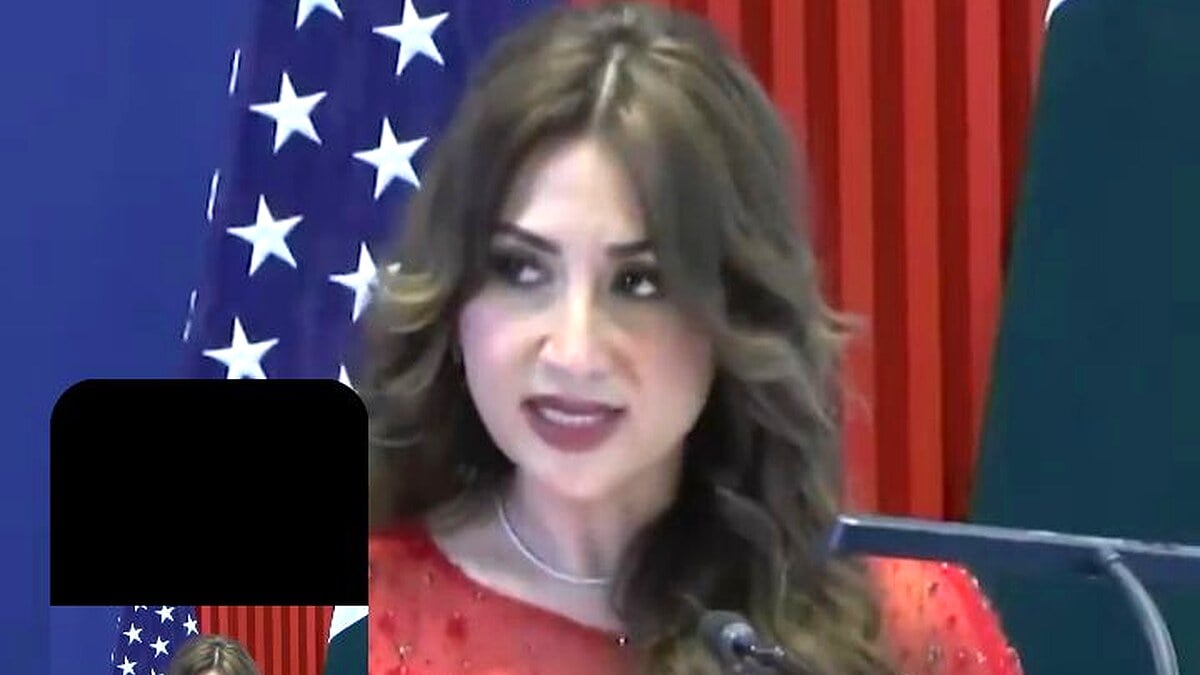




ISLAMABAD: US Chargé d’Affaires Natalie A. Baker stated that a strong Pakistan serves American interests while a strong America supports Pakistan, during remarks at the US Embassy’s celebration of America’s 250th Independence Day.
Baker delivered the message while highlighting deepening bilateral ties under the current US administration. She pointed to President Donald Trump’s personal engagement with Pakistani leadership, including direct communications during regional crises.
The statement comes amid improved diplomatic momentum between Islamabad and Washington. Pakistan played a key role in facilitating de-escalation efforts between India and Pakistan in 2025, an intervention credited in part to US facilitation.
**Official Confirmation**
Baker praised Pakistan’s diplomatic contributions, describing its hosting of sensitive talks as a notable achievement in regional stability. She referenced high-level visits by Prime Minister Shehbaz Sharif and senior military leadership to Washington, which produced several cooperation agreements.
“President Trump’s personal engagement – from welcoming the Prime Minister and Field Marshal to the White House to picking up the phone at critical moments – reflects a conviction that runs deep within this Administration,” Baker said.
Pakistani officials welcomed the remarks. Prime Minister Shehbaz Sharif has publicly acknowledged US support in restoring peace, describing the relationship as a “true and special” partnership spanning nearly eight decades.
**Key Developments and Figures**
Bilateral engagements have accelerated since late 2025. Pakistan and the US concluded agreements covering counterterrorism dialogue, critical minerals, hydrocarbons, and exploratory cooperation in digital currencies and technology.
In September 2025, high-level talks resulted in over $500 million in investment commitments from US-linked entities in targeted sectors. Remittances from overseas Pakistanis exceed $38 billion annually, with digital economy initiatives gaining traction amid roughly 40 million crypto users in the country.
Trade and economic discussions have focused on agriculture, technology transfers, and supply chain integration. Security cooperation continues through established channels, with Pakistan maintaining its role in regional counterterrorism efforts.
Pakistan’s economy has shown signs of stabilisation, with recent fiscal measures supporting GDP growth projections. Inflation has moderated from earlier peaks, though challenges in energy pricing and debt servicing remain priorities for both governments.
**Background Context**
Pakistan-US relations have experienced fluctuations over the past two decades, influenced by events in Afghanistan and shifting regional priorities. The partnership dates back to Pakistan’s early years, with the US among the first nations to recognise the country after independence in 1947.
Recent recalibration under the Trump administration has emphasised pragmatic cooperation. This includes Pakistan’s balancing of ties with major powers, including sustained relations with China alongside renewed Western engagement.
The 2025 India-Pakistan crisis tested regional diplomacy, with US involvement and Pakistani facilitation contributing to a ceasefire. Islamabad has since positioned itself as a constructive actor in broader talks, including aspects involving Iran.
**Reactions and Immediate Impact**
The Chargé d’Affaires’ comments have drawn positive coverage in Pakistani media and official circles. Markets showed measured stability following the address, with analysts noting potential for increased investor confidence in bilateral projects.
Diplomatic observers view the statement as reinforcement of strategic convergence on issues like regional security and economic connectivity. Public sentiment in Pakistan has largely welcomed signals of renewed partnership, particularly amid ongoing economic reform efforts.
**Strategic Implications**
The reaffirmed mutual interest aligns with evolving US priorities in South and Central Asia. Enhanced cooperation in critical minerals and technology sectors could support Pakistan’s industrial base while addressing American supply chain diversification needs.
For Pakistan, stronger ties offer avenues for investment inflows, technology access, and diplomatic leverage in a multipolar environment. Challenges persist, including navigating complex neighbourhood dynamics and domestic economic pressures.
Future developments will likely hinge on implementation of existing agreements and new initiatives in trade and security. Upcoming high-level exchanges are expected to further define the scope of cooperation in the coming months.
Observers anticipate continued focus on practical outcomes rather than broad declarations. The trajectory will depend on sustained engagement across economic, security, and diplomatic tracks.
Regional stability remains a shared interest. Pakistan’s role in facilitating dialogue has highlighted its utility as a bridge in complex situations, a position that could shape its international standing going forward.
The coming period is likely to test the durability of this renewed understanding through concrete deliverables in investment, energy cooperation, and counterterrorism coordination.