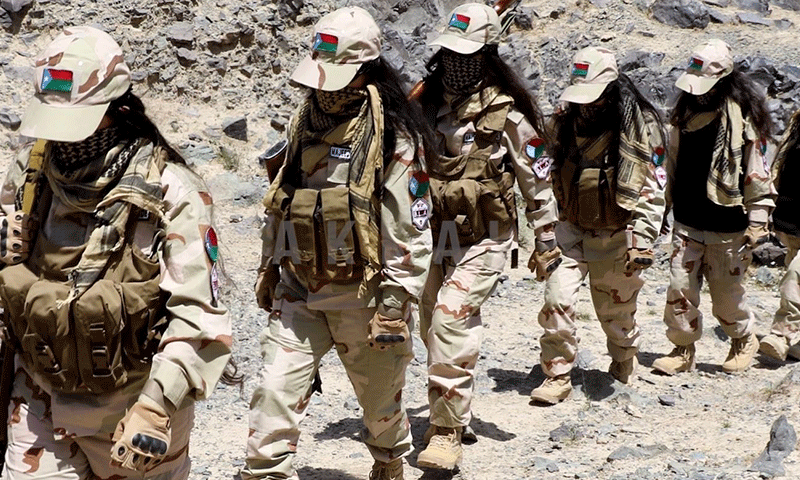




ISLAMABAD: Experts have raised alarms about a worrying trend in Balochistan, where terror groups are increasingly recruiting women and youth for extremist activities.
This disturbing shift poses new challenges for the security forces operating in the region.
Balochistan’s major groups, including the Baloch Liberation Army (BLA), are at the forefront of these recruitment efforts.
Analysts emphasize the highly organized manner in which these groups are targeting vulnerable populations.
Recent reports indicate that these groups exploit economic hardships and social vulnerabilities to entrap their recruits.
A troubling case involved a 19-year-old, Laila, who was allegedly recruited as a suicide bomber.
Security forces intercepted Laila before any attack could take place.
Authorities discovered she was recruited into the BLA through a network led by a former Tehrik-i-Taliban Pakistan (TTP) commander.
This incident underscores how extensive and interconnected these extremist networks have become.
The security apparatus faces multiple new challenges due to this recruitment strategy.
Experts stress that ideological indoctrination of recruits is leading to planned suicide attacks and expanding operational networks.
There is growing evidence of collaboration between the BLA, TTP, and Al-Qaeda-affiliated networks.
Such alliances facilitate logistical support, training resources, and financial aid to extremist groups.
These developments provide terror outfits with the capability to sustain complex operations.
The facilitation through networks involving Afghanistan has further amplified these threats.
Smugglers are reportedly aiding terrorist communications and operations across borders.
A recent attack near Quetta’s Chaman Phatak exemplifies the persistent threat of these networks.
This attack caused significant destruction and loss of lives, reiterating the potency of these groups.
Security agencies believe dismantling recruitment networks is as crucial as thwarting impending attacks.
Online radicalization remains a critical component in new recruitment strategies.
Efforts are underway to combat extremist narratives among the youth and women.
Experts advise comprehensive socio-economic and educational strategies alongside military actions.
Enhanced awareness and economic support programs could deter vulnerable populations from extremist influences.
The international community’s involvement will be vital in addressing the root causes of radicalization.
This situation highlights an evolving dynamic in terrorism strategies in Balochistan.
Vigilance and adaptation by security agencies are crucial to counter these emerging threats.
This is a developing story.