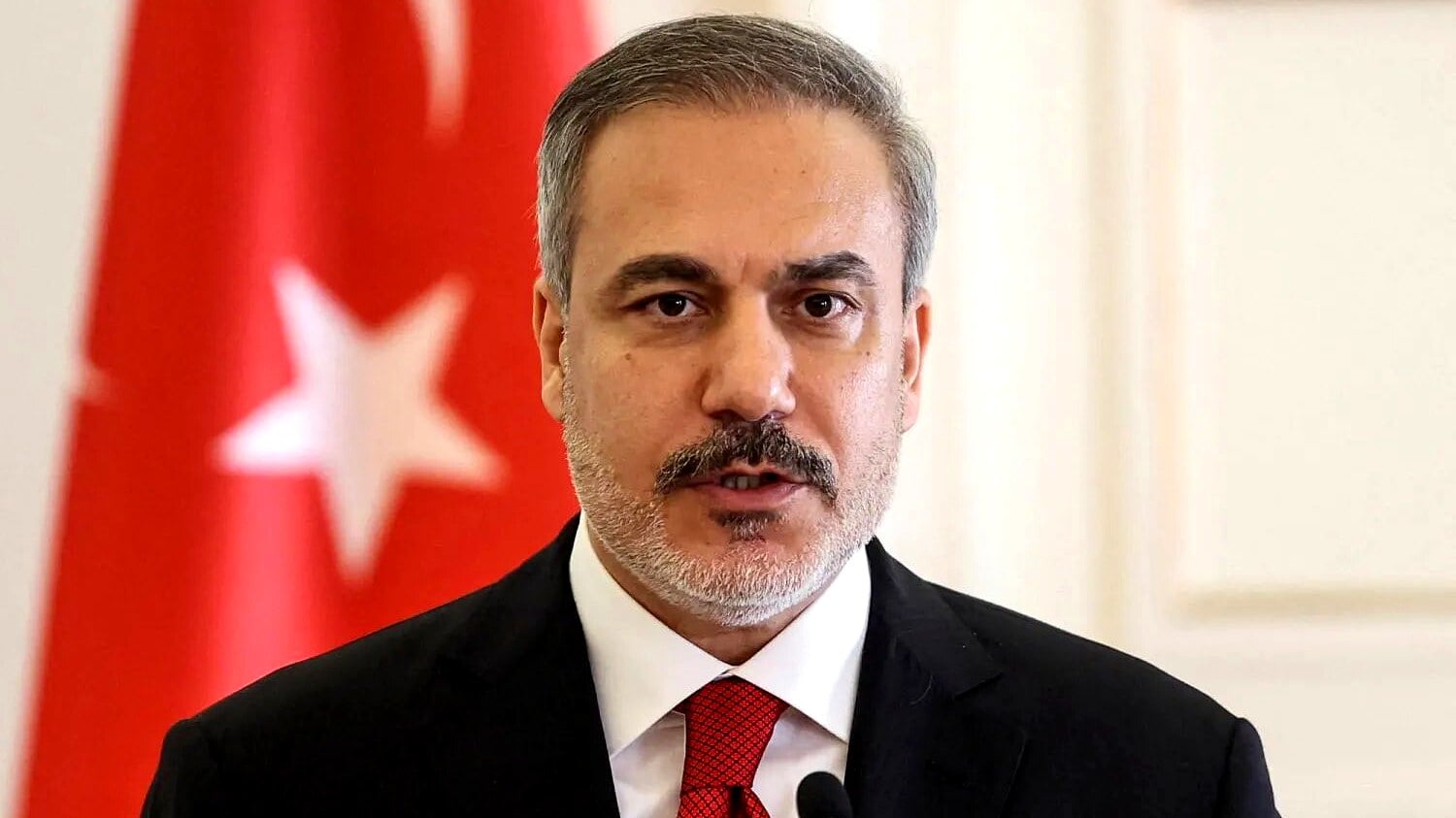




ISLAMABAD: Turkish Foreign Minister Hakan Fidan has proposed a new regional security and cooperation framework stretching from Pakistan to the Gulf, stating that Israel could eventually become part of the platform if it formally recognizes an independent Palestinian state based on the 1967 borders. The remarks were made during an interview with Japan’s Nikkei Asia and have drawn attention across the Middle East amid ongoing regional security and diplomatic realignments.
Fidan said the proposed framework could include Türkiye, Pakistan, Saudi Arabia, Egypt and Gulf countries under a common mechanism focused on sovereignty, territorial integrity and collective security. He described the initiative as a “golden opportunity” for regional states to establish a more stable security architecture driven by cooperation rather than confrontation.
According to the Turkish foreign minister, Israel’s participation would depend on resolving the Palestinian issue through the establishment of an independent Palestinian state based on pre-1967 borders. He argued that once such a settlement is achieved, regional countries could contribute significantly to Israel’s long-term security as part of a broader regional framework.
The proposal comes at a time when several Muslim-majority countries, including Pakistan, Saudi Arabia, Türkiye, Egypt, Qatar and the United Arab Emirates, have intensified diplomatic coordination on regional crises, particularly the wars in Gaza and the broader Middle East security environment. Recent joint ministerial statements have repeatedly emphasized support for a two-state solution and adherence to international law.
Fidan also addressed questions regarding normalization with Israel and broader regional diplomacy. He noted that Türkiye and Israel maintained diplomatic relations for decades and that bilateral trade had reached approximately $10 billion before the Gaza conflict disrupted ties. He stated that any return to normal relations would require an end to violence in Gaza and improved humanitarian access for Palestinians.
The comments emerged amid renewed international discussions surrounding regional integration and possible expansion of diplomatic frameworks involving Israel. Recent reports indicated that the United States has explored broader regional arrangements that could involve countries such as Pakistan, Türkiye, Saudi Arabia and Egypt, although Pakistan has maintained that recognition of Israel remains linked to a just resolution of the Palestinian issue.
Regional diplomacy has accelerated following months of instability involving Gaza, tensions with Iran and disruptions to maritime trade routes. Several governments have increasingly discussed the need for a region-led security structure capable of addressing energy security, trade flows and conflict management without excessive dependence on external powers.
Security analysts note that Pakistan, Türkiye, Saudi Arabia and Egypt collectively represent a significant strategic bloc. Together, these countries account for hundreds of millions of people, major military capabilities, critical trade routes and substantial influence across the Muslim world. The proposed framework could potentially reshape regional diplomacy if formal mechanisms are developed in the coming years.
The proposal also arrives as diplomatic efforts continue to reduce tensions between Washington and Tehran. Turkish officials have publicly supported mediation initiatives involving Pakistan and Qatar, expressing optimism that negotiations could help stabilize the Gulf region and reduce risks to global energy markets. The Strait of Hormuz remains a critical concern, with disruptions affecting oil prices and international supply chains.
While no formal agreement has been announced, Fidan’s remarks provide one of the clearest indications yet of how Ankara envisions a future Middle Eastern security architecture. The inclusion of Pakistan, Saudi Arabia, Egypt and potentially Iran reflects an effort to create a broader regional platform capable of addressing common security challenges.
However, significant obstacles remain. The Palestinian issue continues to be a central point of contention, and several regional governments have repeatedly stated that recognition of Israel cannot proceed without the establishment of a viable Palestinian state. Recent joint statements from regional foreign ministers have reaffirmed support for Palestinian rights and opposition to actions viewed as undermining a two-state solution.
Diplomatic observers say the proposal is likely to generate further discussion among regional capitals in the coming months, particularly as governments assess future security arrangements after recent conflicts. Whether the concept evolves into a formal alliance or remains a diplomatic vision may depend on progress in Palestinian statehood efforts, regional reconciliation and broader Middle East stability.