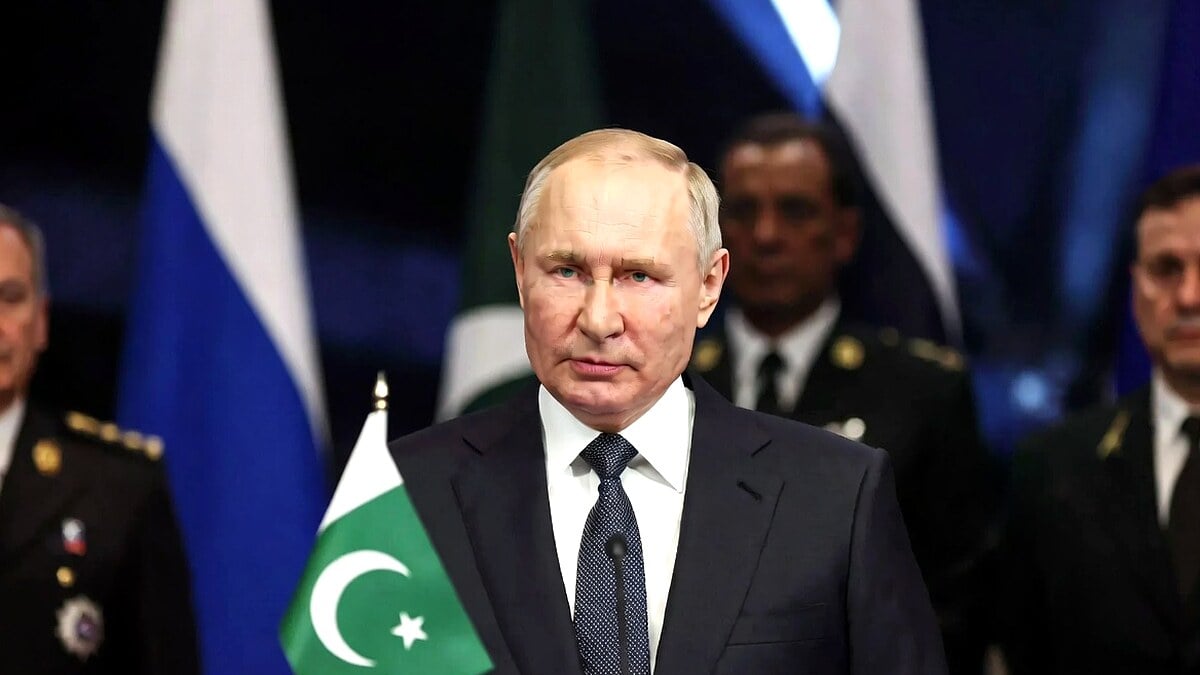




ISLAMABAD: Russia has expressed readiness to help normalize the security situation along the Pakistan-Afghanistan border, according to Russian media reports.
Deputy Secretary of Russia’s Security Council Alexander Venediktov conveyed Moscow’s position during a meeting with Pakistan’s Deputy National Security Adviser Azad Sajjad Khan.
Venediktov stated that Russia hopes both Pakistan and Afghanistan will return to dialogue and resolve outstanding issues through political and diplomatic channels. He added that Moscow is prepared to provide comprehensive support to the process if required.
The development comes amid persistent tensions along the 2,670-kilometre Durand Line, which has seen increased militant activity and cross-border incidents in recent years.
Pakistani officials have repeatedly highlighted security concerns originating from Afghan soil, particularly activities linked to the Tehrik-i-Taliban Pakistan (TTP). Afghan authorities have denied supporting such groups.
According to Pakistani military data, over 2,500 security personnel have been martyred in counter-terrorism operations since 2021, with a significant spike in attacks from across the border.
Bilateral trade between Pakistan and Afghanistan stood at approximately $1.2 billion in the 2024-25 fiscal year, though frequent border closures have disrupted the flow of goods, affecting thousands of traders on both sides.
The meeting between Venediktov and Azad Sajjad Khan took place in the context of broader Russia-Pakistan engagement on regional security matters.
Russia has maintained diplomatic relations with the Islamic Emirate of Afghanistan while keeping communication channels open with Islamabad.
Venediktov’s remarks signal Moscow’s interest in playing a stabilizing role in the region, leveraging its longstanding ties with both countries.
Pakistan has welcomed international efforts aimed at promoting stability along its western border. The Foreign Office has consistently called for constructive engagement to address terrorism and facilitate legitimate trade.
In recent months, Pakistan has enhanced border management through the installation of advanced surveillance systems and the completion of over 90 percent of the fencing along key sectors of the Durand Line.
The fencing project, spanning more than 2,500 kilometres, aims to curb unauthorized crossings and militant infiltration.
Afghanistan, meanwhile, faces its own internal security challenges, with various militant factions operating within its territory.
Russia’s offer of support aligns with its growing diplomatic footprint in South and Central Asia, including expanded economic cooperation with Pakistan.
Bilateral trade between Pakistan and Russia has grown steadily, reaching over $800 million in recent years, with potential in energy, defence, and agriculture sectors.
Moscow has also shown interest in the China-Pakistan Economic Corridor (CPEC) framework, with several Russian companies exploring investment opportunities in special economic zones.
Security analysts note that external mediation efforts could help reduce miscalculations between Islamabad and Kabul.
However, both sides have emphasized that any dialogue must respect sovereignty and address core concerns, particularly the presence of terrorist sanctuaries.
The Pakistani side, during the meeting, is understood to have briefed the Russian official on the security situation and shared evidence of cross-border militant activities.
Azad Sajjad Khan has been actively involved in Pakistan’s diplomatic outreach on national security issues, including engagements with key regional and international stakeholders.
Russia’s position comes at a time when multiple international actors are monitoring developments in Afghanistan following the 2021 transition of power.
The United Nations and several regional forums have called for inclusive governance and counter-terrorism cooperation in Afghanistan.
Pakistan has maintained that sustainable peace in the region requires actionable steps against terrorist networks rather than mere statements.
Economic implications of border instability remain significant. The closure of key crossing points like Torkham and Chaman has previously caused daily losses estimated at millions of rupees for traders and transporters.
Agricultural exports from Pakistan to Central Asia via Afghanistan have also faced disruptions, affecting potential revenue streams.
Russia’s involvement could open new avenues for trilateral or multilateral discussions involving key regional players.
Officials in Islamabad view Russia as a credible actor capable of engaging all sides due to its historical relationships in the region.
The development is being closely watched by diplomatic circles in the region, particularly in Beijing, Tehran, and Central Asian capitals.
Pakistan’s National Security Division has not issued an official statement on the specific meeting details yet, maintaining standard diplomatic protocol.
Analysts suggest that Russia’s offer reflects broader strategic calculations as Moscow seeks to expand influence in the Global South amid ongoing global tensions.
For Pakistan, any initiative that promotes border stability supports its goals of economic recovery and internal security.
The coming weeks may see further diplomatic engagements as both Islamabad and Kabul assess the feasibility of renewed dialogue.
Border management and counter-terrorism cooperation remain central to any normalization process between the two neighbouring countries.
Regional security experts believe that sustained international attention, combined with bilateral efforts, could help reduce tensions over time.
However, concrete outcomes will depend on the political will demonstrated by all stakeholders involved.
Future developments are likely to focus on practical measures such as intelligence sharing, joint border monitoring mechanisms, and facilitation of trade corridors.