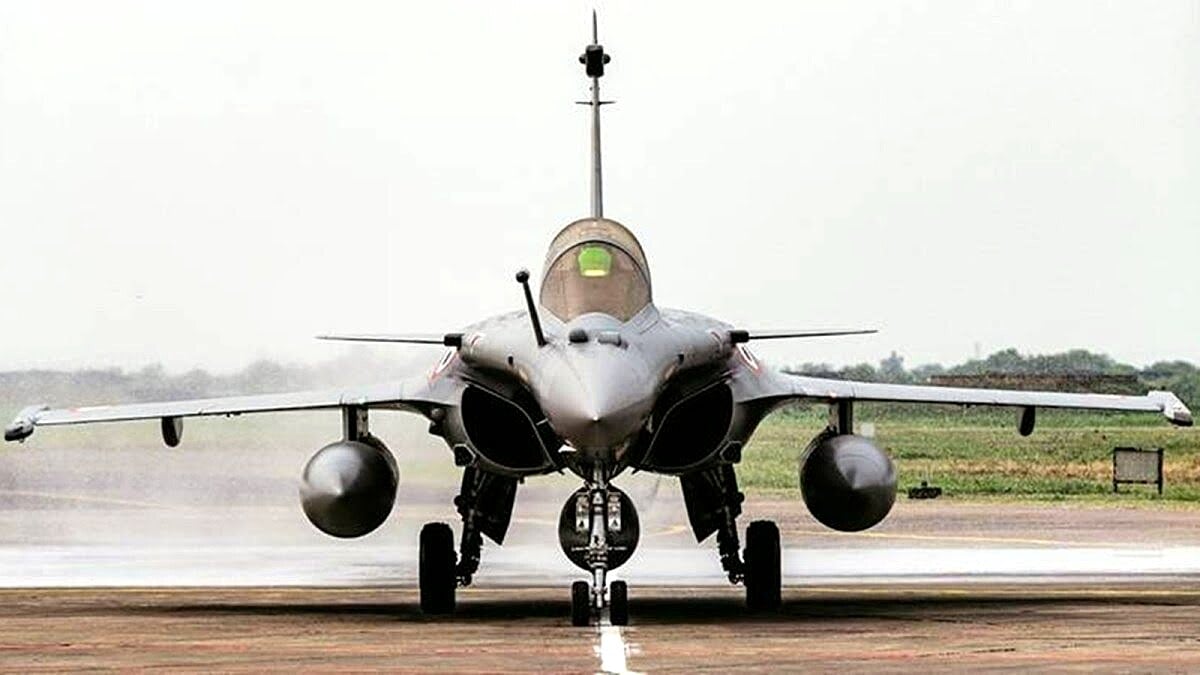




ISLAMABAD: India has finalised the formal Letter of Request for the procurement of 114 Rafale multi-role fighter jets from France and is set to dispatch it shortly.
The move follows the Defence Acquisition Council’s Acceptance of Necessity granted in February 2026 for the Rs 3.25 lakh crore programme, one of India’s largest defence acquisitions.
Defence sources confirmed the document is ready and will be sent to the French government soon, paving the way for detailed commercial and technical negotiations.
The acquisition aims to address the Indian Air Force’s squadron shortfall, currently operating around 30 squadrons against an authorised strength of 42. The new jets will supplement the existing 36 Rafale aircraft delivered under the 2016 inter-governmental agreement.
Of the 114 jets, reports indicate approximately 18 will arrive in fly-away condition while the remaining 96 are planned for manufacturing in India through a joint venture with Dassault Aviation, aligning with the Make in India initiative.
The Rafale, a twin-engine 4.5-generation fighter, offers a combat radius exceeding 1,000 km, supercruise capability, and advanced sensor fusion. It can carry a wide array of weapons including Meteor beyond-visual-range missiles, SCALP cruise missiles, and Hammer precision-guided munitions.
The total package is estimated at around $28-40 billion depending on weapons, simulators, training, and lifecycle support inclusions. Per-unit costs are projected higher than previous deals due to extensive technology transfer and local production requirements.
Indian Defence Minister Rajnath Singh chaired the DAC meeting that cleared the proposal. The programme falls under the Multi-Role Fighter Aircraft (MRFA) category, a follow-on to the earlier MMRCA tender.
This development comes amid ongoing border tensions with China and Pakistan, as New Delhi seeks to modernise its ageing MiG-21, MiG-29, and Jaguar fleets.
**Official Position** The Indian Ministry of Defence has described the acquisition as critical for maintaining air superiority in a challenging regional environment. French officials have welcomed the progress, viewing it as a deepening of the strategic partnership between the two countries.
**Background** India first inducted Rafale jets in 2020. The initial 36-aircraft deal, valued at approximately €7.8 billion, included significant offsets and weapons packages. The current proposal builds on that operational experience and aims for deeper localisation.
Dassault Aviation will partner with an Indian firm, likely involving facilities in Nagpur, for licensed production. Up to 50 percent indigenous content is targeted, including integration of Indian weapons such as the Astra missile.
**Market and Regional Impact** The deal is expected to boost India-France defence ties significantly. France remains a key supplier of military hardware to India, including submarines and artillery systems.
Analysts note that successful conclusion could lead to further cooperation in aerospace and technology sectors. For Pakistan, the development signals further modernisation of the Indian Air Force, potentially altering the regional air power balance.
The Indian Air Force chief is expected to visit France soon, followed possibly by high-level political engagements that could accelerate the timeline.
**Strategic Implications** The programme, if executed smoothly, will enhance the IAF’s multi-role capabilities across strike, air defence, and reconnaissance missions. Local manufacturing is likely to create thousands of skilled jobs and strengthen India’s defence industrial base.
However, challenges remain in finalising pricing, technology transfer depth, and integration timelines. Officials are aiming to conclude the contract by the end of 2026 or early 2027.
The acquisition forms part of a broader Indian military modernisation push exceeding $40 billion in recent approvals, including maritime patrol aircraft and missiles.
Future developments will depend on France’s response to the Letter of Request and subsequent negotiations on cost and offsets. The deal is being closely watched for its impact on India’s self-reliance goals and regional security dynamics.