



ISLAMABAD: A deadly clash between rival terrorist factions has erupted in Kurram district, highlighting deepening rifts among banned militant outfits operating in Pakistan’s tribal districts.
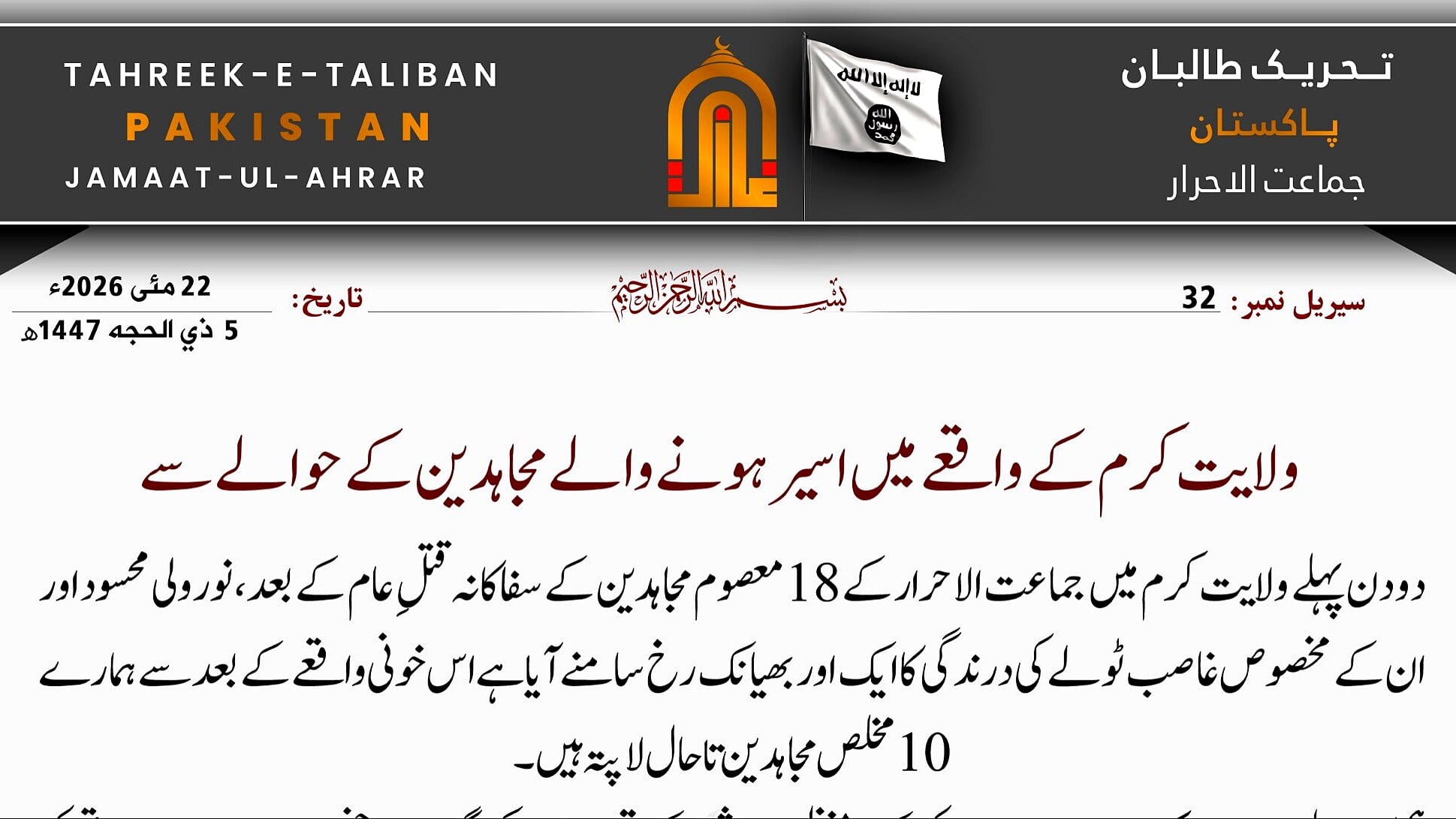
Jamaat-ul-Ahrar spokesman Asad Mansoor accused the TTP Noor Wali Mehsud group of killing 18 of its fighters and abducting 10 others in the Manatu area of Kurram over the past few days. The violence stems from disputes over extortion rights and territorial control, according to statements from the involved groups.
In a strongly worded statement, Asad Mansoor described the TTP Noor Wali Mehsud faction as “savage killers, shameless, and self-interested.” He warned that any harm to the abducted fighters would make the opposing group fully responsible, promising retaliation.
The incident reflects ongoing power struggles among proscribed terrorist organizations in the former FATA regions, particularly over lucrative extortion networks targeting local businesses, transporters, and residents.
Security officials confirmed heightened tensions in upper Kurram following the reported ambush. Local sources said armed confrontations lasted several hours, resulting in the targeted elimination and capture of Jamaat-ul-Ahrar members.
**Official and Group Reactions** Jamaat-ul-Ahrar, a splinter faction previously aligned with Tehrik-i-Taliban Pakistan, has operated independently for years. The group has maintained a presence in parts of Khyber, Orakzai, and Kurram districts despite repeated security operations.
Asad Mansoor’s statement, released through militant channels, directly blamed the TTP’s dominant Mehsud faction for initiating the attack to expand influence and secure larger shares of local bhatta (extortion) collections.
No immediate confirmation or denial has come from the TTP Noor Wali Mehsud group. However, such inter-group rivalries have increased since 2022 as different factions compete for financial resources amid pressure from Pakistani security forces.
**Key Figures and Timeline** The clash reportedly occurred in Manatu, a relatively remote area in Upper Kurram known for difficult terrain that has historically provided cover for militant movements.
According to Jamaat-ul-Ahrar’s claim, 18 fighters were killed outright while 10 were taken captive. This brings the total reported casualties and losses from this single incident to 28 personnel.
This is not the first reported incident of infighting. In 2023-2024, similar disputes in North Waziristan and Bajaur resulted in over 60 militant deaths across factions, according to estimates compiled by security analysts.
Pakistan’s security forces have conducted multiple intelligence-based operations in Kurram and adjacent districts over the past 18 months, eliminating more than 300 terrorists and recovering significant caches of arms and explosives.
**Background Context** The resurgence of TTP-related activities began gaining momentum after the Afghan Taliban’s takeover of Kabul in August 2021. Since then, cross-border sanctuaries and internal reorganizations have allowed various factions to regroup.
Jamaat-ul-Ahrar, which broke away from TTP in 2014, has historically focused on high-profile urban attacks in Pakistan but has shifted toward consolidating local influence in recent years. The TTP under Noor Wali Mehsud has consolidated several Mehsud subgroups and expanded its operational footprint across multiple tribal districts.
Disputes over extortion rackets — which generate millions of rupees monthly from local traders, mining operations, and transport routes — frequently trigger violent confrontations. Kurram district, with its strategic location near the Afghan border and diverse sectarian landscape, remains particularly vulnerable to such turf wars.
**Impact on Regional Security** Local residents in Kurram have expressed concern over renewed militant activity. The district has seen periodic sectarian tensions alongside terrorist threats, straining law enforcement resources.
Security analysts note that such infighting, while reducing overall militant numbers, creates short-term instability as displaced fighters move between areas or intensify attacks on security forces to demonstrate strength.
The Pakistani military has repeatedly stated that no sanctuaries will be tolerated within the country. Operation Azm-e-Istehkam, launched to counter the resurgent threat, focuses on intelligence-driven actions and border management.
**Broader Implications** The latest clash underscores the fragmented nature of the terrorist landscape in the northwest. While major operations have dismantled large networks, smaller factions continue to compete for shrinking resources, leading to increased internal violence.
Experts suggest that sustained pressure by security forces, coupled with effective border coordination with Afghanistan, could further exploit these divisions. However, the presence of sophisticated weaponry and ideological motivations means such groups retain the capacity to conduct sporadic attacks.
Future developments in Kurram will likely depend on how swiftly security agencies respond to the current tensions and whether the rival groups escalate their conflict into wider areas.
The situation remains fluid as both sides have issued threats of further retaliation. Authorities continue to monitor the Manatu sector and surrounding regions closely.