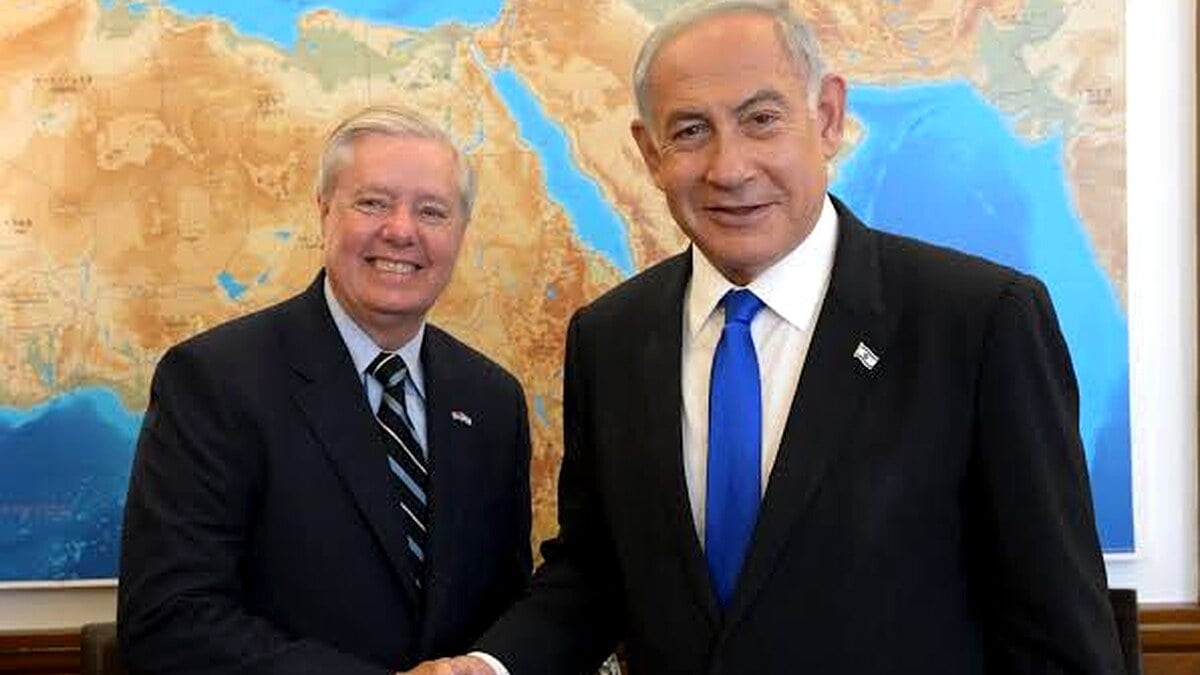




ISLAMABAD: US Senator Lindsey Graham has urged Saudi Arabia, Qatar and Pakistan to join the Abraham Accords as part of ongoing negotiations aimed at ending the Iranian conflict, describing the potential expansion as potentially one of the most consequential developments in Middle East history.
In a detailed statement posted on X on Sunday, the senior Republican senator described President Donald Trump’s approach as “brilliant” and pressed for normalisation with Israel to be linked directly to any long-term agreement with Tehran.
Graham stated that Saudi Arabia, Qatar, and Pakistan joining the accords would be “beyond transformative” for the region and the world, effectively ending the Arab-Israeli conflict. He warned that refusal to join could have “severe repercussions” for future US relationships with these countries and would be viewed as a “major miscalculation” by history.
The Abraham Accords, originally brokered by the Trump administration in 2020, normalised relations between Israel and the UAE, Bahrain, Sudan and Morocco. The framework has seen limited expansion since, with Kazakhstan joining in 2025-26.
Pakistan has maintained a traditional stance on the Palestinian issue and does not have diplomatic relations with Israel. Saudi Arabia has repeatedly conditioned any normalisation on progress towards a Palestinian state, while Qatar has maintained working ties with Israel but has not formally joined the accords.
**Official Context**
Graham’s remarks come amid active US-led diplomatic efforts to reach a lasting understanding with Iran following recent regional tensions involving the Strait of Hormuz and shipping security. Pakistani officials have not issued an immediate public response to the senator’s specific call.
The statement reflects continued US interest in leveraging the Iranian negotiations to broaden the Abraham Accords circle. President Trump has previously indicated that broader normalisation could form part of a comprehensive regional deal.
**Key Regional Implications**
For Pakistan, any potential shift would carry significant diplomatic and economic considerations. The country maintains strong defence and economic partnerships with Saudi Arabia, including a mutual defence agreement signed in 2025. Bilateral trade with Gulf states exceeds $10 billion annually, while remittances from Pakistani workers in Saudi Arabia and the UAE remain a critical component of the economy, contributing over $4 billion yearly.
Analysts note that Pakistan’s strategic position, close ties with China through CPEC, and its role in regional diplomacy have positioned Islamabad as a potential interlocutor in broader Middle East engagements, though joining the Abraham Accords would represent a major policy departure.
**Background on Abraham Accords**
Since their signing, the accords have facilitated increased trade, technology cooperation and security coordination between Israel and participating Arab states. Trade volumes between Israel and the UAE alone have grown to several billion dollars annually. However, the framework has faced criticism from many Muslim-majority countries for not addressing core Palestinian demands.
Saudi Arabia has pursued a balanced approach, strengthening ties with Iran through China-brokered diplomacy in 2023 while maintaining engagement with the United States and exploring defence cooperation options.
**Reactions and Analysis**
Graham’s intervention highlights divisions within US policymaking circles on the linkage between Iran policy and Arab-Israeli normalisation. While some view expanded accords as a pathway to regional stability, others argue that progress on Palestinian statehood remains essential for wider acceptance.
In Pakistan, foreign policy experts emphasise that any decision would be guided by national interests, public sentiment and alignment with OIC positions on Palestine. Islamabad has historically played a mediating role in regional crises and continues to advocate for a two-state solution.
The senator’s call also comes against the backdrop of Pakistan’s ongoing economic stabilisation efforts, supported by Gulf investments and IMF programmes. Any major diplomatic realignment would likely be assessed through the lens of economic security and strategic autonomy.
Broader regional reactions have been mixed, with some Gulf voices stressing the need for a comprehensive peace framework that includes Palestinian rights.
**Strategic Outlook**
The coming weeks may see further clarity as US-Iran negotiations progress. Whether the Abraham Accords expansion becomes a formal condition in those talks will significantly influence diplomatic calculations across Muslim capitals, including Islamabad.
Pakistan is expected to continue careful diplomacy, balancing its traditional alliances with emerging regional realities. The government has not indicated any shift in its longstanding position on the Israel-Palestine issue.
Future developments will depend on the outcome of current negotiations, internal Saudi and Qatari deliberations, and Pakistan’s assessment of its long-term strategic interests in a rapidly evolving Middle East landscape.